





Blue Orange Games Mom'N Pups
Good for a first game with real turns: 2–4 players, listed for ages 3–5.
Skip it if your youngest player is already 6; the listing tops out at 5.
Hobbies · Best-of list
The best gifts for kids match the age printed on the listing and the kind of play the child already picks on their own. This list spreads 24 picks across stated ages, from 3+ blocks and matching games up to a 6+ brick vehicle and a snap-together model kit. I sorted them by kind of play, not by what's loudest in the toy aisle. (My son Sam is 7 and has opinions about every one of them. Noted, Sam.)
How this list is builtToys and games whose listing or maker states a starting age between 3 and 10, from every section of the site, spread across the ages — at most three picks per stated age range, youngest first. One pick per brand and at most three of any one kind, so the list covers building, games, stargazing and more.
We earn a commission if you buy through our links, at no cost to you. Disclosure
| Model | Kind | Age | Players (max) | Play time | Pieces | Amazon |
|---|---|---|---|---|---|---|
Blue Orange Games Mom'N PupsKids & preschool games More specs
| Kids & preschool games | 3–5 yearslisting | 4listing | — | — | Check price |
Buffalo Games Chuckle & Roar Alphabet Matching MemoryKids & preschool games | Kids & preschool games | 3–5 yearslisting | — | — | — | Check price |
HABA Wooden Building Blocks Varius 21 PieceWooden blocks & building logs | Wooden blocks & building logs | 3–5 yearslisting | — | — | — | Check price |
Engino Qboidz 30 in 1 Multi ModelsSTEM building kits | STEM building kits | 3–6 yearslisting | — | — | — | Check price |
Hape Alphabet Learning Pack & Chalkboard SetSTEM building kits | STEM building kits | 3–6 yearslisting | — | — | — | Check price |
Melissa & Doug Magnetic Wooden Fishing Game and PuzzleKids & preschool games | Kids & preschool games | 3–6 yearslisting | — | — | — | Check price |
| Marble runs | 3–7 yearslisting | — | — | — | Check price | |
| Magnetic tiles | 3–8 yearslisting | — | — | — | Check price | |
Playmags Magnetic Tiles Road Set 50 PcsMagnetic tiles | Magnetic tiles | 3–10 yearslisting | — | — | — | Check price |
Brain Flakes 500 Piece SetSTEM building kits | STEM building kits | 3+ yearslisting | — | — | — | Check price |
CONNETIX Magnetic Tiles Roads Creative Pack 48 PiecesMagnetic tiles | Magnetic tiles | 3+ yearslisting | — | — | — | Check price |
Funko Dr. Seuss Pattern PartyBoard & family games More specs
| Board & family games | 3+ yearslisting | — | — | — | Check price |
Educational Insights Kanoodle Jr.Board & family games More specs
| Board & family games | 4–7 yearslisting | — | — | — | Check price |
| Marble runs | 4–8 yearslisting | — | — | — | Check price | |
MindWare Marble Run Mini GolfMarble runs | Marble runs | 4–8 yearslisting | — | — | — | Check price |
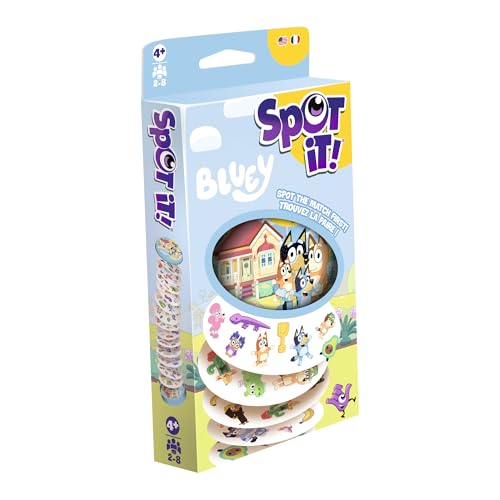
Asmodee Spot It! BlueyCard games More specs
| Card games | 4+ yearslisting | 8listing | 15 minlisting | — | Check price |
Bandai Anime Heroes Jujutsu Kaisen Gojo Satoru Hollow Purple VersionAction figures More specs
| Action figures | 4+ yearslisting | — | — | — | Check price |
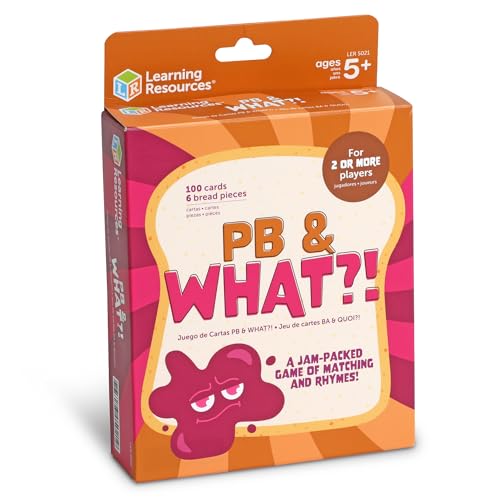
Learning Resources PB & What?!Card games More specs
| Card games | 4+ yearslisting | — | — | — | Check price |
PLUS PLUS Puzzle By Number Activity Pad, TransportationCompatible & micro bricks More specs
| Compatible & micro bricks | 5–12 yearslisting | — | — | — | Check price |
Gamewright Throw FishCard games More specs
| Card games | 5+ yearslisting | 4listing | — | — | Check price |
Goliath Mastermind Junior: What's for Lunch?Board & family games More specs
| Board & family games | 5+ yearslisting | 2listing | — | — | Check price |
LEGO 11036 Creative VehiclesBrick building sets More specs
| Brick building sets | 5+ yearslisting | — | — | — | Check price |
Sluban Off-Road Military VehicleBrick building sets More specs
| Brick building sets | 6–12 yearslisting | — | — | 265 pcslisting | Check price |
Airfix J6039 Quickbuild Jeep Gladiator (JT) OverlandSnap-together model kits More specs
| Snap-together model kits | 6+ yearslisting | — | — | — | Check price |
Good for a first game with real turns: 2–4 players, listed for ages 3–5.
Skip it if your youngest player is already 6; the listing tops out at 5.
Good for a preschooler working on letters: an alphabet matching memory game listed for ages 3–5.
Skip it if you want a player count or play time first; the data doesn't list them.
Good for a stacker who likes balancing shapes: 21 wooden pieces in the Varius set, listed for ages 3–5.
Skip it if you want a big pile for a whole playroom; 21 pieces is a small set.
Good for a kid who wants to build something new each day: 30 models from one Qboidz set, per the title, listed for ages 3–6.
Skip it if you want a piece count before you buy; the data doesn't give one.
Good for a preschooler learning letters: an alphabet learning pack with a chalkboard, listed for ages 3–6.
Skip it if chalk dust in the playroom is a deal-breaker in your house.
Good for a preschooler who likes to fish for pieces: a wooden fishing game and puzzle with ocean animal magnets, per the title, listed for ages 3–6.
Skip it if you need a player count first; the data doesn't list one.
Good for a young marble run builder: the GraviTrax Junior Starter Set L Ice, listed for ages 3–7.
Skip it if there's a child under 3 at home; marbles are small parts.
Good for open-ended magnetic building: 101 tiles with a storage bag, listed for ages 3–8.
Skip it if a baby or toddler shares the playroom and can reach the bin; it's magnetic.
Good for a kid who builds roads for toy cars: a 50-piece magnetic road set, listed for ages 3–10.
Skip it if you want plain tiles for tall towers; this set is built around roads.
Good for a long building habit: a 500-piece set, listed for ages 3 and up.
Skip it if a child under 3 lives in the house; 500 small pieces is a lot to track.
Good for a family that already owns magnetic tiles and wants roads: a 48-piece Roads Creative Pack, listed for ages 3 and up.
Skip it if this would be the first tile set; 48 pieces is an add-on size.
Good for a young Dr. Seuss reader: a pattern-matching game listed for ages 3 and up, base game.
Skip it if you want the player count first; the data doesn't list it.
Good for a 4- to 7-year-old who likes puzzles: Kanoodle Jr., a base game per the listing.
Skip it if the child is 3; the listing starts at 4.
Good for a 4- to 8-year-old who likes to test what they build: a 130-piece marble run starter set.
Skip it if the child is 3 or younger; the listing starts at 4, and marbles are small parts.
Good for a 4- to 8-year-old who wants a marble run with a goal: Marble Run Mini Golf.
Skip it if you want a piece count first; the data doesn't list one.
Good for a Bluey fan and a big table: a matching and speed game for 2–8 players, 15 minutes, in a storage tin, listed for ages 4 and up.
Skip it if the child is 3; the listing starts at 4.
Good for a Jujutsu Kaisen fan who poses figures: Anime Heroes Satoru Gojo, Hollow Purple version, 6.7 in tall with 16 points of articulation and several hands, per the listing.
Skip it if a toddler shares the room; the spare hands are small parts.
Good for a kid who likes word play: PB & What, a word card game listed for ages 4 and up.
Skip it if you want a player count first; the data doesn't list it.
Good for a 5- to 12-year-old who likes following a picture: a PLUS PLUS Puzzle By Number pad, Transportation theme, with mini waffle bricks.
Skip it if the child wants free building with no pattern; this one follows a design.
Good for a quick card game for 2–4 players, listed for 5 and up.
Skip it if your table often seats five or more; the listing tops out at 4.
Good for a two-player logic game for kids 5 and up: Mastermind Junior, What's for Lunch? edition.
Skip it if you need a game for three or more; it's strictly 2 players.
Good for a 5+ builder who likes cars: LEGO Classic 11036 Creative Vehicles.
Skip it if you want a piece count before you buy; the data doesn't list it.
Good for a 6- to 12-year-old who wants a bigger brick build: 265 pieces and 2 minifigures, per the listing.
Skip it if the child is 5 or younger; the listing starts at 6.
Good for a 6+ kid curious about model kits: an Airfix Quickbuild Jeep Gladiator (JT) Overland, snap-together, pre-colored, with stickers, no paint or glue needed, per the listing.
Skip it if the child is under 6; the listing starts at 6.
Every product here has a listing or maker page that states a starting age between 3 and 10. The list is spread across those stated ages, with no more than three picks for any one age range, youngest first. There's one pick per brand and no more than three of any one kind. That's the rule. It's printed in the box above the table too.
The picks start at 3+, 4+, 5+ and 6+, and several run well past that on the label. The Brain Flakes set and the Dr. Seuss game say 3 and up with no ceiling. The PLUS PLUS pad and the Sluban set run to 12. So a 3-year-old and a 9-year-old can both find something here, as long as you check where each label starts.
The table up top shows all 24 with their kind, age range and players where the data has them. A dash means the listing doesn't say. Below, I've grouped the same picks by kind of play: build, play, explore, and make or display.
If you want a narrower list, these pages are cut by age:
Small parts: Check the age label on the listing. Toys with small parts are a choking hazard for children under 3. Almost everything on this page has small parts, magnets or marbles. The CPSC says to store toys with small parts out of reach of children under 3.
This is my one strong opinion for this page. The first number on the label decides if the gift fits today. The second number tells you how long the maker thinks it stays useful. A wide range is a gift that stays out of the donation bag longer.
You can check this in the table. Mom'N Pups is listed for 3–5. The Playmags Road Set is listed for 3–10. The PLUS PLUS pad and the Sluban set both run to 12. Both kinds are fine gifts. But if you're buying for a 5-year-old, a 3–5 game has about one good year left on the label, and a 3–10 tile set has five.
The start of the range still comes first. Never buy below it because "they'll grow into it." Buy a range that starts at or under the child's age today, then look at how far it runs.
Building gifts are the biggest group here, and the easiest to get right. The real choice is the material. Wood, plastic bricks, small waffle bricks, magnetic tiles. Each one asks something different of small hands.
The HABA Wooden Building Blocks Varius 21 Piece is listed for ages 3–5. Twenty-one pieces is a small set built around balance and stacking. More wooden sets live on the wooden blocks page, and HABA has its own page at HABA.
The Engino Qboidz 30 in 1 Multi Models says 30 models from one set, listed for ages 3–6. It's for the kid who wants to build something new every morning. See Engino.
The Brain Flakes 500 Piece Set is listed for 3 and up. This is the long-haul pick. It's also the one that will turn up under the couch. Plan a bin. More at Brain Flakes.
The LEGO Classic 11036 Creative Vehicles is listed for 5 and up. LEGO Classic is the line built around open building, and this box points it at cars. The data doesn't give a piece count. More at LEGO.
The Sluban Off-Road Military Vehicle lists 265 pieces and 2 minifigures, for ages 6–12. It's the biggest brick count with a stated number on this page. It also starts at 6, so it's not for a 5-year-old. See Sluban and the building blocks page.
The PLUS PLUS Puzzle By Number Activity Pad, Transportation uses mini waffle bricks and is listed for ages 5–12. It follows a pattern, like paint by number but with bricks. Some kids want a picture to follow. Some kids want a blank floor. You know which one you're buying for. More at PLUS PLUS.
Three magnetic sets made the cut, one per brand.
The road sets suit a kid who already pushes toy cars around the floor. A plain tile set suits a kid who builds walls and towers. If you plan to mix brands, check each listing first rather than counting on them to fit. The magnetic tiles page has the full lineup.
Magnets: Swallowed magnets can cause serious internal injuries. The CPSC warns that two or more swallowed magnets can pull together inside the body. Keep loose or broken magnetic pieces away from young children, and get medical help right away if you think a child swallowed one.
Games at 3 and 4 are short and simple. That's on purpose. A preschooler is learning to wait for a turn, and that's a big job. By 5 and 6, kids can hold a rule or two in their heads and start to plan.
Blue Orange Games Mom'N Pups lists 2–4 players and ages 3–5. It's a game with real turns for kids who are just learning that turns exist. More at Blue Orange Games.
The Melissa & Doug Magnetic Wooden Fishing Game and Puzzle is listed for ages 3–6. Per the title, it pairs a fishing game with a puzzle, and the ocean animals are wooden magnets. The data doesn't give a player count. It uses magnets, so the magnet note above applies. More at Melissa & Doug.
The Chuckle & Roar Alphabet Matching Memory from Buffalo Games is a letter-matching memory game for ages 3–5. The Funko Dr. Seuss Pattern Party is a pattern game listed for 3 and up. See Funko.
I have lost a fishing game to a kindergartner. I stand by every cast I made. The kindergartner stands by his too, and he kept the biggest fish as a trophy.
The Bluey edition of Spot It lists 2–8 players and 15 minutes, in a storage tin. It's a matching and speed game. The listing starts at 4, so it's for 4-year-olds and up, not 3. The Spot It page has the rest of the family.
PB & What from Learning Resources is a word card game listed for 4 and up. It's for the kid who already likes silly sentences. More at Learning Resources.
Gamewright Throw Fish lists 2–4 players and 5 and up. It's a quick card game for after dinner. See Gamewright and the card games page.
Mastermind Junior: What's for Lunch? is a junior edition for exactly 2 players, listed for 5 and up. One player hides a combination and the other tries to work it out. The Mastermind page covers the other editions.
These suit the kid who drops a spoon off the high chair just to watch it fall. It's not mischief. It's research.
The Ravensburger GraviTrax Junior Starter Set L Ice is listed for ages 3–7. The Marble Genius Marble Run Starter Set lists 130 pieces and ages 4–8. The MindWare Marble Run Mini Golf is listed for ages 4–8 and adds a goal to the run, per the title. Note the gap: only the GraviTrax Junior set starts at 3. See marble runs, Ravensburger, Marble Genius and MindWare.
Kanoodle Jr. from Educational Insights is a puzzle game listed for ages 4–7. It's for a kid who likes to sit with one problem until it clicks. The Kanoodle page has more.
The Hape Alphabet Learning Pack & Chalkboard Set is listed for ages 3–6. It's for a preschooler who has started to point at letters on cereal boxes. More at Hape.
At one of Marisol's star nights on the loop, Sam was 6. He looked through the eyepiece at Saturn and asked who put the sticker on the lens. He didn't believe it was real. Then he looked again, for a long time.
Marisol's take: the first time a kid sees how something really works, keep it simple and let them look. That's my case for a marble run at 4. The marble goes in at the top, and the child watches where it goes. Nothing has to be explained. No telescope made this list. If your kid is asking about the sky, try the telescopes for kids page and check each listing's age.
Two picks here are for the kid who wants something to finish and keep on a shelf.
The Airfix J6039 Quickbuild Jeep Gladiator (JT) Overland is a snap-together car kit listed for 6 and up. The listing says it's pre-colored, comes with stickers and needs no paint or glue. Snap-fit means the parts press together. It's a gentle first step toward model kits. More at Airfix and the model kits section.
The Bandai Anime Heroes Jujutsu Kaisen Gojo Satoru Hollow Purple Version is listed for 4 and up. The listing gives a 6.7 in height, 16 points of articulation and several hands. Articulation means the number of places the figure can move. More at Bandai and the figures section.
Small parts: Spare hands and accessories are small parts. Keep them away from children under 3.
A lot of you are shopping from another state, and the gift gets opened without you in the room. That changes what works.
Start with a text to the parents. Ask what's already on the shelf. A second copy of the same marble run is the gift problem I see most, and it's the easiest one to avoid.
Then pick something that works the minute the tape comes off. Blocks, bricks and magnetic tiles need nobody to explain them. A game with rules needs a grown-up who knows them, and that grown-up may be busy with the cake.
If a baby or toddler lives in the house, think twice about magnets and marbles. At least tell the parents what's in the box, so it can go up on a high shelf. And if you want to play together from far away, send a card game. It works fine with a phone propped against the fruit bowl.
This site never shows prices, because they change. But you can still shop smart. Card games and preschool games tend to be the smaller boxes here. Bigger tile sets and marble runs sit at the other end. The Check price button shows today's number.
If you're splitting one budget between two kids, a card game plus a small building set covers two kinds of play. That's my favorite trick for siblings. Neither kid gets the "better" gift. They have to share both. (This works about half the time. Dana says that's a good average.)
Skip this page if the child is under 3. Nothing here is labeled for that age, and almost everything has small parts. Skip it, too, if the kid is 8 or older and wants a real challenge. A few labels here run that high, but most of these picks were built with younger kids in mind. The 8 year olds page is a better start.
For a birthday, pick from the group that matches what the kid does already. A stacker gets blocks. A kid who likes to win gets a short card game. A kid who keeps asking "why" gets a marble run or a puzzle. A kid who likes to finish things gets the snap kit, if they're 6 or older. For a party where you don't know the child well, a card game for 2–4 players is the safest choice on this page.
Tape, scissors, age label. Check them in that order.
Look at what the child does with a free hour. A builder can take the LEGO Classic Creative Vehicles set (5+) or the Sluban Off-Road Military Vehicle (6+, 265 pieces). A kid who likes a contest can take Throw Fish (5+, 2–4 players). A kid who likes finished models can take the Airfix Quickbuild Jeep, a 6+ snap kit that needs no paint or glue.
Pick something that works without a grown-up who knows the rules. Open-ended sets like Brain Flakes, magnetic tiles or HABA wooden blocks need no rulebook. A card game like Spot It Bluey travels well. Ask the parents what's already on the shelf, and check the age on the listing against the child's age today.
Yes. The PicassoTiles, Playmags and CONNETIX sets and the Melissa & Doug fishing game use magnets, and the marble runs, brick sets, the figure's spare hands and most games have small parts. Per the CPSC, toys with small parts are a choking hazard for children under 3. If a baby or toddler shares the house, keep these in a closed bin and check the floor after play.
The Bandai Anime Heroes Jujutsu Kaisen figure on this list is listed for 4 and up, stands 6.7 in tall and has 16 points of articulation with several hands, per the listing. Articulation means it can be posed. The spare hands are small parts, so keep them away from children under 3.
Start with the smaller boxes. Card games and preschool games tend to cost less than large tile sets. This site never prints prices, because they change. The Check price button shows today's number on Amazon. A small game that gets played beats a big set that sits in the closet.