Section
Construction Toys and Building Toys
Construction toys are anything a kid, or a grown-up, puts together piece by piece: snap bricks, magnetic tiles, marble runs, wooden blocks, gear-and-motor kits. This section sorts them by kind, so you can pick the way someone likes to build before you pick a box. Each kind has its own page with the age labels and piece counts from the listings. (I teach seventh-grade math. Half my geometry unit is in a toy bin somewhere in this house.)
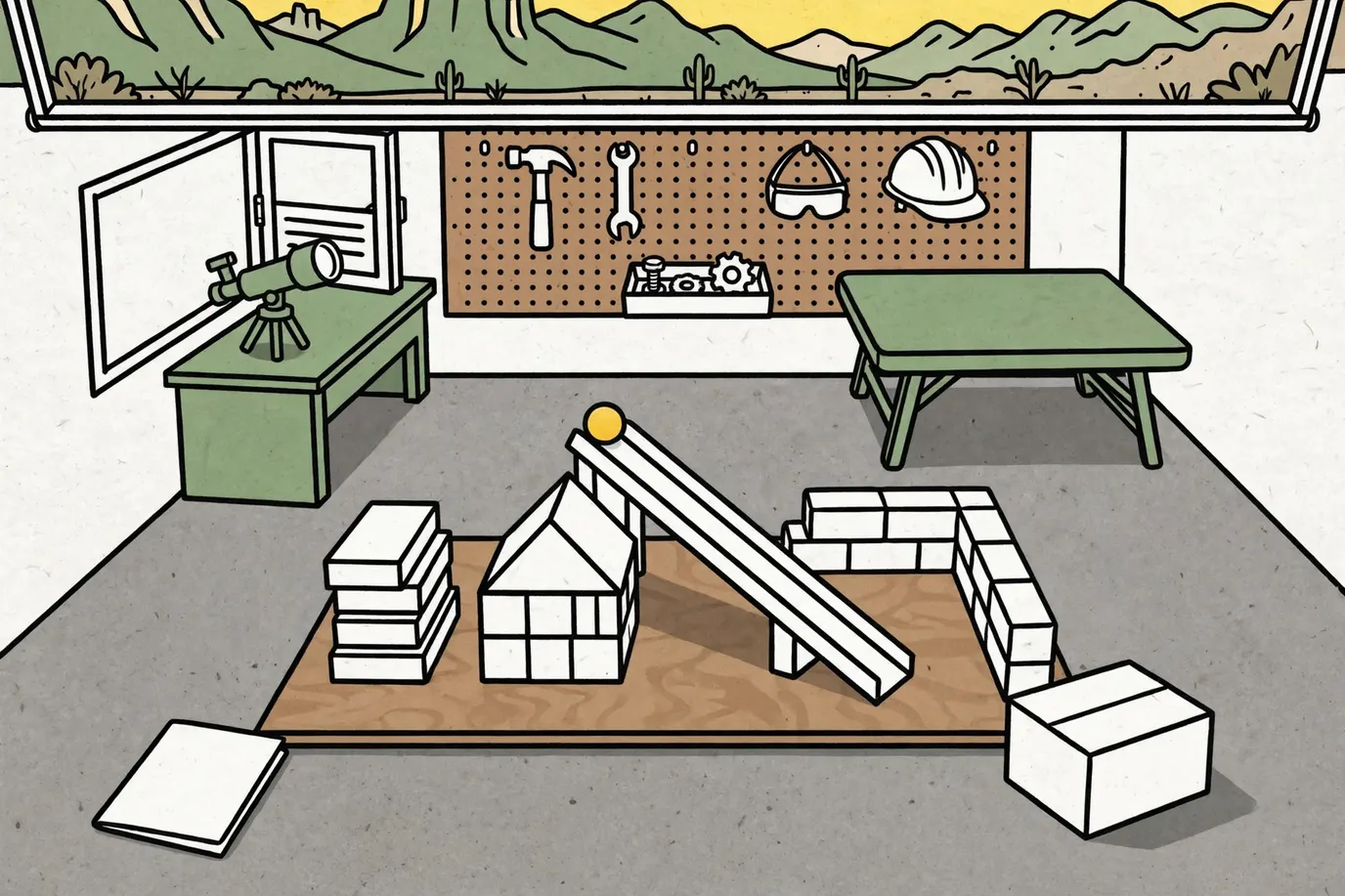
Gear in this section
Best-of lists
Best Pokémon LEGO Sets and Pokémon Building Sets
Building sets whose listing names the Pokémon license — LEGO and MEGA alike — from the biggest stated piece count down.
Best LEGO Star Wars Sets
LEGO sets whose listing names the Star Wars line, from the biggest stated piece count down.
Brands in this section
What counts as a construction toy on this site
Here's the table version. If it comes in pieces and the fun is putting the pieces together, it lives in this section. If it comes finished and the fun is playing with it, it lives somewhere else.
That covers more ground than you'd think. A tub of wooden blocks for a 2-year-old and an 18+ display set for an adult are both building toys. They share a shelf in the store and almost nothing else. So instead of one big list, this section splits building sets by how they go together:
- Pieces that snap or press together (bricks)
- Pieces that stick by magnet (tiles)
- Pieces that make a path for something to roll down (marble runs)
- Pieces that stack and balance (wooden blocks and logs)
- Pieces that make something move (STEM kits)
Each kind has its own type page with a product table. The age label and piece count in that table come from the listing's title and bullets, or from the maker. They don't come from the spec boxes further down an Amazon page. Those boxes are wrong often enough that we don't trust them for ages or piece counts. More on that below.
Which kind should you start with? The one that matches how the builder already plays. A kid who stacks everything within reach is a block kid. A kid who asks "what happens if" is a marble-run kid. A kid who follows the booklet page by page, and gets upset when a step is skipped, is a brick kid. Most kids are two of these. June is all five, depending on the day.
A tour of the building toys in this section
Snap-together bricks and building sets
Bricks are the kind most people picture first: plastic pieces with studs on top that press into each other. The building blocks page covers the general sets, the tubs of mixed bricks and the themed builds that come with a booklet.
The age labels on brick sets run wider than any other kind here. In our data as of 2026-10-23, stated ages on brick sets start anywhere from 4+ to 18+. The most common starting age, by a margin, is 18+. That surprises people. A lot of brick sets now are display models for adults, and the label says so.
Makers in this group include LEGO, MEGA and nanoblock, which makes very small bricks. Some sets from other makers say on the listing that they fit with other bricks. We only repeat that when the listing says it, and we never say another maker agrees.
Two lists in this section are built from licensed brick sets: LEGO Star Wars sets and Pokémon building sets. Both list the age label first for every set, because on both lists it runs from kid ages to 18+.
House rule: the builder names the build before anyone asks what it is. It saves a lot of guessing. Sam's last one was a "sky garage." I'd have said boat.
Magnetic tiles
Magnetic tiles are flat plastic shapes, mostly squares and triangles, with magnets inside along the edges. They click together edge to edge. Lay them flat and fold them up, and you have a box. The magnetic tiles page has the sets, with the age and details each listing gives.
This is the most consistent kind in the section on age. Every magnetic tile set in our data that states an age starts at 3+, except one at 8+. Upper ends vary.
A math-teacher note, because I can't help it. When a kid lays out six squares in a cross and folds them into a cube, that flat cross is called a net. My seventh graders learn that word in October. Some 4-year-olds have been doing it since spring and just didn't know it had a name.
Makers in this group include PicassoTiles, CONNETIX and Playmags. A related kind, rods and balls that join by magnet, is made by makers such as Geomag. It works differently and gets its own page later.
Marble runs
A marble run is a set of tracks, tubes and supports you build into a path, then drop a marble in at the top. The build is the toy. The marble is the test. The marble runs page covers plastic, wooden and mixed sets.
Ages on marble runs spread out more than you'd guess. In our data, stated starting ages go from 1+ up to 12+, with a big group at 4+ and another at 8+. Read the listing to see what kind of ball comes in the box, and how many.
One more thing to check: whether the piece count includes the marbles. Some listings fold them into one number. If a good share of that number is marbles, there's less track in the box than the count suggests. The item list near the end of the listing usually settles it.
Marisol's take: "A marble run is a grade problem. Every piece has to drop a little, or the marble stops. Downhill is the one direction nobody has ever disputed." She has offered to bring a level to the next build. Sam has already asked to hold the bubble part.
Makers in this group include Marble Genius and Hape.
Wooden blocks and building logs
Wooden blocks are the oldest idea in the section: shapes cut from wood that you stack, balance and knock over. Building logs are their cousin, with notched ends that lock into a cabin. The wooden blocks page covers both.
These start young. In our data, stated starting ages on wooden sets go from 1+ to 7+, with the biggest group at 2+. Piece counts are mostly missing on these listings, so look at the photos and the item list instead.
Some wooden sets are cut so two short blocks line up with one long one. When a set is made that way, a kid finds out what "half" means before anyone teaches it. Check the listing or the photos to see if a set is cut like that.
Makers in this group include Melissa & Doug, Hape and Lincoln Logs.
Dana's ruling: whoever builds the tallest tower also takes it down. She came up with it at the end of a night shift, and it has held up in every appeal since.
STEM and engineering kits
STEM kits are building sets that make something work: gears that turn each other, a crank that lifts, a car that rolls, sometimes a motor. They sit between bricks and science kits. The stated starting ages in our data run from 18 months to 16+, with most between 3 and 9.
Very few of these listings state a piece count, so read the parts list. If a kit needs batteries, the listing should say how many and whether they're in the box.
Makers with kits in this group include Engino, K'NEX and Brain Flakes. A type page for STEM kits is on the way. Until then, the brand pages show what each maker has listed.
Big blocks for the youngest builders
For toddlers there are big blocks, which the listings call large, jumbo or bigger bricks. In our data, stated starting ages on these go from 1+ to 3+. Makers in this group include MEGA and Fisher-Price. If you're shopping for a 3-year-old, the gifts for 3-year-olds page has building picks checked against the age label.
How to read the age on construction toys for kids
The age on the listing is the one fact that rules a set in or out. The CPSC tells parents to follow the age guidance on toy packaging and to pick toys that fit the child's interests and abilities. We do the same: we use the age as the listing states it, and we never put a set on a page for a child younger than its starting age.
Here's how to read the label:
- 8+ means 8 and up. There's no upper end.
- 3–10 means the maker set both ends. The low end is the firm one.
- No age stated means we leave it blank. We don't guess one.
A low number isn't always about skill. On toys for small kids, the starting age is often about choking risk from small parts. A high number is often about the build: how long it runs, how small the pieces are, how much reading the booklet takes.
Watch for a listing that disagrees with itself. Sometimes the title says one age and the spec box says another. When that happens, we go with the title, the bullets or the maker's own page.
How to read a piece count
A piece count is the number of pieces in the box. It tells you roughly how long a build runs and how much table it needs. It doesn't tell you how big the finished build stands or who it's for.
Three things to know before you compare counts:
- Many listings don't state one. In our data, about a third of brick sets give a piece count. Most tile, wooden and marble-run listings don't.
- The spec box can be wrong. Some listings show "1" or "25" for a set with hundreds of pieces. We take the count from the title, bullets or maker.
- Count what's counted. Marble runs may include the marbles in the number. Read the item list to see what the count covers.
If two sets look the same and one has a much bigger number, read both listings slowly before you decide. Sometimes the extra pieces are tiny ones, and that changes who the set is for.
Small parts, marbles and magnets
Check the age label on the listing. Toys with small parts are a choking hazard for children under 3. The CPSC bans small parts in toys meant for children under 3, and requires a warning label on certain toys with small parts, small balls or marbles.
Swallowed magnets can cause serious internal injuries. The CPSC warns that two or more swallowed magnets can pull toward each other inside the body and damage the stomach and intestines. If you think a child swallowed a magnet, get medical care right away. Keep loose or broken magnetic pieces away from young children.
If a younger sibling shares the house, build big sets at a table they can't reach. Store pieces in a bin with a lid, up high. Throw away plastic wrap and packaging after the box is opened. If a toy breaks or seems unsafe, you can report it to the CPSC at SaferProducts.gov.
Gifts and building sets by age
If you're shopping for a specific kid, the gift pages sort building sets, games and more by the age on the label. Start with gifts for kids, or go straight to gifts for 8-year-olds or gifts for teens. The boys and girls pages use the same age rule and sort by kind of play, not by who's opening the box.
Pick the kind of building first. The box comes second.
Related
Questions people ask
What building toys from the 90s are still sold today?
We don't publish brand histories we can't check, so we won't date any line. What we can check is today's listings. Snap-together bricks, rod-and-connector sets, wooden building logs and marble runs are all on Amazon US now, from makers such as LEGO, K'NEX and Lincoln Logs. If you want the exact set you remember, search its name or set number and compare the age label to the builder.
Are building toys and construction toys the same thing?
For shopping, yes. Both names cover toys you put together from pieces: bricks, tiles, blocks, rods, tracks and gear kits. Some people say construction toys for trucks and diggers, but on this site the word means building sets. Every kind in this section has its own type page, and the age label on each listing is the first thing to read.
What age are magnetic tiles for?
In our data as of 2026-10-23, every magnetic tile set that states an age starts at 3+, except one that starts at 8+. The rest don't state an age in the title or bullets. Read the listing for how the magnets are held in. If a tile cracks and a magnet comes loose, take that tile away from young children at once.
Are marble runs safe for toddlers?
Read the label first. The CPSC lists small balls and marbles among the things that trigger a choking-hazard warning on toys, and toys with small parts are a choking hazard for children under 3. Some runs in our data start at 1 or 2, others at 8. Follow the age on the listing and the warning on the box, not the look of the track.
What makes a building toy a STEM kit?
On this site, a STEM building kit is one that builds something that moves or works: gears that turn, a crank, a motor, a rolling car. The stated ages on the kits in our data run from 18 months up to 16+, with most starting between 3 and 9. Only a few listings state a piece count, so check the parts list before you buy.
Sources
- U.S. Consumer Product Safety Commission: Small Parts for Toys and Children's Products — accessed 2026-10-23
- U.S. Consumer Product Safety Commission: Toys — accessed 2026-10-23
- U.S. Consumer Product Safety Commission: Magnets — accessed 2026-10-23