Brand · Board & Card Games
Learning Resources Gears, Building Sets and Learning Games
Learning Resources Gears sets are the center of this maker's building lineup: gear-and-crank sets from 3+ up through motion and robot builds at 5+. Around them sit 1-2-3 Build It sets from 2+, Engineering & Design kits, STEM Explorers and a shelf of math and phonics games. Read the age, then decide whether you want a build or a game. (I teach seventh-grade math. A box with the word tri-FACTa on it was always going to end up on this page.)
We earn a commission if you buy through our links, at no cost to you. Disclosure
Learning Resources on Amazon US
56 models- STEM building kits
Learning Resources Gears! Gears! Gears! Deluxe Building Set
Check price - STEM building kits
Learning Resources Gears! Gears! Gears! Super Building Set 150 Pieces
- Recommended age
- 3+ years
- STEM building kits
Learning Resources Simple Machines
- Recommended age
- 8+ years
- STEM building kits
Learning Resources Candy Construction Building Set
Check price - STEM building kits
Learning Resources Gears! Build & Bloom
Check price - STEM building kits
Learning Resources STEM Force and Motion Activity Set
- Recommended age
- 5+ years
- STEM building kits
Learning Resources Gears Deluxe Building Set, Pink
Check price - STEM building kits
Learning Resources Gears Robot Factory Building Set
- Recommended age
- 4–8 years
- STEM building kits
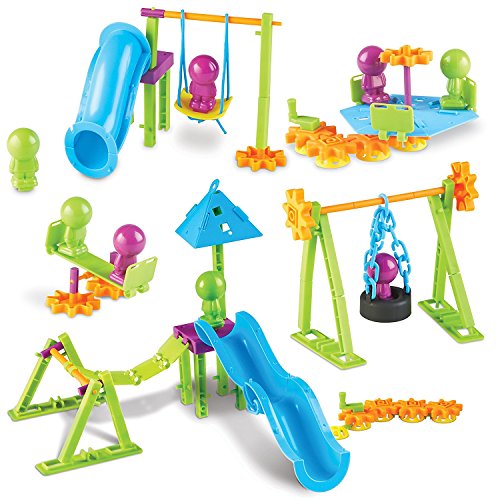
Learning Resources Playground Engineering & Design Building Set
Check price - STEM building kits
Learning Resources Gears CycleGears
- Recommended age
- 4–8 years
- STEM building kits
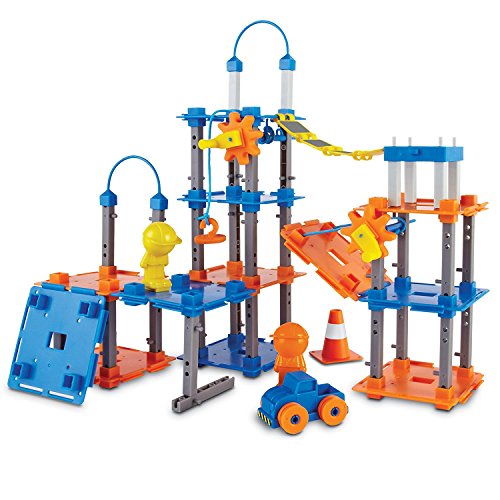
Learning Resources City Engineering & Design Building Set
Check price - STEM building kits
Learning Resources Gears! Gears! Gears! Machines in Motion
- Recommended age
- 5+ years
- STEM building kits
Learning Resources 1-2-3 Build It Rocket-Train-Helicopter
- Recommended age
- 2+ years
- STEM building kits
Learning Resources Gears! WreckerGears
- Recommended age
- 4+ years
- STEM building kits
Learning Resources Engineering & Design Castle Set 123 Pieces
- Recommended age
- 5+ years
- STEM building kits
Learning Resources 1-2-3 Build It Robot Factory
- Recommended age
- 2+ years
- STEM building kits
Learning Resources Gears Robots in Motion
- Recommended age
- 5+ years
- STEM building kits
Learning Resources Gears Mega Builds
- Recommended age
- 4–8 years
- STEM building kits
Learning Resources Gears! Gears! Gears! Treadmobiles Building Set 108 Pieces
- Recommended age
- 5+ years
- STEM building kits
Learning Resources STEM Explorers Motioneering
- Recommended age
- 5–8 years
- STEM building kits
Learning Resources STEM Explorers Brainometry
- Recommended age
- 5+ years
- STEM building kits
Learning Resources STEM Explorers Machine Makers
Check price - STEM building kits
Learning Resources STEM Explorers Bridge Builders Classroom Set
Check price - STEM building kits
Learning Resources STEM Explorers Geo-Glow Art
Check price - STEM building kits
Learning Resources Garden Gears Flower Building Set
- Recommended age
- 4+ years
- STEM building kits
Learning Resources STEM Explorers Pixel Art Pro
- Recommended age
- 5–7 years
- Board & family games
Learning Resources Dino Math Tracks Game
- Recommended age
- 5+ years
- Players (min)
- 2
- Players (max)
- 4
- Board & family games
Learning Resources Sum Swamp Addition & Subtraction Game
Check price - Board & family games
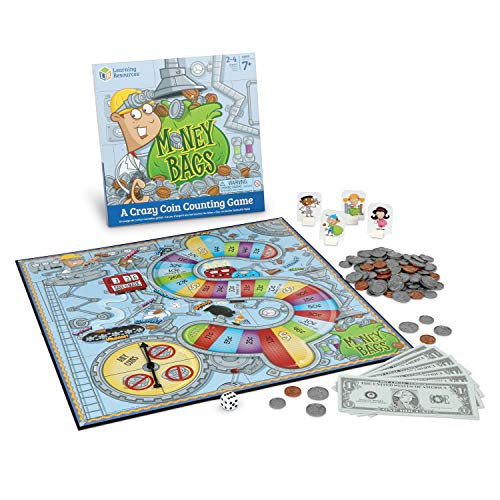
Learning Resources Money Bags Math Game
Check price - Board & family games
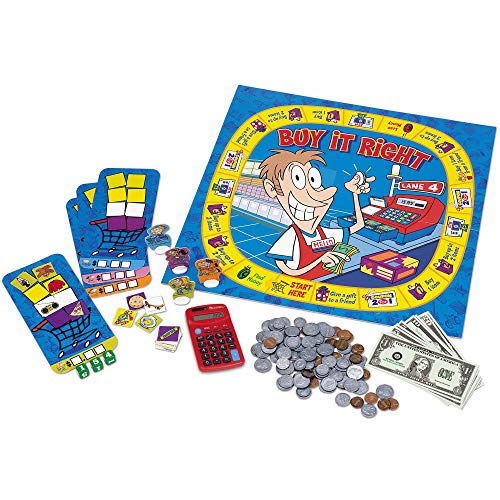
Learning Resources Buy It Right Shopping Game
Check price - Board & family games
Learning Resources Pop For Addition & Subtraction Game
- Players (min)
- 2
- Players (max)
- 4
- Board & family games
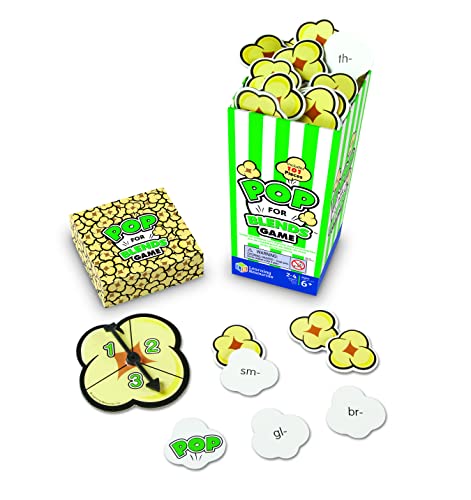
Learning Resources Pop for Blends Game
- Recommended age
- 6+ years
- Players (min)
- 2
- Players (max)
- 4
- Board & family games
Learning Resources tri-FACTa Addition and Subtraction Game
- Recommended age
- 6+ years
- Players (min)
- 2
- Players (max)
- 4
- Board & family games
Learning Resources Tri-FACTa Multiplication & Division Game
- Recommended age
- 8+ years
- Players (min)
- 2
- Players (max)
- 4
- Board & family games
Learning Resources iTrax Critical Thinking Game
- Recommended age
- 6+ years
- Board & family games
Learning Resources I Sea 10 Math Game
- Recommended age
- 6+ years
- Board & family games
Learning Resources Sight Word Swat! The Original Sight Words Swatting Game
Check price - Board & family games
Learning Resources Mathswatters Addition & Subtraction Game
- Recommended age
- 5+ years
- Board & family games
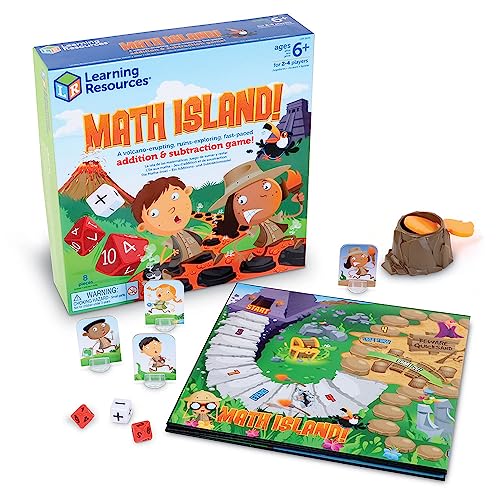
Learning Resources Math Island Addition & Subtraction Game
- Recommended age
- 6+ years
- Players (min)
- 2
- Players (max)
- 4
- Board & family games
Learning Resources Sight Word Stomp!
- Recommended age
- 5+ years
- Board & family games
Learning Resources Summit Sums Math Game
- Recommended age
- 5+ years
- Players (min)
- 2
- Players (max)
- 4
- Board & family games
Learning Resources Dumpling Dash Fine Motor Math Game
Check price - Board & family games
Learning Resources Wizards of Mathland
Check price - Kids & preschool games
Learning Resources Alphabet Island a Letter & Sounds Game
- Recommended age
- 4+ years
- Kids & preschool games
Learning Resources Noodle Knockout Fine Motor Game
- Recommended age
- 4–8 years
- Players (min)
- 2
- Players (max)
- 4
- Kids & preschool games
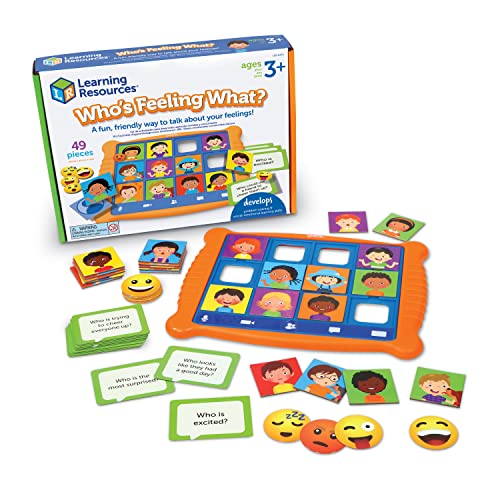
Learning Resources Who's Feeling What? Game
- Recommended age
- 3+ years
- Kids & preschool games
Learning Resources Grab That Donut Fine Motor Game
- Recommended age
- 3+ years
- Kids & preschool games
Learning Resources Alphabet Cookie Jar
Check price - Kids & preschool games
Learning Resources Slam Dunk Sums
- Recommended age
- 4+ years
- Toddler & large blocks
Learning Resources Buddy Builders 32 Pieces
- Recommended age
- 3+ years
- Toddler & large blocks
Learning Resources Letter Blocks
- Pieces
- 36 pcs
- Recommended age
- 2–8 years
- Material
- Plastic
- Toddler & large blocks
Learning Resources MathLink Junior Building Blocks
Check price - Card games
Learning Resources Snap It Up Phonics Word Families
Check price - Card games
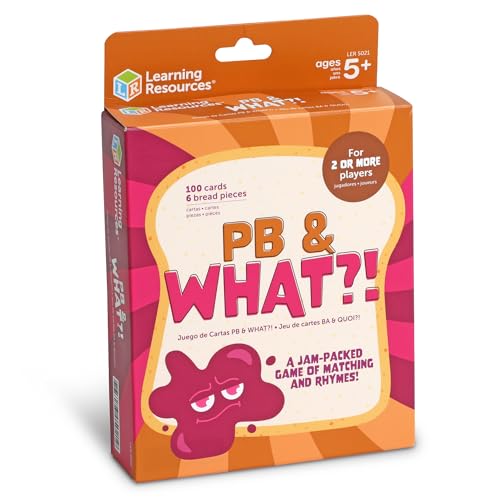
Learning Resources PB & What?!
- Recommended age
- 4+ years
- Marble runs
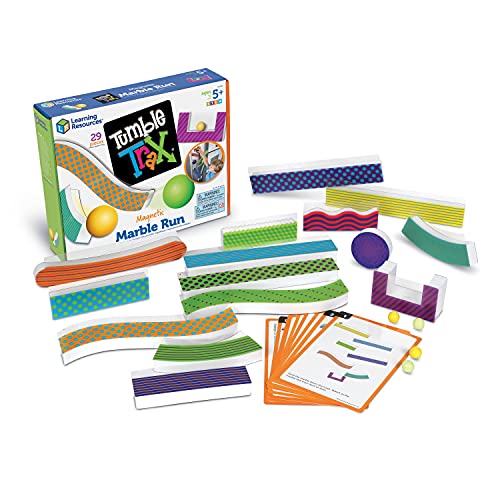
Learning Resources Tumble Trax Magnetic Marble Run
Check price - Marble runs
Learning Resources STEM Explorers Marble Runners
Check price













What Learning Resources makes
Learning Resources makes toys and games built around a skill. In our data, its listings cover five types: STEM building kits, toddler blocks, marble runs, preschool games and family learning games.
The building side and the games side work differently, so this page takes them one at a time.
On the building side, the main lines are:
- Gears, Gears, Gears sets (gears, cranks and moving builds)
- 1-2-3 Build It sets (for the youngest builders)
- Engineering & Design sets
- STEM Explorers and other STEM sets
- Blocks and marble runs
On the games side, most listings practice math or reading: addition and subtraction, multiplication and division, phonics, sight words and money.
The grid above shows every listing with its age and, for the games, player count where the listing states it.
Learning Resources Gears sets
Gears sets are plastic gears that snap onto posts and a base. Turn one gear with a crank, and every gear meshed to it turns too. Kids learn by watching what happens when a big gear drives a small one, or the other way around.
Eleven listings in our data carry the Gears name. Here they are by listed age:
- 3+: Gears, Gears, Gears Super Building Set 150 Pieces
- 4+: Gears WreckerGears
- 4–8: Gears Robot Factory Building Set, Gears CycleGears, Gears Mega Builds
- 5+: Gears, Gears, Gears Machines in Motion, Gears Robots in Motion, Gears, Gears, Gears Treadmobiles Building Set 108 Pieces
- No age in our data: Gears, Gears, Gears Deluxe Building Set, Gears Deluxe Building Set Pink, Gears Build & Bloom
The Super Building Set lists 150 pieces. Treadmobiles lists 108. The others don't state a piece count in our data.
The sets with "Motion" or "Robots" in the name are the 5+ group. They build things that move. The 3+ and 4+ sets are more about meshing gears on a base and watching them turn.
Marisol's take, looking at a gear chain on the bench: "A gear train is a ratio you can hold. Count the teeth and you've done the math." She then counted the teeth. Out loud.
Who these suit: a kid who takes things apart to see how they work. Who should skip: a child under 3, and a kid who only wants a build to sit on a shelf. Gears are made to be turned.
Choosing between the Gears sets
With eleven Gears listings, the question is less "which brand" and more "which box." The listed facts give three ways to narrow it down.
By age. The Super Building Set is the only one in our data at 3+. If the builder is 3, that's the box by the label. At 4, WreckerGears joins, and so do the 4–8 sets. At 5, the motion and robot sets open up.
By what it builds. The names tell you the theme. Robot Factory and Robots in Motion build robots. CycleGears, by its name, is about bikes. WreckerGears and Treadmobiles are vehicles. Build & Bloom suggests flowers. Machines in Motion is the general moving-machine set. Pick the theme the kid already talks about.
By size. Only two listings state a piece count: 150 for the Super Building Set and 108 for Treadmobiles. "Mega Builds" and "Deluxe" are names, not counts. Read the listing's contents before assuming a bigger box.
For a second set, match the age band first. A 3-year-old's set and a 5+ robot set may sit side by side in the bin for years, but the 5+ set is the one with the parts that move.
Gears for siblings
Two kids, one gear set: it works better than you'd think, because gears connect. One kid builds a chain on one side of the base, the other builds on the other, and sooner or later the chains meet. Then it's one machine and two engineers arguing about which crank is the main one.
If the siblings are far apart in age, buy for the younger one's label. A 7-year-old can still enjoy a 3+ or 4–8 set. A 3-year-old can't safely use a set with a higher starting age.
Other Learning Resources building sets
1-2-3 Build It
- 1-2-3 Build It Rocket-Train-Helicopter, 2+
- 1-2-3 Build It Robot Factory, 2+
Both list 2+. These are the youngest building sets from this maker in our data. The Rocket-Train-Helicopter name lists three builds in one set.
Engineering & Design sets
- Engineering & Design Castle Set 123 Pieces, 5+
- Playground Engineering & Design Building Set, no age stated
- City Engineering & Design Building Set, no age stated
The Castle Set states 123 pieces and 5+. For the other two, check the box for the age.
STEM Explorers and STEM sets
- STEM Explorers Motioneering, 5–8
- STEM Explorers Brainometry, 5+
- STEM Explorers Marble Runners, no age stated
- STEM Force and Motion Activity Set, 5+
- Simple Machines, 8+
- Candy Construction Building Set, no age stated
Simple Machines lists 8+, the highest starting age among the building sets in our data. If you have an older kid who has outgrown the gear base, that's the step up by the label.
Blocks and marble runs
- Buddy Builders 32 Pieces, 3+
- Letter Blocks, 2–8, 36 plastic pieces, storage included
- Tumble Trax Magnetic Marble Run, no age stated
- STEM Explorers Marble Runners, also filed with marble runs
Letter Blocks is one of the few listings in our data that states storage is included. That's not a small thing. A set with a home gets put away. A set without one gets found later, one block at a time.
Learning Resources math and reading games
The games side is where the math teacher in me pays attention. Most of these games practice one skill, and the name tells you which.
Math games
- Sum Swamp, addition and subtraction, a dice game
- Pop for Addition & Subtraction, 2–4 players
- tri-FACTa Addition and Subtraction, 6+, 2–4 players, a triangle board, 100 cards and 4 trays
- tri-FACTa Multiplication & Division, 8+, 2–4 players, a triangle board, 100 fact cards and 4 trays
- I Sea 10, 6+, a card game with 90 number cards and 10 Shark cards
- Mathswatters, 5+, 4 fly swatters, 90 double-sided bug cards, 3 dice and a spinner
- Dino Math Tracks, 5+, 2–4 players
Money Bags (counting money) and Buy It Right (a shopping game) round out the math group. Neither states an age in our data.
The two tri-FACTa games are the clearest pair. Same board shape, same card count. One practices adding and subtracting at 6+, the other multiplying and dividing at 8+. A triangle with three numbers is a fact family, and a fact family is the whole of third-grade arithmetic on one card. My seventh graders could use a refresher, honestly.
Reading and phonics games
- Pop for Blends, 6+, 2–4 players, 92 blend cards, 8 Pop cards and a spinner
- Snap It Up Phonics Word Families, a word card game
- Alphabet Island, 4+, letters and sounds
- Sight Word Swat The Original Sight Words Swatting Game, no age stated
Alphabet Island starts youngest at 4. Pop for Blends at 6 fits a kid who already knows letter sounds and is starting to put them together.
Thinking and fine motor games
- iTrax Critical Thinking Game, 6+, 44 pieces, 25 double-sided pattern cards
- Noodle Knockout Fine Motor Game, 4–8, 2–4 players
iTrax lists pattern cards and an activity guide, so check the listing for how many can play at once. Noodle Knockout is for hand control at 4–8.
How to pick a Learning Resources set
Here's the short version, built from the listed ages:
- Age 2: 1-2-3 Build It sets, Letter Blocks.
- Ages 3–4: the Gears Super Building Set, WreckerGears, Buddy Builders, Alphabet Island, Noodle Knockout.
- Ages 4–8: Robot Factory, CycleGears, Mega Builds.
- Ages 5 and up: the Motion and Robots Gears sets, Treadmobiles, the Castle Set, STEM Explorers, Mathswatters, Dino Math Tracks.
- Ages 6 and up: tri-FACTa Addition and Subtraction, I Sea 10, Pop for Blends, iTrax.
- Ages 8 and up: tri-FACTa Multiplication & Division, Simple Machines.
Then decide: build or game. A builder who likes moving parts gets a Gears set. A kid working on a school skill gets the game that names it.
Learning games at home: a teacher's note
A learning game works best when it's a game first. If it feels like a worksheet, kids can tell. The games in this lineup that use speed, swatters or a race give a reason to answer fast. The ones with a board and cards give a reason to answer right.
At our house, a math game at the kitchen table on a school night is a hard sell. The same game on a Saturday morning, with nobody calling it practice, gets played twice. I don't explain why. I just leave the box out.
How many can play
Where a game listing states players, it's almost always 2–4: Pop for Addition & Subtraction, Pop for Blends, both tri-FACTa games, Dino Math Tracks and Noodle Knockout. That fits a parent and a child, or two siblings and a grown-up. For a classroom-size group, these aren't built for it by the listing. For a kid alone, the building sets and iTrax are the better fit, since the game listings that state a minimum start at 2.
Who should skip Learning Resources
- A child under 2. No listing in our data starts lower.
- A family looking for a strategy game for adults. These are skill games for kids.
- Anyone who wants a finished model for a shelf. Gears and STEM sets are made to move and come apart.
For building toys across brands, see the building toys section and the marble runs page.
Small parts and magnets
Check the age label on the listing. Toys with small parts are a choking hazard for children under 3. Gears, connector posts, dice and marbles are small parts, so sort them back into the box after play.
The Tumble Trax set is a magnetic marble run by its name. Swallowed magnets can cause serious internal injuries. Keep loose or broken magnetic pieces away from young children.
Pick the skill, check the age, and leave the box where somebody will find it on a Saturday.
Where Learning Resources shows up
Questions about Learning Resources
What age are Learning Resources Gears sets for?
In our data, the Gears, Gears, Gears Super Building Set lists 3+. WreckerGears lists 4+. Robot Factory, CycleGears and Mega Builds list 4–8. Machines in Motion, Robots in Motion and Treadmobiles list 5+. The Deluxe sets and Build & Bloom don't state an age in our data, so check the box for those.
Are Learning Resources toys good?
We don't rate brands. What the data shows is a lineup aimed at learning by doing: building sets from 2+ to 8+ and games that practice addition, subtraction, multiplication, phonics and sight words, with listed ages starting between 4 and 8. Whether a set suits your child depends on the age line and what you want them to practice.
Do Learning Resources Gears sets work together?
Several Gears listings share the Gears name, but our data doesn't record which sets connect to which. Read each listing's description for what it says about combining sets before you buy a second one to expand a first.
Where can I buy Learning Resources toys?
The products in the grid above are listed on Amazon US, checked for delivery to ZIP 10001 when we collected the data in October 2026. Each card links to its listing, where you can see the current price and seller. The maker has many more products than the ones in our data.
Which Learning Resources games practice math?
In our data: Sum Swamp, Pop for Addition & Subtraction, tri-FACTa Addition and Subtraction (6+), tri-FACTa Multiplication & Division (8+), I Sea 10 (6+), Mathswatters (5+), Dino Math Tracks (5+), and Money Bags, a money-counting game. Several don't state an age, so check the box for those.
Sources
- U.S. Consumer Product Safety Commission: Small Parts for Toys and Children's Products — accessed 2026-10-23
- U.S. Consumer Product Safety Commission: Magnets — accessed 2026-10-23