Board & Card Games · Type
Mastermind Game: How It Plays and Which Edition to Get
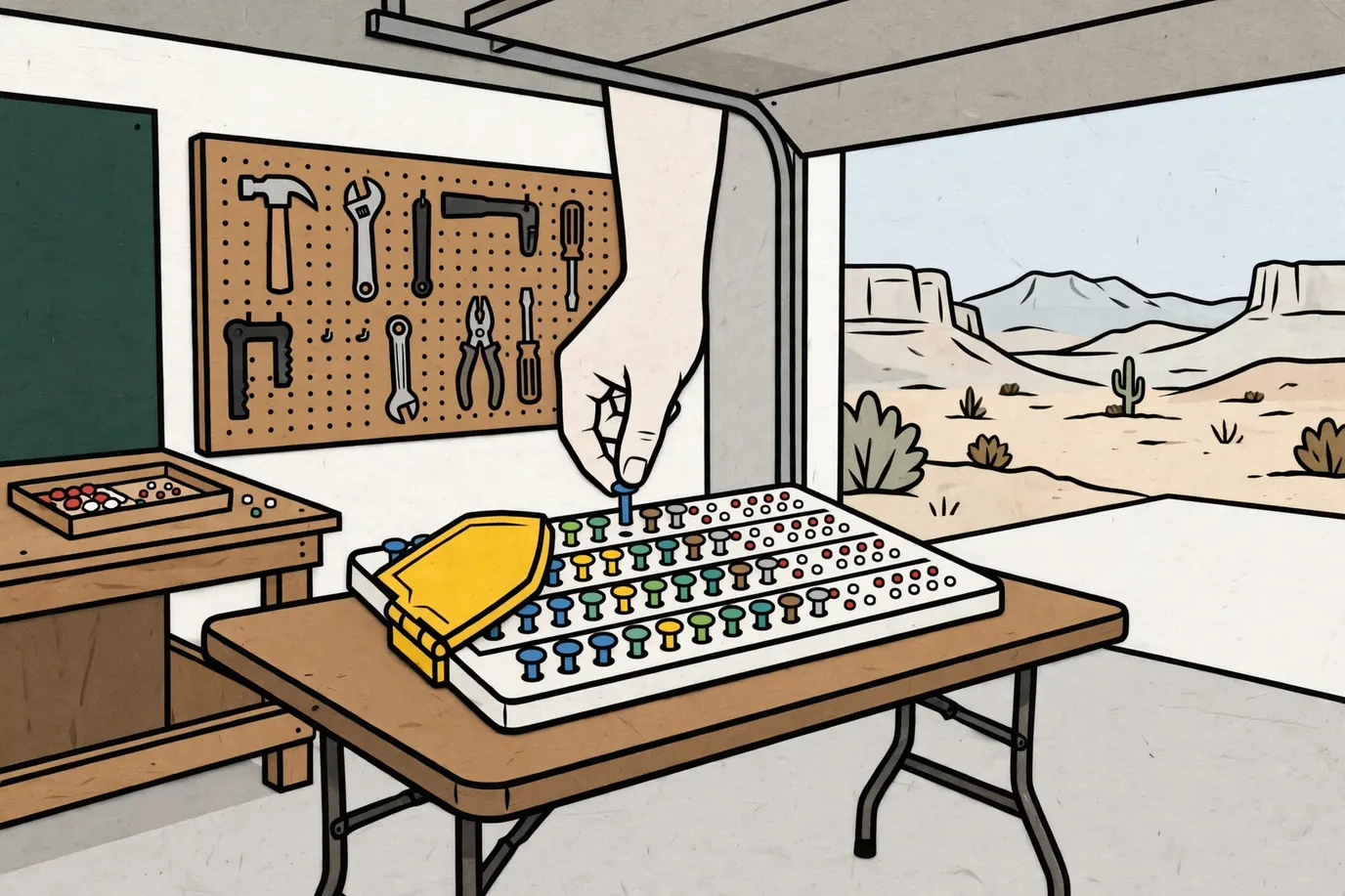
The Mastermind game is a two-player code-breaking game: one player hides a row of colored pegs behind a shield, and the other tries to crack it in 10 guesses or fewer, using the clues they get after every try. Goliath lists the classic Pressman box for ages 8+. Our data shows three Mastermind editions on Amazon US, including a junior version listed for ages 5+. It's the only game where your opponent has to tell you the truth.
We earn a commission if you buy through our links, at no cost to you. Disclosure
Board & family games
| Model | Recommended age | Players (min) | Players (max) | Amazon |
|---|---|---|---|---|
Goliath Mastermind Junior: What's for Lunch?Board & family games More specs
| 5+ yearslisting | 2listing | 2listing | Check price |
Pressman Retro MastermindBoard & family games More specs
| — | — | — | Check price |


Strategy & hobby games
| Model | Recommended age | Players (min) | Players (max) | Amazon |
|---|---|---|---|---|
Pressman MastermindStrategy & hobby games More specs
| 8+ yearslisting | 2listing | 2listing | Check price |

What’s in this listEditions and versions of Mastermind sold on Amazon US, matched by the name on the listing. Players, age and play time come from the box or listing. “—” means neither the maker nor the Amazon listing states it.
What the Mastermind game is
Mastermind is a code-breaking game for two. One player makes a secret code out of colored pegs and hides it behind a shield. The other player tries to work out that code by placing guesses, one row at a time. After every guess, the code maker gives a clue with small red and white pegs. The clues tell you how close you are. You use them to make a better guess, and then a better one, until the code is cracked or you run out of rows.
That's the whole game. There are no dice, no cards and no luck after the code is set. Every guess is a small experiment, and every clue is a result. I teach middle-school math, and I'll say this about Mastermind: it's the only test I know where the answer key tells you how close you got, right after every question.
Here are the box facts for the classic edition, from Goliath's own product page for Mastermind, which links straight to the Pressman Mastermind listing in our data:
- Players: 2
- Ages: 8+
- Play time: 0 to 20 minutes
- Contents: a game console with a built-in storage tray and code peg shield, 108 code pegs in 6 colors, 30 red and white key pegs, and the instructions
- Codes: more than 2,000 possible, by the page's count
- The challenge: crack the code in 10 moves or less
It's not a co-op game. One person makes the code, one person breaks it, and then you trade places.
How Mastermind plays
First, where this comes from. Goliath's site carries the Pressman Mastermind, and I couldn't find a rules sheet from Goliath or Pressman online that I could open and cite. So what follows is based on Goliath's two Mastermind product pages and on the listings. The full instructions are in the box, and they're the ones to follow for the details.
The two roles
- The Codemaker sets a secret code and hides it behind the shield. After each guess, the Codemaker gives clues.
- The Codebreaker places guesses, row by row, and uses the clues to narrow down the answer.
Goliath's kids' page adds that players take turns in each role. So in a full game, both players get to make a code and both get to break one.
Setting the code
The Codemaker picks colors from the code pegs and sets them in the hidden row behind the shield. Goliath's page says two things about codes that surprise a lot of first-time players:
- You can use more than one peg of the same color.
- You can leave a peg hole empty.
Both of those make the code harder to guess. Two reds side by side, or a gap where you expected a peg, can stall a Codebreaker for a few rows. That's how the count gets past 2,000 possible codes.
Guessing and the clues
The Codebreaker places a guess in the first open row. The Codemaker looks at the guess, compares it with the hidden code, and answers with red and white key pegs next to that row. Red and white mean different things. The exact meaning of each color is printed in the box's instructions, so read that part out loud before the first game and make sure both players agree on it. A single wrong clue can ruin the whole round, and nobody notices until the shield comes up.
Then the Codebreaker guesses again, using what the clues said. The goal on Goliath's page is to crack the code in 10 moves or fewer.
How to get better at it
This is my advice, not the maker's:
- Change one thing at a time. If you swap three pegs between guesses and the clue changes, you won't know which swap did it.
- Write down what you've ruled out. A scrap of paper works. Your memory will tell you red was out when it wasn't.
- Don't forget the empty hole. If the clues stop making sense, check whether the code has a gap in it.
- Read the whole board, not just the last row. Every row is evidence. The fourth clue often makes sense only next to the second one.
Lucho's take: "That's diagnostics. Change one part, read the result, then change the next part. The same goes for an engine that won't start."
How a game ends
A round ends when the Codebreaker cracks the code or runs out of rows. Then the shield comes up, and the players switch roles. How many rounds make a game, and how you keep score across rounds, is set by the box's instructions. If your box leaves scoring loose, the house rules below give you a simple way to keep it.
House rules some families use
These are house rules, not printed rules. Try the game as the box describes it first.
- House rule: no repeats, no gaps for beginners. The Codemaker uses each color once and fills every hole. That cuts the number of possible codes a lot, and a new player gets to a win sooner. Add repeats and gaps back once the clues make sense.
- House rule: teams. Two players make the code together, two break it together. The breakers have to talk through every guess out loud, which is a good way to teach the reasoning.
- House rule: best of five. Each player makes a code and breaks one per round, and you count rows used. Fewer rows wins the round.
- House rule: the clue gets checked. Before the Codebreaker places the next guess, the Codemaker checks the last clue one more time. Mistakes happen, and a wrong clue is the one thing that can't be fixed later.
Mastermind editions on Amazon US right now
Our data for this page lists three Mastermind editions on Amazon US as of October 2026, matched by the name on the listing. The table above shows the players, ages and play times each listing states. A dash means the listing doesn't say.
Pressman Mastermind, the classic
The listing says ages 8+ and exactly 2 players. It's the edition Goliath's Mastermind page links to, so the box facts above apply to it: 108 code pegs in 6 colors, 30 key pegs, a console with a storage tray and a shield. If you want the game as it's described on this page, start here.
Mastermind Junior: What's for Lunch?
The listing names it Mastermind Junior: What's for Lunch?, gives ages 5+ and 2 players, and marks it as a junior edition. It's sold under the Goliath name.
Here's a wrinkle. Goliath's own "Mastermind for Kids" page links to this same Amazon listing, but describes a jungle-animal version: 72 jungle animal pegs in 6 colors, 15 red and 15 white scoring pegs, a plastic base with a storage tray, three levels of play, and ages 6+. The listing's name and the maker's page don't describe the same theme, and they don't agree on the starting age. Look at the listing photos to see which box is actually for sale, and go by 6+ to be safe.
Either way, the kids' version keeps the same idea: one player hides a code, the other cracks it from clues. Goliath's page says the three levels let a child move up as they learn.
Retro Mastermind
The listing calls it Retro Mastermind, a retro or vintage reissue sold under the Pressman name. It doesn't list players or ages, and it isn't marked as resale stock. If you remember a particular look of the game from years ago, this is the listing that's selling the look. For anything beyond the name, check the listing itself.
Which Mastermind edition fits your table
My one opinion for this page: the age on the box works in both directions. The classic game is 8+ because the Codebreaker has to hold several clues in their head at once and reason across rows. A 6-year-old can place pegs happily but will often guess at random, which is no fun for either player. That's what the kids' version is for. Going the other way, a junior box with three adults at the table won't hold them long.
Some quick matches, by the listings:
- The classic game for ages 8 and up: Pressman Mastermind
- A younger child, by the listing's age: the junior edition, with the age caveat above
- A gift for someone who remembers the old look: Retro Mastermind, after checking the listing details
Who Mastermind suits
Mastermind fits two people who like a quiet puzzle with a clear answer. It suits:
- A parent and a kid, especially once the kid can be the Codemaker too
- Two adults who like logic puzzles and want something shorter than a full board game
- Anyone who enjoys Guess Who or Battleship and wants a version with more reasoning in it
- A solo puzzler with a patient partner, since the Codemaker's job is mostly to answer clues carefully
Being the Codemaker is a good job for a younger player who's still learning. It teaches them to compare two rows carefully, and it gives them the satisfying moment of lifting the shield.
Who should skip Mastermind
Skip it if your group is three or more and nobody wants to sit out. The game is built for two, and the listings in our data say so. A team version is a house rule.
Skip it too if your table wants talk, laughter and bluffing. Mastermind is a game of careful, quiet thinking, and a round can pass with a few words.
And skip it for now if there's a child under 3 in the house. Code pegs and key pegs are small parts, and there are a lot of them. Check the age label on the listing. Toys with small parts are a choking hazard for children under 3. Count the pegs back into the tray before you close the box.
If you like Mastermind, look at these
Picked by what they share with Mastermind: two players, hidden information and a question-and-answer rhythm.
- Guess Who: ask yes-or-no questions to narrow down a hidden face
- Battleship: call coordinates and read hit-or-miss clues
- Kanoodle: a logic puzzle you can play alone
- Strategy board games: longer games built on planning
- Clue: deduction for a bigger table, with a notepad
Change one peg at a time. Then read the clue twice.
Related
Questions people ask
How do you play Mastermind?
One player is the Codemaker and secretly sets a code with colored pegs behind a shield. The other is the Codebreaker and places guesses one row at a time. After each guess, the Codemaker answers with small red and white key pegs as clues. Goliath's page says the goal is to crack the code in 10 moves or less. Then you switch roles.
How many players can play Mastermind?
Two. Goliath's product page for the classic Mastermind lists 2 players, and both the Pressman Mastermind and the junior edition in our data list exactly 2 on their listings. A bigger group can play as two teams, one making codes and one breaking them, but that's a house rule, not something the maker prints.
What age is Mastermind for?
The classic Pressman Mastermind is 8+ on its listing and on Goliath's product page. The junior edition in our data lists 5+ on Amazon, while the Goliath kids' page that links to that listing says 6+. The Retro Mastermind listing doesn't give an age. Go by the higher number if the two disagree.
How many possible codes are there in Mastermind?
Goliath's product page for the classic game says more than 2,000. That's because a code can repeat colors and can leave holes empty, both of which the page says are allowed. It's why guessing at random rarely works, and why each clue matters so much.
How long does a game of Mastermind take?
Goliath's product pages for both the classic Mastermind and the kids' version list 0 to 20 minutes. One round ends when the code is cracked or the guesses run out, so a full game where each player makes and breaks a code a few times fits easily into an evening.
Sources
- Goliath Games: Mastermind (links to Amazon B00000DMBF) — accessed 2026-10-23
- Goliath Games: Mastermind for Kids (links to Amazon B00004TFZL) — accessed 2026-10-23
- CPSC: Small Parts Ban and Choking Hazard Labeling — accessed 2026-10-23