Building Toys · Type
Magnetic Tiles: How to Pick a Set
Magnetic tiles are flat plastic shapes, mostly squares and triangles, with magnets sealed along the edges so they snap together at any side. Kids build walls, boxes, towers and roads with them. Nearly every set we track that states an age starts at 3+. The real choice is the shape mix and what the set adds: ball runs, car tracks, base plates. (The fridge works as an accessory too. Nobody sells it that way.)
We earn a commission if you buy through our links, at no cost to you. Disclosure


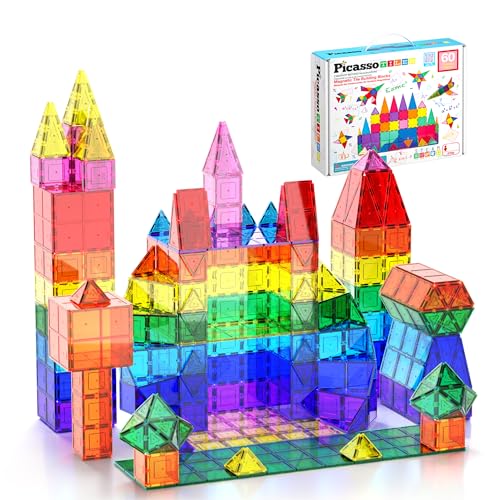


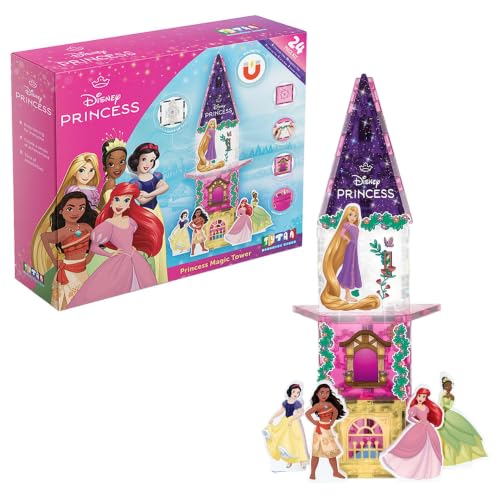


What’s in this listEvery set of magnetic tiles we track on Amazon US, from the biggest stated piece count down. “—” means neither the maker nor the Amazon listing states it.
What magnetic tiles are
Magnetic tiles are flat shapes with magnets in the edges. That's the whole idea, and it's a good one. A square meets a triangle at any side and holds. Fold four squares up from a fifth and you have an open box. Add triangles on top and it's a house.
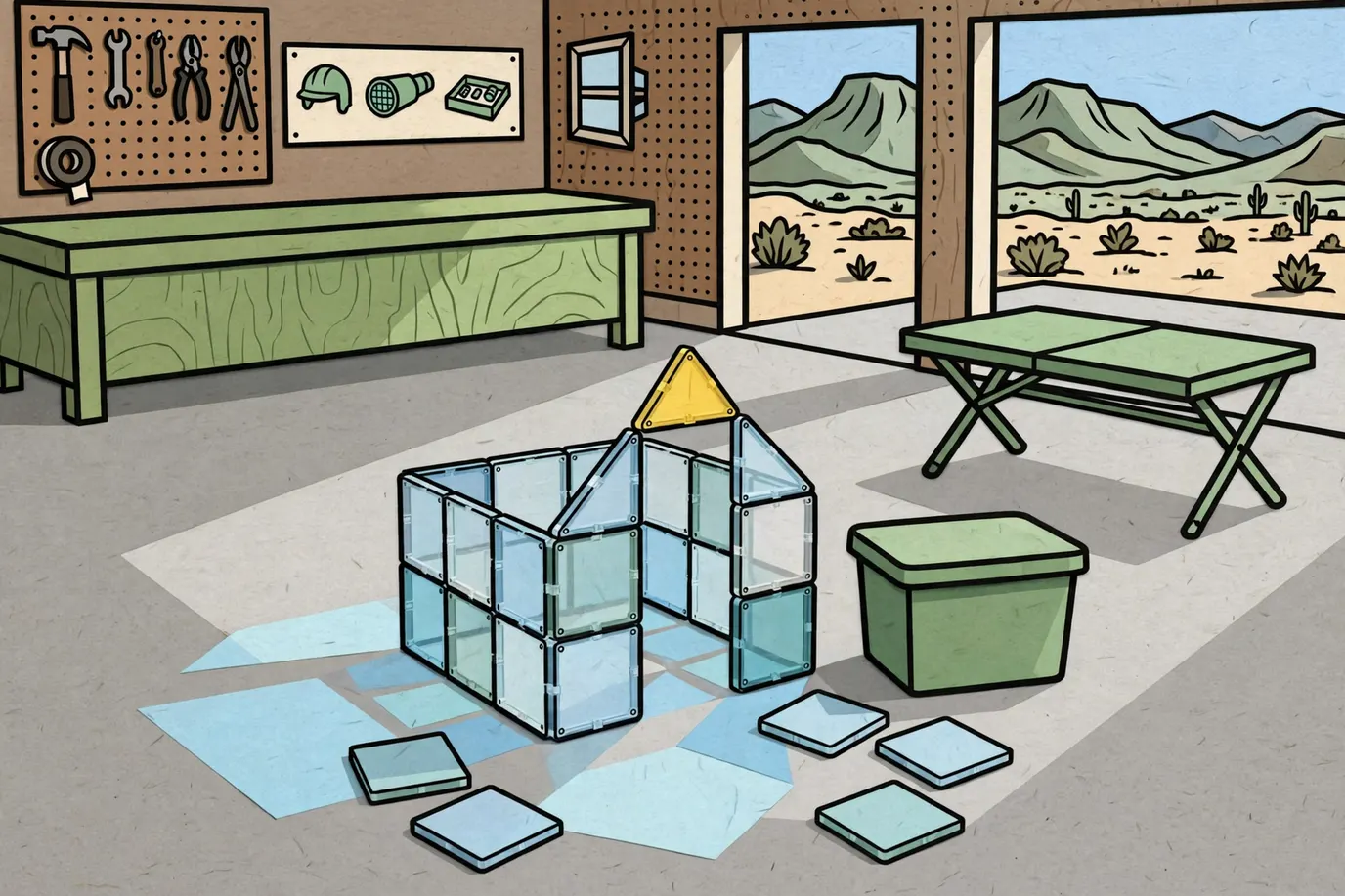
Most tiles are plastic frames, often see-through and colored, so light comes through them. That's why so many listings say "clear" or "translucent". Put a finished build on a sunny windowsill and the floor gets colored shadows for about forty minutes. Then the sun moves on and the show is over until tomorrow.
We track 110 magnetic tile sets on Amazon US as of 2026-10-23. They come from five makers in our data: PicassoTiles, Tytan, CONNETIX, Playmags and Geomag. The table above sorts them from the biggest stated piece count down.
Magnetic tiles aren't bricks. They don't lock. They hold by magnets, they come apart with a gentle pull, and nothing needs to line up with a stud. That makes them easier for small hands and less precise for big plans.
Magnetic tile sets: what to look at
Here are the fields that decide a set, in the order I'd check them.
Recommended age: almost always 3+
In our data, 71 of the 110 sets state an age in the title, bullets or maker text. Seventy of them start at 3+. One starts at 8+. The rest don't state an age, and we leave those blank instead of guessing.
That 3+ isn't a reading level. It's mostly about small parts and magnets, which is the right thing for a label to be about. We never put a set on a page for a child younger than its stated starting age, and you shouldn't either.
The upper end is less useful. Some listings stop at 10 or 14, many say "and up". A tile set doesn't really expire. It just turns into a different kind of build.
Piece count and the shape mix
Many set names carry a count, like the CONNETIX Bright Mega Pack 202 Pieces or the PicassoTiles 100 Piece Magnetic Tiles Clear. We haven't checked those against the makers yet, so the pieces column in the table stays blank for now. A count in a product name is the listing's own claim.
Here's my one opinion on this page: piece count is not value. With tiles, the mix of shapes matters more than the total. Squares build walls and floors. Small triangles make roofs and points. Long rectangles and big squares span gaps that small pieces can't. A set that's mostly one shape builds one kind of thing, however many pieces it has.
So read the "what's in the box" list. The schema has a field for it, "Shapes included", which takes the counts of squares, triangles and windows as the listing states them. Our data doesn't have those breakdowns filled in yet. The listing photos and bullets usually do.
Some sets are built around one shape on purpose. The CONNETIX Pastel Square Pack 40 Pieces and the Rainbow Rectangle Pack 18 Pieces are made to add more of one shape to a collection you already have. They're good second sets and odd first ones.
How the magnets are held in
This is the safety field, and the one I'd read most carefully. The magnets sit inside the tile's edge. What keeps them there is the build of the tile: welded seams, rivets, glue or a sealed frame.
We only list this when the maker says it. As one example, CONNETIX's own FAQ says its standard tiles are ultrasonically welded and secured with metal rivets, and that its PRO tiles are friction-fitted and secured with industrial-grade adhesive instead. Other makers state their own method, or don't. Our data doesn't yet have this field filled for the sets in the table, so check the listing or the maker's page.
Whatever the method, the habit is the same. Look over the tiles now and then. A cracked tile, a split seam or a rattle inside means that tile comes out of the bin.
Magnet warning on the listing
The schema also tracks whether a listing carries a magnet warning. The CPSC's magnets page points to the ASTM F963 toy standard, which has been a mandatory toy standard since 2012. A set that shows a magnet warning on the box is telling you what the risk is. That's a good sign about the listing, not a bad one about the toy. Our data doesn't have this field filled in yet either, so look at the listing's safety section.
Material
Most tiles are plastic. Some listings name the plastic, many don't. If the set is for a young child, look for what the maker says about the material and the finish. If the maker doesn't say, we don't fill it in.
Compatibility with other brands
Will tiles from two makers stick together? Sometimes. They might have different magnet strength, different edge length or different magnet placement. We say a set is compatible only when the listing or maker says so.
As an example, CONNETIX says its tiles are compatible with most leading magnetic tile brands. It adds that the joins with other brands may not feel as strong, because its magnets are stronger than most. That's an honest way to put it, and it's the kind of line to look for before you mix sets from two boxes.
Sam, who is 7, once built a garage with a mixed pile and then found out the toy car didn't fit inside. He renamed it a carport. Nobody in the house has questioned it.
Kinds of magnetic tile sets
The 110 sets split into a few kinds. Most homes start with a basic set and add one of the others later.
Basic and creative packs
These are the plain building sets: squares, triangles and a few other shapes. In our data that includes packs like the CONNETIX Pastel Starter Pack 64 Pieces and Pastel Creative Pack 120 Pieces, and PicassoTiles' clear sets in 60 and 100 pieces. A basic set is the right first buy.
Ball runs and marble runs
Ball-run packs add chutes, ramps and curves so a ball can roll through a tile tower. In our data that includes the CONNETIX Rainbow Ball Run Pack 92 Pieces, the Geomag Magnetic Tiles Marble Run 45 and the PicassoTiles 70 Piece Marble Run Race Track. The CONNETIX Pastel Ball Run Expansion Pack 80 Pieces is sold as an expansion, so read the listing for what it needs alongside it.
Balls and marbles are small parts. A ball-run set follows the same age label rule as everything else, and the ball goes back in the box when the run comes down. If marble runs are the main interest, the marble runs page covers sets built only for that.
Car tracks and vehicle sets
These add wheels, roads and ramps. In our data: the PicassoTiles Magnetic Vehicle Set, the 30 PCS Magnetic Race Track and the 50 Piece Race Car Track with LED Cars, the CONNETIX Rainbow Car Pack and Roads Creative Pack, and the Geomag Gems Vehicles 24. A car set suits a kid who builds in order to play, not to finish.
If a set has lights, check the listing for what powers them. Button batteries can cause serious injury if swallowed. Keep spares locked away and check that battery covers are screwed shut.
Base plates and large tiles
A base plate is a big flat piece that gives a build a floor. The CONNETIX Rainbow Blue & Green Base Plate Pack is one. The PicassoTiles 28 Piece Large Magnetic Tiles Stabilizer Set adds bigger pieces for steadier towers. Both are add-ons. They make sense once a family has a basic set and keeps running out of floor.
Mini and travel sets
Smaller tiles in a smaller box: the Geomag Mini Magnetic Tiles Travel Set 26 Pieces, the CONNETIX Pastel Mini Pack 32 Pieces and the PicassoTiles Mini Size Diamond Series. Small tiles mean smaller builds and smaller pieces to keep track of. Read the age label on these as carefully as on any set.
Gem and themed sets
Some sets use faceted, gem-like tiles or a theme. Geomag's Gems line is one example in our data, with sets like the Gems 100 and the Gems Rocket 32. CONNETIX has themed packs such as the Glitter Unicorn Pack and a Christmas Tree Ball Run special edition. A theme changes the look. The magnets work the same.
Who should skip magnetic tiles
Skip them for a household where a child under 3 can reach the bin and you can't keep it up high. The age label is there for a reason.
Skip a big set for a kid who likes to follow steps to a finished model. Tiles rarely come with a booklet that ends in one build. A brick building set fits that kid better.
And skip the expansion packs until a basic set has been out on the floor for a while. You'll know which shapes keep running out. That's the add-on to buy.
Magnet and small-parts safety
Check the age label on the listing. Toys with small parts are a choking hazard for children under 3.
Swallowed magnets can cause serious internal injuries. The CPSC warns that two or more magnets swallowed can pull toward each other inside the body and may need surgery. Signs can include stomach pain, nausea, vomiting and diarrhea. If you think a child swallowed a magnet, get medical care right away.
Keep loose or broken magnetic pieces away from young children. Check tiles for cracks and split seams, and throw out any tile that has one. Store sets in a bin with a lid.
Where to go next
For a young builder, the gifts for 3-year-olds page checks every pick against the age label, and gifts for kids covers older ages too. The building toys section has every other kind of building set.
Start with squares and triangles. The rest of the shapes will tell you when they're needed.
Brands in this list
Related
Questions people ask
What are magnetic tiles?
Magnetic tiles are flat building pieces, usually plastic squares, triangles and other shapes, with small magnets fixed inside the edges. Any edge can stick to any other edge, so the tiles hinge, fold and stack into walls, boxes and towers. Many sets use clear or colored see-through plastic. Some add wheels, ball-run pieces or base plates.
Are magnetic tiles safe?
Follow the age on the listing: in our data, 70 of the 71 sets that state an age start at 3+. The risk is a loose magnet. The CPSC warns that two or more swallowed magnets can attract inside the body and may need surgery. Check tiles for cracks, and take a broken tile away from children right away.
Are magnetic tiles from different brands compatible?
Sometimes, and we go by what each maker says. CONNETIX's own FAQ says its tiles work with most leading magnetic tile brands, and that the joins may feel weaker because its magnets are stronger than most. A set that doesn't state compatibility may still connect, but we can't say so. Shapes and sizes can differ too.
How many magnetic tiles does a kid need?
There's no set number. A child can build a small box or wall from a few dozen tiles, and bigger builds need more. Set names in our data run from 16 pieces to 202. A smaller set with a good mix of squares and triangles can build more shapes than a bigger one that is mostly one shape.
What is a magnetic tiles car track?
It's a set that adds road or ramp pieces, and often wheeled bases, to ordinary tiles so kids can build roads and run cars down them. In our data that includes the PicassoTiles 50 Piece Race Car Track with LED Cars, the PicassoTiles 30 PCS Magnetic Race Track and the CONNETIX Roads Creative Pack. Read the listing to see what powers any lights.
Sources
- U.S. Consumer Product Safety Commission: Magnets — accessed 2026-10-23
- U.S. Consumer Product Safety Commission: Small Parts for Toys and Children's Products — accessed 2026-10-23
- CONNETIX: FAQs (safety and quality, compatibility) — accessed 2026-10-23