Section
Gas Powered Ride Ons for Kids and Teens
Gas powered ride ons for kids come in three main shapes: go karts, mini bikes, and pit and dirt bikes. Most come in electric versions too. The right one is the one whose maker's age, height and weight limits fit your rider right now, with the helmet and gear bought at the same time. I work as a service tech at a powersports shop, and the first thing I read on any machine is the limits. The paint color can wait.
Gear in this section
Best-of lists
Best Cheap Go Kart Picks for Kids
Go karts (gas and electric) in our lower price tiers at our last check, each with a stated rider age. Where the listing states a rider weight limit it's in the table, heaviest first.
Best 50cc Dirt Bikes
Gas dirt and pit bikes with a stated 49–50 cc engine, the smallest gas class, heaviest stated rider limit first.
Brands in this section
What the ride-ons section covers
This section covers motorized ride-ons for kids and teens: go karts, mini bikes, and pit and dirt bikes, in gas and electric versions. These aren't toys in the push-it-around-the-yard sense. They have motors, brakes and limits printed by the maker, and every page here is built around those limits.
Every number on these pages comes from the Amazon US listing or the maker. Nobody on Piñon Loop has ridden the machines on these pages. If a listing leaves out the age, the rider weight limit or the top speed, the table shows a dash and the text says so. That happens a lot. The gaps are part of what you need to know.
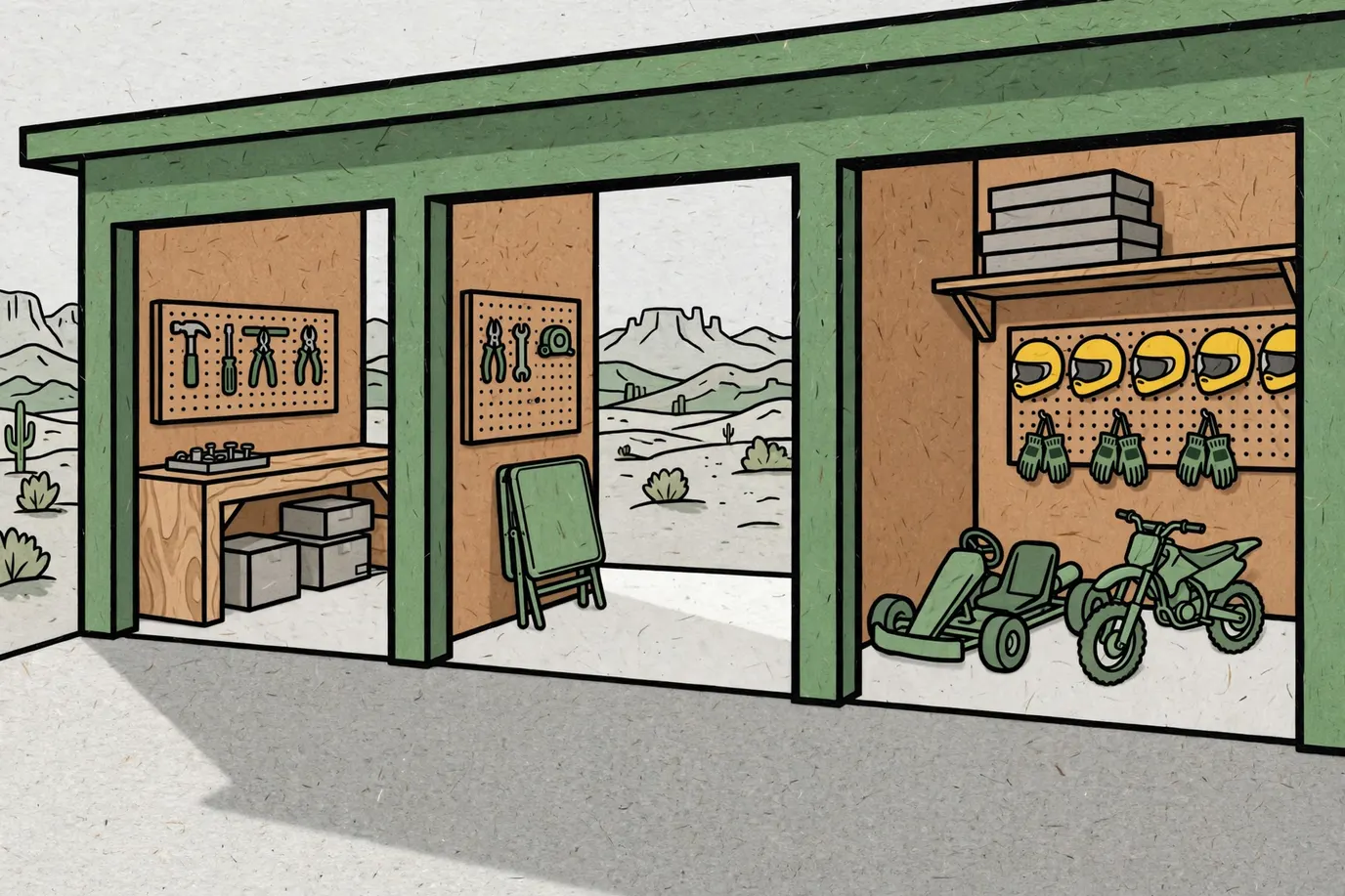
I write this section from Bay Three, the engine corner of our shared garage. The helmet wall is the first thing you see when the door goes up.
A tour of go karts, mini bikes and dirt bikes
Go karts
A go kart is a low four-wheeled ride-on with a seat, a steering wheel, and pedals or hand controls. Gas karts run small engines measured in cc, which is engine size in cubic centimeters. Electric karts run on a battery and a motor measured in watts.
The main go karts page has every gas and electric kart we track, highest listed rider weight limit first. From there:
- Electric go karts: battery karts only
- Drift karts: electric karts listed as drift karts, built so the back end slides in a turn
- Off-road go karts: karts with listed suspension, biggest listed engine first
- Cheap go karts: karts in our lower price tiers, each with a listed rider age
Some gas karts list two seats, seat belts or harnesses, and a reverse gear. Read the restraint line on any kart. It's one of the first things I look for.
Mini bikes
A mini bike is a small, simple motorbike with a low frame, small wheels and usually a small gas engine. The mini bikes page covers them, highest listed rider weight limit first. Several listings name an automatic clutch or a torque converter, which means no clutch lever; the bike engages as the engine speeds up.
Here's the catch. None of the 14 mini bikes in our data list a rider age. Only three list a rider weight limit. So with mini bikes, the owner's manual isn't extra reading. It's the main reading.
Pit bikes and kids' dirt bikes
A pit bike is a small off-road motorcycle. A dirt bike is the wider family. Both have knobby tires and suspension for dirt, and the bigger ones have gears and a clutch.
- Pit bikes: gas pit and dirt bikes, biggest listed engine first
- Kids' dirt bikes: gas and electric, highest listed rider weight limit first
- 50cc dirt bikes: the smallest gas class, with a listed 49 to 50 cc engine
Pit bike listings in our data give engine size, wheel size and often seat height. None of the 54 give a rider age. Kids' electric dirt bikes are the opposite story: some list ages as young as 3 to 7, and some start at 16+.
Makers in this section with brand pages include Trailmaster, Razor, MotoTec, X-PRO and Hiboy.
My tía asked if a go kart counts as a car. I said no. She asked if it needs a parking spot. I said yes, in Bay Three. She said that sounds like a car.
Fit the rider to the machine by the maker's limits
Every machine in this section has limits the maker sets: age, height, rider weight. Those limits are the fit. Not the rider's confidence, not the photo, not the birthday coming up next month.
Here's how I'd read a listing:
- Age: the listed starting age is a floor. Never buy for a rider younger than it.
- Rider weight limit: the rider plus gear has to fit under it.
- Height and seat height: if the listing gives one, check it against the rider.
- Missing values: if any of the three is missing, get the owner's manual before you buy.
In our data, fewer than one in six ride-on listings state a rider weight limit. That doesn't mean the others have none. It means the listing didn't print it. The manual will.
For bikes, the Motorcycle Safety Foundation gives parents a physical check. The rider should be big enough to hold the bike up, get on, and sit with both feet touching the ground. They should be able to reach and work every control: turn the bars all the way both ways, work the foot brake and shifter, and use the throttle and brake levers while holding the grips. If not, the MSF says the rider isn't physically ready for that bike.
It also says riding readiness shows up in other play. A kid who rides a bicycle well, keeps their balance and isn't careless on a skateboard is closer to ready than one who isn't.
Marisol's take, since she surveys land for a living: "The manual is the benchmark. Measure the rider against it, not against the box."
Gas powered ride ons for kids vs electric
Both kinds are on every page in this section. They ask different things of the family that owns them.
Gas ride-ons run on fuel and make exhaust. They need fuel stored safely, an engine that only ever runs outdoors, and more upkeep. Bigger gas bikes add a clutch and gears. Some gas listings in our data carry a note that the model is not CA CARB-compliant. CARB is California's Air Resources Board. If you live in California, read that line before anything else.
Electric ride-ons run on a battery. No fuel, no exhaust, less noise for the neighbors. They need charging, and run time is listed as "up to", which is the best case. Several electric karts and bikes in our data list speed settings, often a low and a high.
Straight up, this is my one opinion on this page. For most families, an electric ride-on is the easier first one. The reasons are on the listings: no fuel to store, no exhaust, and many list a low speed setting for the first weeks. A gas machine isn't wrong. It just comes with more jobs, and every one of them is a grown-up's job.
Fuel and exhaust: Refuel outdoors with the engine off and cool, and store fuel in an approved container away from the house. Never run an engine in a garage or any closed space.
The CPSC's fuel safety page says to use approved, child-resistant containers, keep caps closed, store them in a cool, ventilated place out of children's reach, and not indoors or near heat or flame. Its carbon monoxide page warns never to run a portable generator inside a home or garage, even with the doors and windows open. A ride-on engine makes exhaust too. Same rule.
Batteries and charging: Charge with the charger that came with it, on a hard surface, and follow the maker's charging instructions.
Safety, every ride
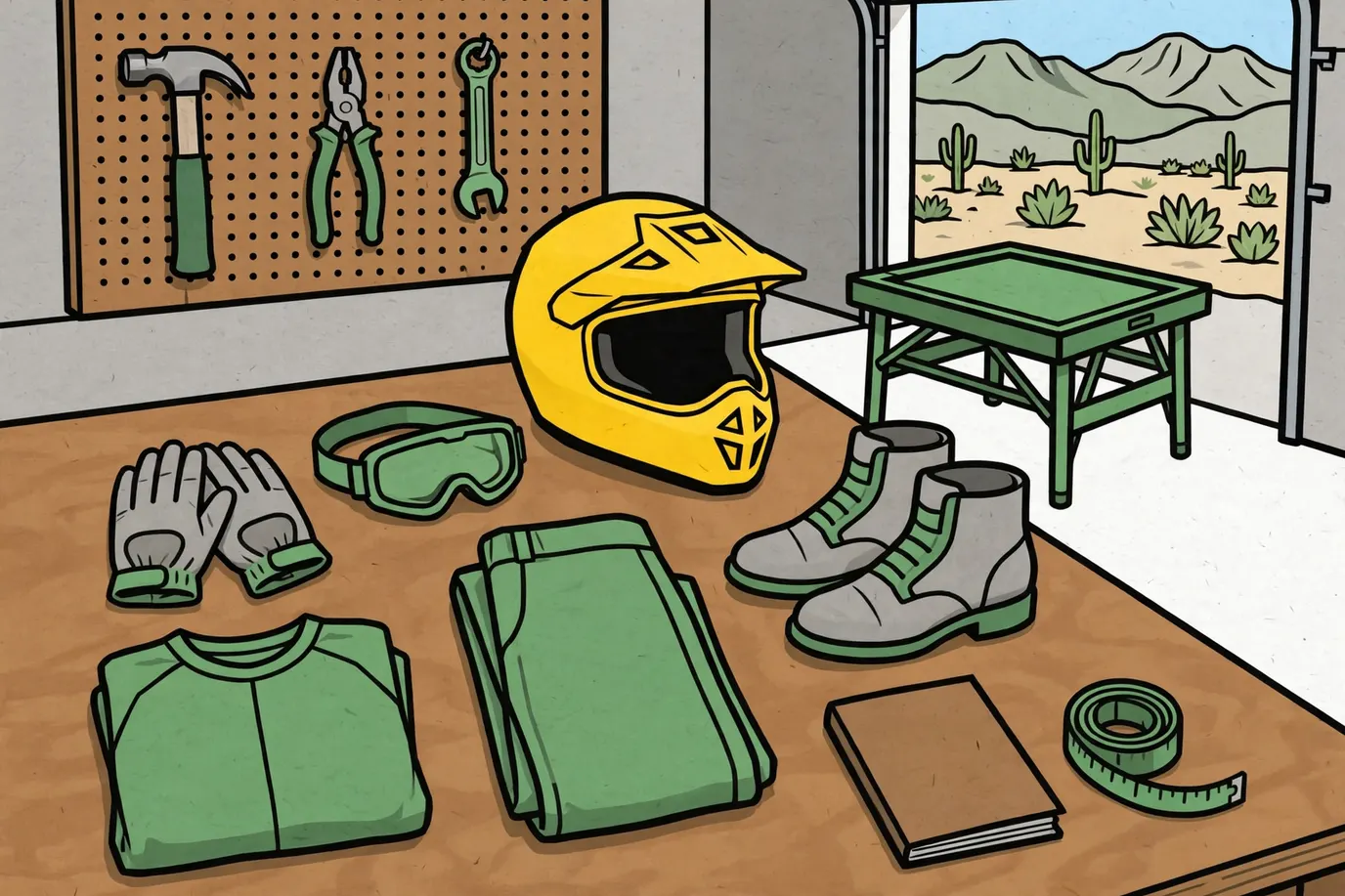
Ride-ons: Riders need a properly fitted helmet made for motorized riding, plus gloves, boots, eye protection and long sleeves and pants. Follow the maker's age, height and weight limits, and keep an adult watching every ride.
Helmet and gear, every ride
The CPSC's helmet chart lists a motocross or motorcycle helmet for dirt and mini bike riding, and a karting or motorcycle helmet for go-karting. A bicycle helmet is the wrong helmet for a motor. The CPSC also says to avoid novelty and toy helmets, which aren't made to any standard, and to replace a helmet after a hard impact even when no damage shows.
The Motorcycle Safety Foundation's list for off-highway riding:
- Helmet: DOT-compliant motorcycle helmet, snug and fastened
- Eye protection: goggles or a face shield
- Gloves
- Boots: over the ankle
- Long pants and long sleeves: a shirt or jacket
The MSF says anything less isn't adequate, in any weather. The AAP's HealthyChildren.org gives the same list for ATV riding and asks parents to wear their own helmets too.
An adult watching, every ride
The MSF tells parents to closely supervise every ride, even after the rider has learned the skills, because young riders tire and miss things. It says starting and refueling should be done by adults only. It also says to read the owner's manual before teaching anything, and to inspect the machine before each use.
A CPSC study of go-kart injuries to children found the main hazards were collisions, loss of stability and falls. Most of the injured were the operators, and most were 8 or older. Close to home is not the same as safe.
Ages and weights only as listed
Follow the maker's age, height and weight limits for the exact model. If a limit isn't on the listing, get it from the manual. Don't round up a birthday. Don't guess a weight.
Where to ride
The MSF's learning area is level, open ground, free of rocks, stumps and holes, with room to maneuver and no other riders close. It says no concrete or asphalt for learning. Keep riders away from streets, parked cars and other kids.
Rules for riding mini bikes, pit bikes and go karts vary by state and town. Check yours, and ride only where it's allowed. The MSF tells parents to find out their state and local requirements, and the AAP's ATV rules say to stay off public roads, paved or not.
Where it lives when it's parked
A ride-on needs a dry, level spot that isn't the hallway. Plan that before the box shows up. Karts are wide. Dirt bikes need a stand. Fuel, if you have any, goes in its approved container away from the house, not on the shelf next to the bike.
I keep every box I own. A ride-on box is the one exception. It doesn't fold small, and the casita closet already has a waiting list. (The figures got there first. They always do.)
Who should wait
Wait if the rider is younger than the listed starting age, birthday next month or not. Wait if they can't yet ride a bicycle with confidence. Wait if you don't have a safe, legal place to ride, or an adult who can watch every ride. And wait if the helmet and gear aren't in the budget yet. Come back when they are. That's a fine answer for this year.
If you're ready, start with the type page that fits your rider and the space you have, then read the limits on every listing.
Read the limits first. The paint color will still be there.
Related
Questions people ask
What age can a kid ride a gas go kart?
Only the age the maker lists for that model. In our data, listed starting ages on gas and electric go karts run from 4+ up to 16+, and many listings give no age at all. A CPSC report notes that the fun-kart safety standard recommends a minimum age of 8 unless the maker says otherwise. If a listing has no age, get the owner's manual before you buy.
Are there electric ride-ons for teens?
Yes. Some electric go karts and electric dirt bikes in our data list 13+, 14+ or 16+, and some list rider weight limits that fit teens and adults. Read the age, weight and height limits on the exact model. A higher starting age usually means a bigger machine, so the gear and supervision rules matter just as much at 15 as at 8.
What helmet does a kid need for a dirt bike or go kart?
The CPSC helmet chart lists a motocross or motorcycle helmet for dirt and mini bike riding, and a karting or motorcycle helmet for go-karting. The Motorcycle Safety Foundation says never to let anyone ride an off-highway motorcycle without a DOT-compliant motorcycle helmet, snug and fastened. Skip novelty or toy helmets. The CPSC says they aren't made to any standard.
Can kids ride pit bikes or go karts on the street?
Treat the answer as no unless your state and town say otherwise. The Motorcycle Safety Foundation defines off-highway vehicles as ones restricted by law from public roads, and the AAP's ATV safety rules tell riders to stay off public roads. Rules vary by state and town, so check yours, and ride only where it's allowed.
What does youth powersports mean?
It's the industry's name for motorized vehicles sized for kids and teens: go karts, mini bikes, pit and dirt bikes, and youth ATVs. On this site, the ride-ons section covers karts and bikes. Every page sorts by what the maker lists, such as age, rider weight limit or engine size, so you can match a machine to a rider instead of to a photo.
Sources
- U.S. Consumer Product Safety Commission: Go-Kart Related Injuries & Deaths to Children (Hazard Analysis, September 2000) — accessed 2026-10-23
- U.S. Consumer Product Safety Commission: Which Helmet for Which Activity? — accessed 2026-10-23
- U.S. Consumer Product Safety Commission: Fuel Container, Gasoline and Other Liquid Fuel Safety — accessed 2026-10-23
- U.S. Consumer Product Safety Commission: Carbon Monoxide Information Center — accessed 2026-10-23
- Motorcycle Safety Foundation: Parents, Youngsters & Off-Highway Motorcycles — accessed 2026-10-23
- HealthyChildren.org (American Academy of Pediatrics): ATV Safety Rules — accessed 2026-10-23
- HealthyChildren.org (American Academy of Pediatrics): Bike Riding & Beyond: 5 Times Your Kids Should Wear Helmets — accessed 2026-10-23