Brand · Board & Card Games
Blue Orange Games
Blue Orange Games publishes a wide spread of tabletop games: preschool games from 3+, two-player wooden games, family strategy games, party games and small-box card and dice games. The Blue Orange Games listings in our data run from a 3+ stacking game to 10+ strategy boxes, and from strictly 2 players up to 10. Start with who's sitting down, then read the age. (I count chairs before I count cards. It's a math-teacher thing.)
We earn a commission if you buy through our links, at no cost to you. Disclosure
Blue Orange Games on Amazon US
64 models- Strategy & hobby games
Blue Orange Games Gobblet!
- Recommended age
- 7+ years
- Players (min)
- 2
- Players (max)
- 2
- Strategy & hobby games
Blue Orange Games Battle Sheep
- Recommended age
- 7+ years
- Players (min)
- 2
- Players (max)
- 4
- Strategy & hobby games
Blue Orange Games Scarabya
- Players (min)
- 2
- Players (max)
- 4
- Play time (min)
- 20 min
- Strategy & hobby games
Blue Orange Games Blue Lagoon
- Players (min)
- 2
- Players (max)
- 4
- Play time (min)
- 30 min
- Strategy & hobby games
Blue Orange Games Kingdomino: Age of Giants
- Recommended age
- 8+ years
- Players (min)
- 2
- Players (max)
- 5
- Strategy & hobby games
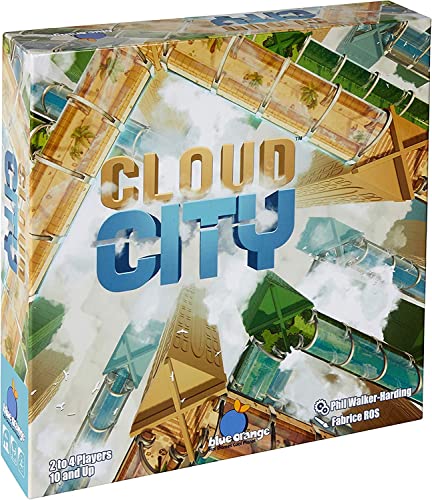
Blue Orange Games Cloud City
- Recommended age
- 10+ years
- Players (min)
- 2
- Players (max)
- 4
- Strategy & hobby games
Blue Orange Games Photosynthesis: Under the Moonlight
- Recommended age
- 10+ years
- Players (min)
- 2
- Players (max)
- 4
- Strategy & hobby games
Blue Orange Games BlockNess
- Recommended age
- 8+ years
- Players (min)
- 2
- Players (max)
- 4
- Strategy & hobby games
Blue Orange Games Neoville
- Recommended age
- 10+ years
- Players (min)
- 2
- Players (max)
- 4
- Strategy & hobby games
Blue Orange Games Downtown Farmers' Market
- Recommended age
- 7+ years
- Players (min)
- 2
- Players (max)
- 4
- Strategy & hobby games
Blue Orange Games Wonder Woods
- Recommended age
- 8+ years
- Players (min)
- 2
- Players (max)
- 5
- Strategy & hobby games
Blue Orange Games Mech A Dream
- Recommended age
- 10+ years
- Players (min)
- 2
- Players (max)
- 4
- Strategy & hobby games
Blue Orange Games Linkx
- Recommended age
- 6+ years
- Players (min)
- 2
- Players (max)
- 2
- Strategy & hobby games
Blue Orange Games Gyges
- Players (min)
- 2
- Players (max)
- 2
- Strategy & hobby games
Blue Orange Games Kingdomino: The Lost Treasures
- Recommended age
- 8+ years
- Players (min)
- 2
- Players (max)
- 4
- Party, trivia, drinking & social deduction games
Blue Orange Games Detective Club
- Players (min)
- 4
- Players (max)
- 8
- Play time (min)
- 30 min
- Party, trivia, drinking & social deduction games
Blue Orange Games Cross Clues
- Recommended age
- 7+ years
- Players (min)
- 2
- Players (max)
- 6
- Party, trivia, drinking & social deduction games
Blue Orange Games Starlink
- Recommended age
- 8+ years
- Players (min)
- 3
- Players (max)
- 6
- Party, trivia, drinking & social deduction games
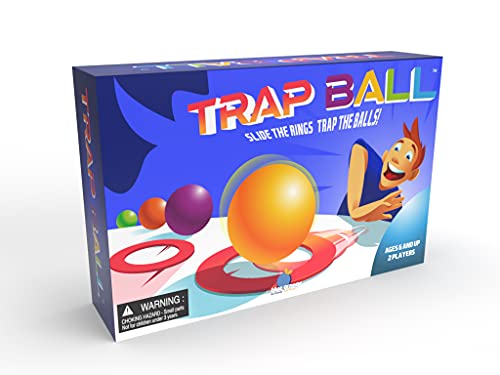
Blue Orange Games Trapball
- Recommended age
- 6+ years
- Players (min)
- 2
- Players (max)
- 2
- Party, trivia, drinking & social deduction games
Blue Orange Games Pear Shaped
- Recommended age
- 7+ years
- Party, trivia, drinking & social deduction games
Blue Orange Games Burger ASAP!
- Recommended age
- 7+ years
- Players (min)
- 2
- Players (max)
- 5
- Party, trivia, drinking & social deduction games
Blue Orange Games Bag of Chips
- Recommended age
- 8+ years
- Players (min)
- 2
- Players (max)
- 5
- Party, trivia, drinking & social deduction games
Blue Orange Games Disc Cover
- Recommended age
- 7+ years
- Players (min)
- 3
- Players (max)
- 8
- Party, trivia, drinking & social deduction games
Blue Orange Games Do You Know Your Peeps?
- Players (min)
- 3
- Players (max)
- 10
- Party, trivia, drinking & social deduction games
Blue Orange Games Beat The 8 Ball
- Recommended age
- 6+ years
- Players (min)
- 2
- Players (max)
- 4
- Party, trivia, drinking & social deduction games
Blue Orange Games Night Knight
- Recommended age
- 7+ years
- Players (min)
- 3
- Players (max)
- 6
- Party, trivia, drinking & social deduction games
Blue Orange Games Shadow House Masquerade
- Recommended age
- 8+ years
- Party, trivia, drinking & social deduction games
Blue Orange Games Patata!
- Recommended age
- 8+ years
- Party, trivia, drinking & social deduction games
Blue Orange Games Sounds Like You
- Recommended age
- 14+ years
- Players (min)
- 3
- Players (max)
- 10
- Party, trivia, drinking & social deduction games
Blue Orange Games 2 Pineapples
- Recommended age
- 8+ years
- Players (min)
- 2
- Players (max)
- 6
- Board & family games
Blue Orange Games Double Shutter Shut The Box Dice Game, Fun Math and Strategy Family Game by Blue Orange Games- 1 to 4 Players for Ages 8+
- Recommended age
- 8+ years
- Board & family games
Blue Orange Games Fastrack
- Recommended age
- 5+ years
- Players (min)
- 2
- Players (max)
- 2
- Board & family games
Blue Orange Games Planet
- Recommended age
- 8+ years
- Players (min)
- 2
- Players (max)
- 4
- Board & family games
Blue Orange Games Beagle Or Bagel
- Recommended age
- 7+ years
- Players (min)
- 2
- Players (max)
- 6
- Board & family games
Blue Orange Games Slam Cup
- Recommended age
- 6+ years
- Players (min)
- 2
- Players (max)
- 4
- Board & family games
Blue Orange Games Cupcake Academy
- Recommended age
- 8+ years
- Players (min)
- 2
- Players (max)
- 4
- Board & family games
Blue Orange Games Snip Snap
- Recommended age
- 7+ years
- Players (min)
- 2
- Players (max)
- 6
- Board & family games
Blue Orange Games Cake Race
- Recommended age
- 6+ years
- Players (min)
- 2
- Board & family games
Blue Orange Games Next Station Tokyo
- Recommended age
- 8+ years
- Players (min)
- 1
- Players (max)
- 4
- Board & family games
Blue Orange Games Link City
- Recommended age
- 8+ years
- Players (min)
- 2
- Players (max)
- 6
- Board & family games
Blue Orange Games Tumball
- Recommended age
- 5+ years
- Players (min)
- 2
- Players (max)
- 4
- Board & family games
Blue Orange Games Hamster Hammock
- Recommended age
- 5+ years
- Players (min)
- 2
- Players (max)
- 4
- Board & family games
Blue Orange Games Swoobee
- Recommended age
- 6+ years
- Players (min)
- 2
- Players (max)
- 8
- Kids & preschool games
Blue Orange Games Zimbbos
- Recommended age
- 3+ years
- Players (min)
- 1
- Players (max)
- 4
- Kids & preschool games
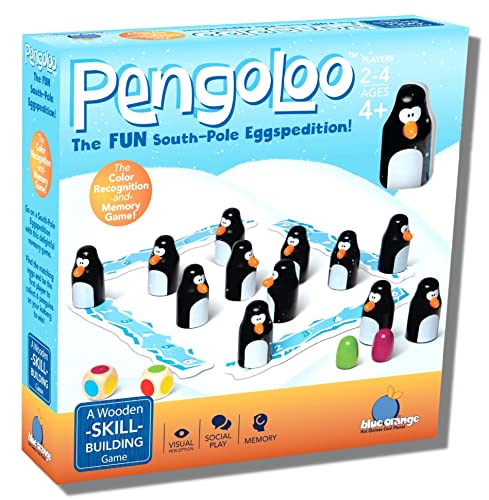
Blue Orange Games Pengoloo
- Recommended age
- 4+ years
- Kids & preschool games
Blue Orange Games Where's Squeaky
- Recommended age
- 4+ years
- Players (min)
- 2
- Players (max)
- 10
- Kids & preschool games
Blue Orange Games Tongues Out!
- Recommended age
- 4+ years
- Players (min)
- 2
- Players (max)
- 4
- Kids & preschool games
Blue Orange Games Freeze Dance with Chilly
- Recommended age
- 4+ years
- Players (min)
- 1
- Players (max)
- 4
- Kids & preschool games
Blue Orange Games Hoot or Toot
- Recommended age
- 4+ years
- Players (min)
- 2
- Players (max)
- 4
- Kids & preschool games
Blue Orange Games Pancake Monster
- Recommended age
- 3+ years
- Players (min)
- 2
- Players (max)
- 4
- Kids & preschool games
Blue Orange Games BoomBoom The Balancing Panda
- Recommended age
- 3+ years
- Players (min)
- 1
- Players (max)
- 4
- Kids & preschool games
Blue Orange Games Ta-Da Bing!
- Recommended age
- 4+ years
- Players (min)
- 3
- Players (max)
- 5
- Kids & preschool games
Blue Orange Games Color Scramble with Cora
- Recommended age
- 3+ years
- Players (min)
- 1
- Players (max)
- 4
- Kids & preschool games
Blue Orange Games Mom'N Pups
- Recommended age
- 3–5 years
- Players (min)
- 2
- Players (max)
- 4
- Card games
Blue Orange Games WuzzIts
- Players (min)
- 2
- Players (max)
- 4
- Card games
Blue Orange Games Who did it?
- Recommended age
- 6+ years
- Players (min)
- 3
- Players (max)
- 6
- Card games
Blue Orange Games What's The Point? The Cactus Card Game
Check price - Card games
Blue Orange Games Picnic Twist
- Recommended age
- 8+ years
- Players (min)
- 1
- Players (max)
- 9
- Card games
Blue Orange Games Scatter Brain
- Recommended age
- 7+ years
- Players (min)
- 2
- Players (max)
- 8
- Card games
Blue Orange Games 2WIN
- Recommended age
- 7+ years
- Players (min)
- 2
- Players (max)
- 6
- Card games
Blue Orange Games Fifty Fruity
- Recommended age
- 8+ years
- Players (min)
- 2
- Players (max)
- 6
- Card games
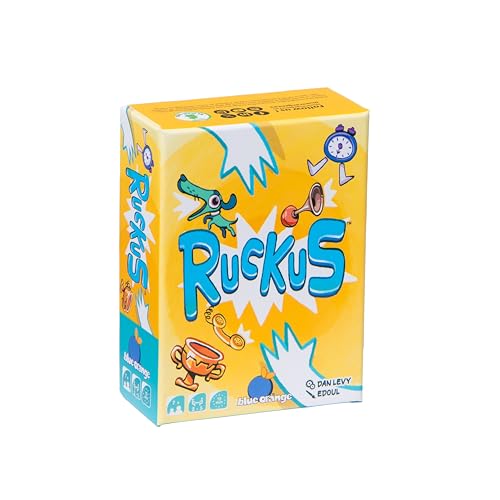
Blue Orange Games Ruckus
- Recommended age
- 7+ years
- Players (min)
- 2
- Players (max)
- 5
- Card games
Blue Orange Games Belly Flop Hippo
- Recommended age
- 6+ years
- Players (min)
- 2
- Players (max)
- 4
- Card games
Blue Orange Games a_way
- Recommended age
- 10+ years
- Players (min)
- 2
- Players (max)
- 4










What Blue Orange Games makes
Blue Orange Games makes tabletop games, and in our data that covers five kinds: preschool games, family games, strategy games, card games and party games. There are no building sets or puzzles among the listings we work from here.
What stands out is the spread. One brand covers a 3+ stacking game, wooden two-player games, tile-laying family games, a 4–8 player social deduction game and a box with 36 dice in a travel bag. That makes it hard to say "a Blue Orange game is like this." It's easier to sort by who's playing.
So this page sorts the lineup into six groups:
- Preschool games (3+ and 4+)
- Two-player wooden and dexterity games
- Family strategy and tile games
- Party and word games
- Small-box card and dice games
- Expansions that need a base game
The grid above shows every listing with its age, players and play time where the listing states them.
Blue Orange Games by line
Preschool games: 3+ and 4+
Six listings in our data are preschool games:
- Zimbbos, 3+, 1–4 players, a dexterity game for fine motor practice
- Pengoloo, 4+, a memory game with no reading required
- Tongues Out, 4+, 2–4 players, matching and memory, no reading required
- Where's Squeaky, 4+, 2–10 players, electronic, no reading required
- Freeze Dance with Chilly, 4+, 1–4 players, electronic, no reading required
- Hoot or Toot, 4+, 2–4 players, electronic memory game
The common thread: no reading. A 4-year-old can play every one of these without a grown-up reading the cards. That's the single most useful fact for a first game, and the listings state it.
Where's Squeaky lists up to 10 players. That's rare for a preschool game. It suits a birthday party or a family with lots of cousins. Zimbbos starts at 1 player, so a kid can play it alone, which is useful on a rainy afternoon when nobody else is free.
Who should skip these: a family whose youngest is already 7 or 8. These are built for the start of the age range, and older kids outgrow them.
Two-player games: Gobblet, Fastrack and Trapball
Three listings are strictly 2-player:
- Gobblet, 7+, a strategy game
- Fastrack, 5+, a wooden dexterity game
- Trapball, 6+, a physical dexterity game
Gobblet is a thinking game for two. Fastrack and Trapball are hand-speed games for two. They suit very different moods, but they share a fixed seat count. If you live in a house of two, or you have one kid who always wants to play with you, a strict 2-player box gets used. In a house of five it gathers dust.
Lucho's take: "A two-player game is a wrench that fits one bolt. When it's the right bolt, nothing works better."
Family strategy and tile games
This is the largest group. These games ask players to plan a few moves ahead, usually by placing tiles, pieces or tokens on a board.
Start with the 7+ and 8+ games, the ones a younger player can join:
- Battle Sheep, 7+, 2–4 players
- Downtown Farmers' Market, 7+, 2–4 players, tile placement and drafting
- Planet, 8+, 2–4 players
- BlockNess, 8+, 2–4 players, a board and 4 monsters
- Wonder Woods, 8+, 2–5 players, 56 wooden mushroom tokens
- Next Station Tokyo, 8+, 1–4 players, with a solo mode
Then the 10+ games: Cloud City, Neoville and Mech A Dream, each listed for 2–4 players. These ask more of everyone at the table, so they suit a family whose youngest is at least 10, or a group of adults.
Two more strategy boxes don't state an age in our data. Scarabya lists 2–4 players and about 20 minutes, with four sets of 12 tiles, four boards and 72 scarab tokens. Blue Lagoon lists 2–4 players and 30–45 minutes, with area control and set collection, wooden villages and 120 settler tokens. Read the box for the age before you seat a younger player.
Drafting means players take turns choosing from a shared pool, so what you take is what the next person can't. Tile placement means you build a map or a pattern as you play. Area control means you score for holding parts of the board.
If your family already plays one or two modern board games on the Sunday table, this group is the main reason to look at the brand. The 7+ and 8+ games bring a younger player in. The 10+ games ask more of everyone.
Blue Lagoon is the one with a play time in our data that goes past half an hour. Scarabya lists about 20 minutes. For the rest, the listings in our data don't state a time, so check the box.
Party and word games
Party games in our data cover a wide age range and some high player counts:
The word, drawing and guessing games:
- Detective Club, 4–8 players, 30–45 minutes, social deduction
- Cross Clues, 7+, 2–6 players, word guessing
- Starlink, 8+, 3–6 players, drawing
- Disc Cover, 7+, 3–8 players, a music game that needs an app or device
- Do You Know Your Peeps?, 3–10 players, a prediction game, not adults-only
- Pear Shaped, 7+, with no player count in our data
The fast ones, played with quick hands:
- Burger ASAP, 7+, 2–5 players
- Bag of Chips, 8+, 2–5 players
- Beat The 8 Ball, 6+, 2–4 players, physical dexterity
The split matters for a mixed group. Word and drawing games reward reading and vocabulary, so the youngest player at a 7+ word game may need a teammate. Quick-hands games reward speed, and a quick 8-year-old can beat a slow adult fair and square. I know this from experience. My experience is mostly losing.
Social deduction means some players have hidden information and the table tries to figure out who. Detective Club has the highest minimum here at 4. With three people, it isn't the game.
Small-box card and dice games
These are the boxes that fit in a coat pocket or a carry-on:
The card and dice boxes:
- Who did it?, 6+, 3–6 players, matching and speed
- Beagle Or Bagel, 7+, 2–6 players
- Snip Snap, 7+, 2–6 players, 36 dice and a travel bag
- Picnic Twist, 8+, 1–9 players, set collection
- WuzzIts, 2–4 players
- What's The Point? The Cactus Card Game, with no age or player count in our data
The small games with pieces on the table:
- Slam Cup, 6+, 2–4 players, a base and 24 cups
- Cake Race, 6+, 2+ players, two cardboard cakes, four rolling candles and six obstacle disks
- Cupcake Academy, 8+, 2–4 players, cooperative
Cooperative means everyone wins or loses together against the game. Cupcake Academy is the only listing in this group our data marks as cooperative. For a family where losing to a sibling ends the evening, that's worth knowing.
Snip Snap packs 36 dice into a travel bag. That's more dice than I own, and I teach probability.
Expansions that need a base game
Two listings are expansions:
- Kingdomino: Age of Giants, 8+, 2–5 players. The listing says it needs Kingdomino or Queendomino.
- Photosynthesis: Under the Moonlight, 10+, 2–4 players. The listing says it needs Photosynthesis.
Neither base game is in our brief's list here. Don't buy either expansion as a stand-alone gift.
Buy for the group you actually have
My one opinion on this page: buy for your usual group size, not the biggest number on the box.
Blue Orange's lineup makes the case. Gobblet, Fastrack and Trapball are exactly 2. Detective Club starts at 4. Do You Know Your Peeps? runs up to 10, and Where's Squeaky too. Picnic Twist goes from 1 to 9. A game with a high top number may still play best near the middle, and play time on many boxes grows with every extra player.
So before you shop, count who's at your table on a normal night. Then filter the grid by that number. If that's three people, cross off the strict two-player games and Detective Club. If it's two, the two-player games and the 1–4 or 2–4 games are your list.
How to pick a Blue Orange game
Here's the order:
- Count the players. Your usual number, not your holiday number.
- Check the youngest player's age. Pick only games whose listed age includes them.
- Decide on the kind of game. Hands (dexterity), heads (strategy), words, drawing or memory.
- Check for extras. Disc Cover needs an app or device. Three preschool games are electronic. The two expansions need base games.
- Check the play time. Where the listing states one, it's in the grid. Where it doesn't, the box will.
Three tables, three short lists
A few examples of how the filter works, using only the listed ages and player counts:
- A 4-year-old and two parents. The preschool group is the list: Pengoloo, Tongues Out, Hoot or Toot, Freeze Dance with Chilly and Where's Squeaky all start at 4 and need no reading where the listing says so.
- Two adults on a weeknight. Gobblet for a thinking game, Fastrack or Trapball for a quick hands game. Next Station Tokyo also works for two, and alone.
- A family of five with kids 8 and 11. Wonder Woods (2–5, 8+), Picnic Twist (1–9, 8+), Bag of Chips (2–5, 8+) and Beagle Or Bagel (2–6, 7+) all seat five by the box.
None of this tells you which game your family will reach for twice. It tells you which ones fit the people and the ages before you spend anything.
Who should skip Blue Orange games
- A child under 3. No listing in our data starts lower.
- A group that only plays one big game a month and wants a two-hour box. The play times in our data top out at 45 minutes.
- Anyone buying an expansion without the base game.
For more games sorted by type, see family board games, party games and strategy board games.
Small parts
Check the age label on the listing. Toys with small parts are a choking hazard for children under 3. Wooden tokens, dice and small pieces belong back in the box after the game, and out of reach of a baby or toddler in the house.
Count the chairs, read the age line, then open the box.
Where Blue Orange Games shows up
Questions about Blue Orange Games
Are Blue Orange games good?
We don't rate brands. What the data shows is range: listings from 3+ preschool games to 10+ strategy games, player counts from strictly 2 up to 10, and several kinds of game under one name, from dexterity to drawing to tile placement. Whether a box suits your table depends on its age line and player count, both shown in the grid above where the listing states them.
What ages are Blue Orange games for?
Listed ages in our data start at 3 (Zimbbos), 4 (Pengoloo, Where's Squeaky, Tongues Out, Freeze Dance with Chilly, Hoot or Toot), and climb through 5, 6, 7 and 8 to 10 for Cloud City, Neoville, Mech A Dream and the Photosynthesis expansion. A few listings state no age. Never pick a game for a child younger than its listed start.
Which Blue Orange games are for two players?
In our data, Gobblet, Fastrack and Trapball are strictly 2-player. Many others start at 2 and go higher, such as Battle Sheep (2–4), Wonder Woods (2–5) and Beagle Or Bagel (2–6). Next Station Tokyo and Picnic Twist go down to 1 player, and Next Station Tokyo lists a solo mode.
Where can I buy Blue Orange games?
The games in the grid above are listed on Amazon US, checked for delivery to ZIP 10001 when we collected the data in October 2026. Each card links to its listing, where you can check the current price and seller. Game lineups change, so the count on this page can move between updates.
Do any Blue Orange games need an app or a phone?
One listing in our data says so: Disc Cover, a music game for 3–8 players, is marked as needing an app or device. Three preschool games, Where's Squeaky, Freeze Dance with Chilly and Hoot or Toot, are electronic. Check the listing for what powers them before you wrap one.
Sources
- U.S. Consumer Product Safety Commission: Small Parts for Toys and Children's Products — accessed 2026-10-23