Brand · Building Toys
National Geographic Telescope and Marble Runs
Right now one National Geographic telescope is live in our Amazon US data: a 70mm computerized refractor, listed as made by Explore Scientific. Two National Geographic marble runs round out the brand's listings. If you came looking for the 76mm or 114mm National Geographic telescope, read on, because those don't show up under this brand in our data, and the alternatives below cover the same sizes. One thing first: a telescope is a night-sky purchase, so check how many clear nights you actually get.
We earn a commission if you buy through our links, at no cost to you. Disclosure
National Geographic on Amazon US
3 models- Marble runs
National Geographic Glowing Marble Run
Check price - Marble runs
National Geographic Magnetic Marble Run
Check price - Telescopes
National Geographic 70mm Refractor Telescope by Explore Scientific (Computerized)
- Optical design
- Refractor
- Lens type
- Achromatic
- Aperture
- 70 mm


Alternatives to National Geographic
- Telescopes · Gskyer
Gskyer AZ90600
- Optical design
- Refractor
- Aperture
- 90 mm
- Focal length
- 600 mm
- Telescopes · Gskyer
Gskyer 80mm AZ Refractor Telescope
- Optical design
- Refractor
- Aperture
- 80 mm
- Focal length
- 400 mm
- Telescopes · SVBONY
SVBONY SV48P 90mm
- Optical design
- Refractor
- Lens type
- Achromatic
- Aperture
- 90 mm
- Telescopes · SVBONY
SVBONY MK105
- Optical design
- Maksutov-cassegrain
- Aperture
- 105 mm
- Focal length
- 1,365 mm
- Telescopes · SVBONY
SVBONY SV520
- Optical design
- Refractor
- Aperture
- 90 mm
- Focal length
- 800 mm
- Telescopes · SOLOMARK
SOLOMARK 130mm Astronomical Telescope 650mm Alt-Az
- Recommended age
- 8–12 years
- Aperture
- 130 mm
- Focal length
- 650 mm
- Telescopes · Celestron
Celestron PowerSeeker 114EQ
- Optical design
- Reflector (Newtonian)
- Aperture
- 114 mm
- Telescopes · Celestron
Celestron AstroMaster 70AZ
- Optical design
- Refractor
- Lens type
- Achromatic
- Aperture
- 70 mm
- Telescopes · Celestron
Celestron Travel Scope 80
- Optical design
- Refractor
- Aperture
- 80 mm
- Telescopes · Sky-Watcher
Sky-Watcher Heritage 130 (S11705)
- Optical design
- Dobsonian
- Aperture
- 130 mm
- Telescopes · Celestron
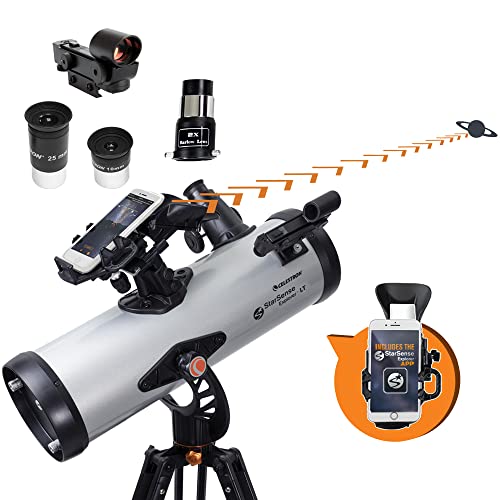
Celestron StarSense Explorer LT 114AZ
- Optical design
- Reflector (Newtonian)
- Telescopes · Celestron
Celestron StarSense Explorer LT 80AZ
- Optical design
- Refractor



How alternatives are pickedSame type of gear from other brands, closest first: same price tier as National Geographic’s own listings at our last check, then the most maker-published specs. No popularity, no paid placement.
What National Geographic has on Amazon US
National Geographic is a name that shows up on a lot of science and discovery toys. In our Amazon US data, as of 2026-10-23, three listings carry it as the brand:
- National Geographic 70mm Refractor Telescope by Explore Scientific (Computerized)
- National Geographic Glowing Marble Run
- National Geographic Magnetic Marble Run
That's a short shelf for a famous name, so this page adds a grid of telescope alternatives from other makers. They're picked by type and specs, closest first. Most of this page is about telescopes, because that's what most people searching for this brand want to know about. The marble runs get their own section further down.
Who's behind the National Geographic telescopes
The 70mm refractor's listing name says "by Explore Scientific." Explore Scientific's own website has a National Geographic collection and says those science and discovery products are available from Explore Scientific. That page lists 70mm refractors, 114mm reflectors, a 76mm compact reflector and a small tabletop model.
On Amazon US, those National Geographic-titled telescopes don't all show up under the National Geographic brand. When our researchers spot-checked a National Geographic 114mm reflector listing, its brand line said Explore Scientific. So if you're looking for a specific National Geographic telescope size, it may be filed under the other name. Read the brand line under the title when you click through.
The National Geographic telescope we track: 70mm computerized refractor
Here's what the listing says, in plain terms.
- Aperture: 70 mm (2.8 in). Aperture is the width of the main lens. It decides how much light the telescope collects.
- Focal length: 350 mm. The distance the lens uses to bring light to focus.
- Focal ratio: f/5. That's 350 divided by 70. Lower numbers give wider, brighter views. It's a division a seventh grader can do, which is my favorite kind of spec.
- Design: achromatic refractor. A refractor uses a lens at the front. Achromatic is the lens type the listing names; our refractor telescopes page explains the types.
- Mount: computerized, GoTo. GoTo means a motorized mount that finds objects for you from a built-in database once it's aligned.
- Eyepieces: two included, per the listing. Swapping eyepieces changes magnification.
A 350 mm focal length means a short tube, which is easier to carry out the door and set down on a small patio. The GoTo mount is what sets this one apart from most small refractors in the alternatives grid, which use manual mounts you point by hand.
Marisol had one thing to say about computerized mounts, and she said it before I finished asking: "A motor still needs a level tripod and an honest alignment. It can't fix a crooked start." She keeps a small level in the tripod bag for exactly that.
Who the 70mm suits, and who should skip it
It suits a family that wants a telescope a child can help carry, and a grown-up who likes the idea of the mount finding things. It suits a small balcony or driveway, too, because a 350 mm tube is short.
Skip it if you'd rather learn the sky by hand. A manual mount is simpler and has nothing to align or power. Skip it, too, if you want the most light-gathering for a deep-sky habit. A 130 mm mirror gathers far more light than a 70 mm lens, and the alternatives include one.
National Geographic telescope 70mm vs the alternatives
The alternatives grid is picked by matching type and specs. Here's how the main choices line up against the 70mm, using listing facts only.
Other small refractors
- Celestron AstroMaster 70AZ: 70 mm achromatic refractor, manual alt-az mount. The same aperture without the motor.
- Celestron AstroMaster 90AZ: 90 mm achromatic refractor, manual alt-az mount.
- Gskyer 80mm AZ Refractor: 80 mm, 400 mm focal length, manual alt-az, three eyepieces plus a 3x Barlow, phone adapter.
- Gskyer AZ90600: 90 mm, 600 mm, f/6.7, manual alt-az, three eyepieces plus a 3x Barlow.
- SVBONY SV520: 90 mm, 800 mm, manual alt-az, PL10 and K25 eyepieces plus a Barlow, phone adapter.
- Celestron Travel Scope 80: 80 mm, 20mm and 10mm eyepieces, phone adapter.
A Barlow is a lens that multiplies an eyepiece's magnification. If you're choosing between the 70mm GoTo and a 90 mm manual scope, here's the trade in one line: the motor, or 20 more millimeters of lens.
114mm options
People search for the National Geographic 114mm telescope more than any other size. In the alternatives grid, two telescopes share that aperture:
- Celestron PowerSeeker 114EQ: 114 mm Newtonian reflector, manual equatorial mount, 20mm and 4mm eyepieces plus a 3x Barlow.
- Celestron StarSense Explorer LT 114AZ: Newtonian reflector on a manual alt-az mount, with an app push-to system that uses a phone dock.
A reflector uses a mirror instead of a lens. An equatorial mount is aligned with Earth's axis so one motion follows the stars. Push-to means the app tells you where to point, and you move the scope by hand.
Bigger mirrors and tube-only scopes
- Sky-Watcher Heritage 130: a 130 mm tabletop Dobsonian, 10mm and 25mm eyepieces. A Dobsonian is a reflector on a simple base you point by hand.
- SOLOMARK 130mm Astronomical Telescope 650mm Alt-Az: 130 mm, 650 mm, manual alt-az, two eyepieces, phone adapter, ages 8–12 on the listing. The only telescope here with a stated age.
- SVBONY SV48P 90mm and SVBONY MK105: both sold as the tube only, with no mount. The MK105 is a 105 mm Maksutov-Cassegrain at f/13. A tube-only scope needs a mount bought separately.
For more on these designs, see refractor telescopes and best telescopes for kids.
A GoTo mount, in general terms
If you've never used a computerized mount, here's the general shape of a first night with one. Your telescope's own manual has the real steps, and it wins over anything here.
- Set up in daylight first. Put the tripod together, attach the mount and tube, and learn where the cables and controls go while you can see them.
- Level the tripod. A GoTo mount works out where things are from where it thinks it's standing.
- Power it and enter what it asks for. Many computerized mounts ask for the date, time and location.
- Align it. Most ask you to center one or more bright stars so the mount can work out where it's pointed.
- Then pick a target. Once aligned, the mount slews to objects you choose from its list.
The first night always takes longer than the second. Give it an evening with no other plans. A manual mount skips steps 3 and 4, which is the whole case for one.
Telescope or marble run as a gift
The two halves of this brand suit different kids. A telescope suits a kid who asks "what's that one?" about a star and will go outside after dark with a grown-up. A marble run suits a kid who wants to build something on the floor today and see it work in the next five minutes.
The marble runs don't state an age in our data, and neither does the 70mm telescope, so read each box. A telescope also needs an adult's time on the first few nights. If nobody in the house has an evening free for that, the marble run is the more honest gift.
Why the first look matters
When Sam was 6, at one of Marisol's star nights on the loop, he looked through the eyepiece at Saturn and asked who put the sticker on the lens. Nobody had. That was the planet. He still talks about it. Whatever telescope you choose, the first night it comes out is the one a kid remembers. Pick a clear one, keep the setup simple, and let them look as long as they want.
Solar safety
Never look at the Sun through a telescope, binoculars, a finder or a camera, or with your eyes, without a certified solar filter made for that purpose and fitted correctly. On a telescope, the filter goes over the front of the tube, never at the eyepiece. For eclipse glasses and handheld viewers, look for ones that conform to the ISO 12312-2 standard. Eye damage can be instant and permanent.
National Geographic marble runs
The other two National Geographic listings are marble runs: the Glowing Marble Run and the Magnetic Marble Run. Our data doesn't have a stated age, piece count or other spec for either one yet. The names tell you the idea. One glows, and one uses magnets.
A marble run is a building toy where you snap together tracks and supports, then send a marble down. For other marble runs with stated ages and piece counts, see the marble runs type page, which reads every set we track by age and system.
Marble run safety
Check the age label on the box. Marbles and small parts are a choking hazard for children under 3. The Magnetic Marble Run has magnets. Swallowed magnets can cause serious internal injuries. Keep loose or broken magnetic pieces away from young children.
Where to buy National Geographic telescopes and marble runs
Every product on this page links to its Amazon US listing through the "Check price" button. The grid only shows listings that were priced, in stock and deliverable to ZIP 10001 when we last checked, and it's rechecked weekly. If a National Geographic 76mm or 114mm telescope turns up under this brand name, it will appear in the grid automatically. We don't print prices anywhere on the site.
How to pick, if you're shopping this brand
- For a telescope, decide on the mount first. GoTo (the 70mm) or manual (most alternatives). That's the biggest difference.
- Then the aperture. 70 mm is small and light. 90 mm to 114 mm gathers more light. 130 mm gathers the most of anything here.
- Check what's in the box. Two of the alternatives are tube-only.
- For a marble run, read the box for the age. Our data doesn't have it.
- Read the brand line. National Geographic-titled telescopes may be listed under Explore Scientific.
Clear nights come and go. Read the listing on a cloudy one.
Where National Geographic shows up
Questions about National Geographic
Who makes National Geographic telescopes?
The National Geographic 70mm refractor in our data is listed as "by Explore Scientific" in its name, and Explore Scientific's own website has a National Geographic collection that says those products are available from Explore Scientific. When we spot-checked a National Geographic 114mm reflector on Amazon, its brand line said Explore Scientific.
Is the National Geographic 70mm telescope good?
We don't grade products. The listing says it's a 70mm achromatic refractor with a 350mm focal length, a computerized GoTo mount and two eyepieces. That works out to f/5. Compare it with the 70mm and 80mm alternatives above, which use manual mounts, and decide whether you want the motor.
Where is the National Geographic 114mm telescope?
It doesn't appear under the National Geographic brand in our Amazon US data. National Geographic-titled reflectors may be listed under the Explore Scientific brand instead. For the same aperture, the alternatives include the Celestron PowerSeeker 114EQ and StarSense Explorer LT 114AZ, both 114mm reflectors by their listings.
What about the National Geographic 76mm telescope?
No 76mm National Geographic telescope is live under that brand in our data. Explore Scientific's National Geographic page shows a 76mm compact reflector. For a small reflector on Amazon US now, the alternatives include the Sky-Watcher Heritage 130, a tabletop Dobsonian with a 130mm mirror.
What age is the National Geographic marble run for?
Our data doesn't have a stated age for either National Geographic marble run. Read the box before buying. Marbles are a choking hazard for children under 3, and the Magnetic Marble Run has magnets, so keep its pieces away from young children.
Sources
- Explore Scientific: National Geographic collection — accessed 2026-10-23
- American Astronomical Society: Solar Filters for Optics: Telescopes, Binoculars & Cameras — accessed 2026-10-23
- American Astronomical Society: How to Tell If Your Eclipse Glasses or Handheld Solar Viewers Are Safe — accessed 2026-10-23
- U.S. Consumer Product Safety Commission: Magnets — accessed 2026-10-23
- U.S. Consumer Product Safety Commission: Small Parts for Toys and Children's Products — accessed 2026-10-23