Board & Card Games · Type
The Aggravation Board Game: Rules, Shortcuts and Editions
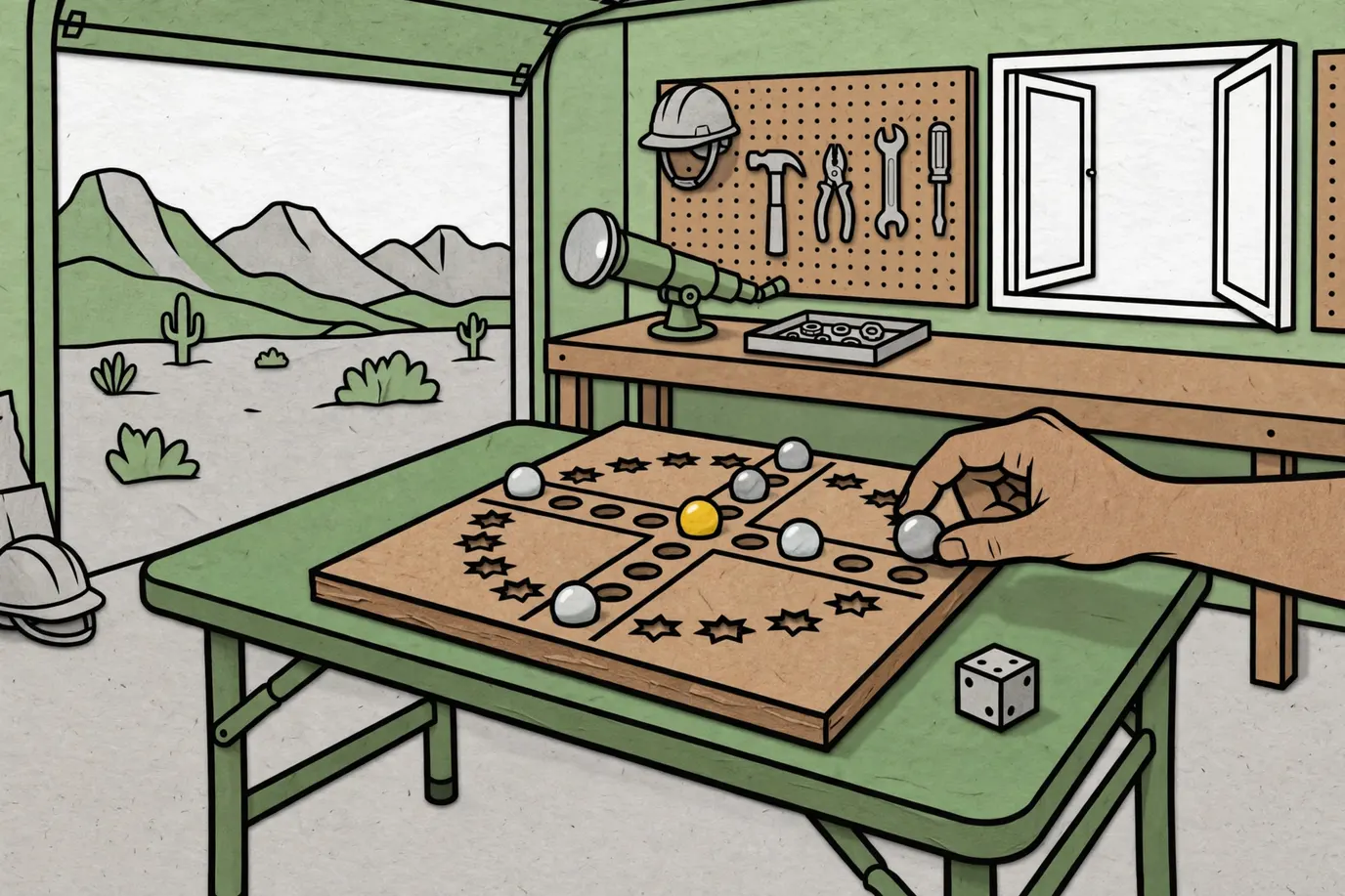
The Aggravation board game is a marble race for 2 to 6 players, ages 6+ on the Winning Moves listing. You roll one die, move your four marbles around the board from base to home, and send any marble you land on back to its start. The name is honest. Two editions are listed on Amazon US right now: a current Winning Moves box and a 1999 Milton Bradley short box. Bring a sense of humor and a friend you'll still talk to afterward.
We earn a commission if you buy through our links, at no cost to you. Disclosure
| Model | Recommended age | Players (min) | Players (max) | Amazon |
|---|---|---|---|---|
Winning Moves AggravationBoard & family games More specs
| 6+ yearslisting | 2listing | 6listing | Check price |
Milton Bradley Aggravation 1999 (Lakeside, Short Box)Board & family games More specs
| — | — | — | Check price |


What’s in this listEditions and versions of Aggravation sold on Amazon US, matched by the name on the listing. Players, age and play time come from the box or listing. “—” means neither the maker nor the Amazon listing states it.
What the Aggravation board game is
Aggravation is a race. Each player has four marbles in a starting row called the base. You roll one die, start your marbles onto the track, and move them clockwise around the board to your home row. First player with all four marbles home wins.
The twist is in the name. If your marble lands on another player's marble, theirs goes back to base. They have to start it all over again. You don't have to aggravate anyone to win, but the game makes it very tempting.
It's a family of marble and dice games that plenty of people grew up on, and it's simple enough to teach in one turn. You need to count holes on a die roll. That's it. The decisions come from which marble to move and whether to take a shortcut.
The box facts, from the Winning Moves listing:
- Players: 2 to 6
- Ages: 6+
- Play time: the listing doesn't say
- Competitive, with partner and team options in the Hasbro rules
- Base game, not an expansion
The Hasbro rules sheet I read lists a gameboard, 6 dice and 24 marbles for six players. That's four marbles and one die per player.
How Aggravation plays
The rules below are in my own words, from Hasbro's rules sheet for the Aggravation Retro Series 1989 Edition (product code B9115). That edition isn't one of the two listed on Amazon US in our data. I couldn't open a rules page for the Winning Moves box or the 1999 Milton Bradley box, so check the sheet in your own box for any small differences.
Setup
- Each player picks a color and puts four matching marbles in the base row of that color.
- Everyone rolls a die. High roll goes first.
- Play passes to the left.
That's the whole setup. I've spent longer finding the dice.
Starting a marble
Before a marble can move around the board, it has to get from your base to your start hole. You can only do that on a roll of 1 or 6. Once a marble is on start, it moves on your next turn.
Any time you roll a 6, you take an extra turn. So a 6 early in the game can start a marble and then move it, or start two marbles over two rolls.
Only one of your marbles can sit on your start hole at a time. If one of yours is already there, you can't bring out another until it moves along.
Here's a rule that surprises people. If an opponent's marble is sitting on your start hole when you roll a 1 or 6, you can start a marble anyway. You land on theirs and send it back to its base. Parking on someone's start is a risk, not a wall.
Moving around the board
Once you have marbles on the track, each roll gives you a choice. On a 1 or 6, you can start a new marble or move one that's already out. On any other number, you move one marble that many holes clockwise.
You count every hole, empty or not. You can jump over or land on other players' marbles. You can't jump over or land on your own. If your own marble is in the way of a full move, that marble can't make that move, and you try another one.
That last rule is where most of the strategy lives. Two of your marbles close together can block each other. Spreading them out keeps your options open.
Getting aggravated
If another player lands on your marble by exact count, your marble goes back to your base, and theirs takes the hole. You'll need a 1 or a 6 to start it again.
Marbles can be aggravated anywhere except in their own base or their own home. That includes the shortcut holes, which matters a lot.
June keeps a straight face for exactly one roll before she aggravates somebody. Then she apologizes, every time, in the same cheerful voice. Nobody believes the apology. Everybody accepts it.
The star-hole shortcut
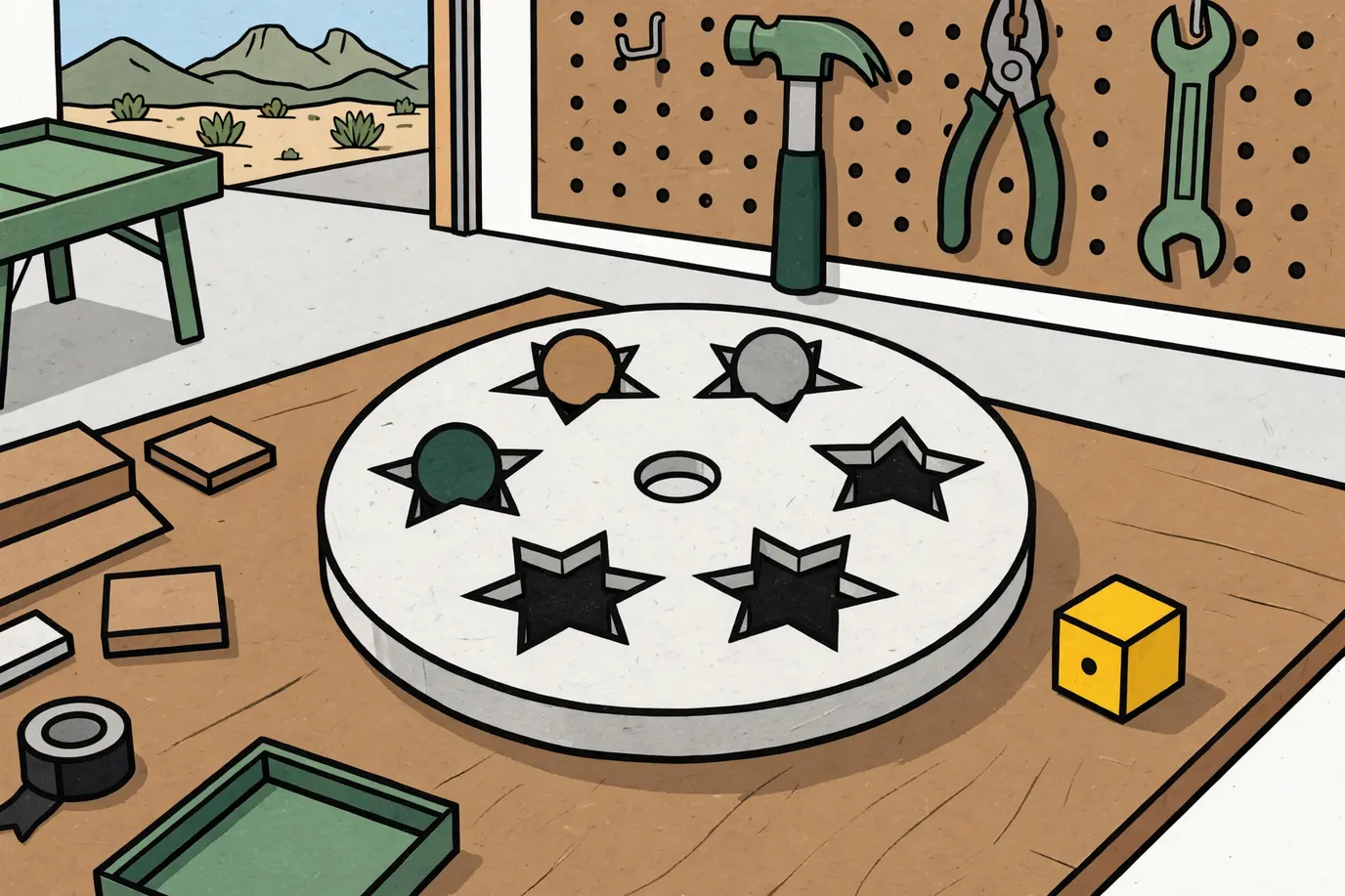
The board has a ring of star holes. If your marble lands on a star hole by exact count, on a later turn you can move it around the ring of star holes instead of along the outer track. Count the holes as usual. Then step off onto the path that leads to your home and use the rest of your roll there. You can also step off at an earlier star hole if that fits your roll better.
The center-hole shortcut
The hole in the middle is the big shortcut. You can only move into it by exact count. From a star hole, that means rolling a 1.
Once you're in, the only way out is to roll a 1 on a later turn. Then you step to the star hole closest to the path to your home, or any star hole you like.
It's the fastest route on the board and the slowest place to sit. A 1-in-6 chance each turn is a long wait when the other players can land on you while you're there. Marisol watched one game and summed it up: "It's a one-way valve with a queue." She's not wrong. Shortcuts are optional in Hasbro's rules, and some turns the plain track is the safer road.
Getting home
Your home area has four holes. You move into it by exact count. If your roll is too big to fit, that marble can't move, and you try another marble. If you have no other marbles in play, your turn is over.
Remember the no-jumping rule. You can't hop over your own marbles in the home row either, so fill the far holes first when you can.
Winning
First player to get all four marbles into home wins.
Partner and team play
Hasbro's sheet includes two group versions.
- Partners: you sit across from your partner. You can jump your partner's marbles, but if you land on one, you have to send it back to base. Once all your marbles are home, you keep rolling on your turn, and your partner moves by your roll. First pair with all marbles home wins.
- Teams of three: teammates sit in alternating seats. When one player is all home, they keep rolling and must say which teammate gets the roll before they throw. First team fully home wins.
Partner play is the version I'd pick for a mixed-age table. A younger kid who gets all four marbles home still has a job, and nobody sits out.
Rules people often get wrong
These come straight from the differences between how people remember the game and what Hasbro's sheet says.
- You can't land on your own marble. You can land on anyone else's. Your own marbles block you.
- A 6 gives you another turn. A 1 starts a marble but doesn't.
- Shortcut holes aren't safe. A marble in a star hole or the center hole can still be aggravated.
- Home needs an exact count. Overshooting means that marble doesn't move.
- An opponent on your start hole doesn't stop you. A 1 or 6 still starts your marble and sends theirs home.
House rules some families use
These are house rules, not Hasbro's rules. Agree on them before the first roll.
- No aggravating the youngest player's last marble. It's a kindness rule for a 6-year-old's first game. Drop it once they start winning.
- Shortcuts off for a first game. Play the outer track only, then add the star holes next time. It makes the first game easier to follow.
- Two dice for a faster game. Some families let each player roll two dice and use either number or the total. It speeds things up and adds a decision, but it changes how often you roll a 1 or 6, so it's a different game.
Aggravation editions on Amazon US right now
Our data for this page lists 2 Aggravation editions on Amazon US as of October 2026. The table above shows what each listing states. Where a listing leaves a field out, the table shows a dash.
Winning Moves Aggravation
This is the current box in our data. The listing says 2 to 6 players and ages 6+. It isn't an expansion, and it isn't marked as resale stock. The listing doesn't give a play time. If you want a copy to play this weekend, this is the one to look at.
Milton Bradley Aggravation 1999 (Lakeside, Short Box)
The listing name points to a 1999 Milton Bradley printing and mentions Lakeside and a short box. It doesn't state players, age or play time in our data, and it isn't marked as an expansion. It also isn't flagged as resale stock in our data, but a 1999 box on a listing today is an older printing, so read the listing's condition notes and photos before you buy.
If you want the box you remember from a relative's closet, this is the one that might match. If you just want to play, the Winning Moves box has the clearer listing facts.
For more on the older line, see the Milton Bradley brand page. The rules sheet on this page comes from Hasbro.
Who Aggravation suits
- Families with kids 6 and up who can count holes on a die
- Groups of up to 6, or 4 or 6 if you want partner or team play
- Grandparents who learned it decades ago and want to teach it
- Anyone who likes a game that can swing back and forth until the last roll
It plays well with a mix of ages because luck does a lot of the work. A 6-year-old and a 60-year-old roll the same die. The choices are real but small: which marble, which route, whether to risk the center hole.
Who should skip Aggravation
Skip it if your group gets upset about being sent back to start. That isn't a side rule. It's the main event, and it will happen to everyone several times a game.
Skip it if you want a game of skill with little luck. Every move starts with one die roll, and a 1 at the wrong moment can undo a careful plan.
And skip it for now if your youngest player is under 6. The listing says 6+. A race game with no capturing, like Snakes and Ladders, is a gentler first race for younger kids if its listing fits their age.
Check the age label on the listing. Toys with small parts are a choking hazard for children under 3, and marbles are small parts. Keep loose marbles off the floor when little kids are around.
If you like Aggravation, look at these
Pages chosen by what they share with Aggravation: a race around a track, sending players back, and a family-age label.
- Sorry: the same send-them-home idea in a different board game
- Trouble: another race-around-the-board family game
- Parcheesi: another classic race-and-capture game
- Chinese checkers: marbles on a star-shaped board, with no dice at all
- Ludo: another cross-shaped race game for a family table
Roll a 6, roll again, and save the apology for after.
Brands in this list
Related
Questions people ask
How many players can play Aggravation?
The Winning Moves listing says 2 to 6 players, and so does the Hasbro rules sheet we read for the Retro Series 1989 Edition. Each player uses four marbles of one color. The Hasbro rules also include partner play for teams of two sitting across from each other and team play for two teams of three. The 1999 Milton Bradley listing doesn't state a player count.
What age is Aggravation for?
The Winning Moves listing says ages 6+, and the Hasbro Retro Series rules sheet also says 6+. The game needs counting holes on a die roll and nothing else, so a 6-year-old can usually play a full game. The marbles are small parts, so keep the box away from children under 3.
What happens when you land on someone in Aggravation?
You aggravate them. In Hasbro's rules, landing on an opponent's marble by exact count sends that marble back to its owner's base, and your marble takes the hole. The other player has to roll a 1 or a 6 to start it again. Marbles can be aggravated anywhere except in their own base or home.
How do you get out of the center hole in Aggravation?
Only with a 1. In Hasbro's rules you enter the center hole by exact count, and from a star hole that means rolling a 1. Once you're in, you stay until you roll a 1 on a later turn. Then you move to the star hole closest to the path to your home, or to any star hole you choose. An opponent can aggravate you there.
Is Aggravation the same as Sorry or Trouble?
No. They're separate games that share an idea: race your pieces home and send other players back to start. Aggravation, in Hasbro's rules, uses marbles, one die per player, and star-hole and center-hole shortcuts. Sorry and Trouble each have their own rules and boards. If your family likes one of the three, our Sorry and Trouble pages show their editions and box facts.
Sources
- Hasbro: Aggravation Game Retro Series 1989 Edition instructions (B9115) — accessed 2026-10-23
- Hasbro: Aggravation Retro Series 1989 Edition rules sheet, B9115 (PDF) — accessed 2026-10-23
- CPSC: Small Parts for Toys and Children's Products — accessed 2026-10-23