Board & Card Games · Type
Sorry Board Game: Rules, Cards and Editions
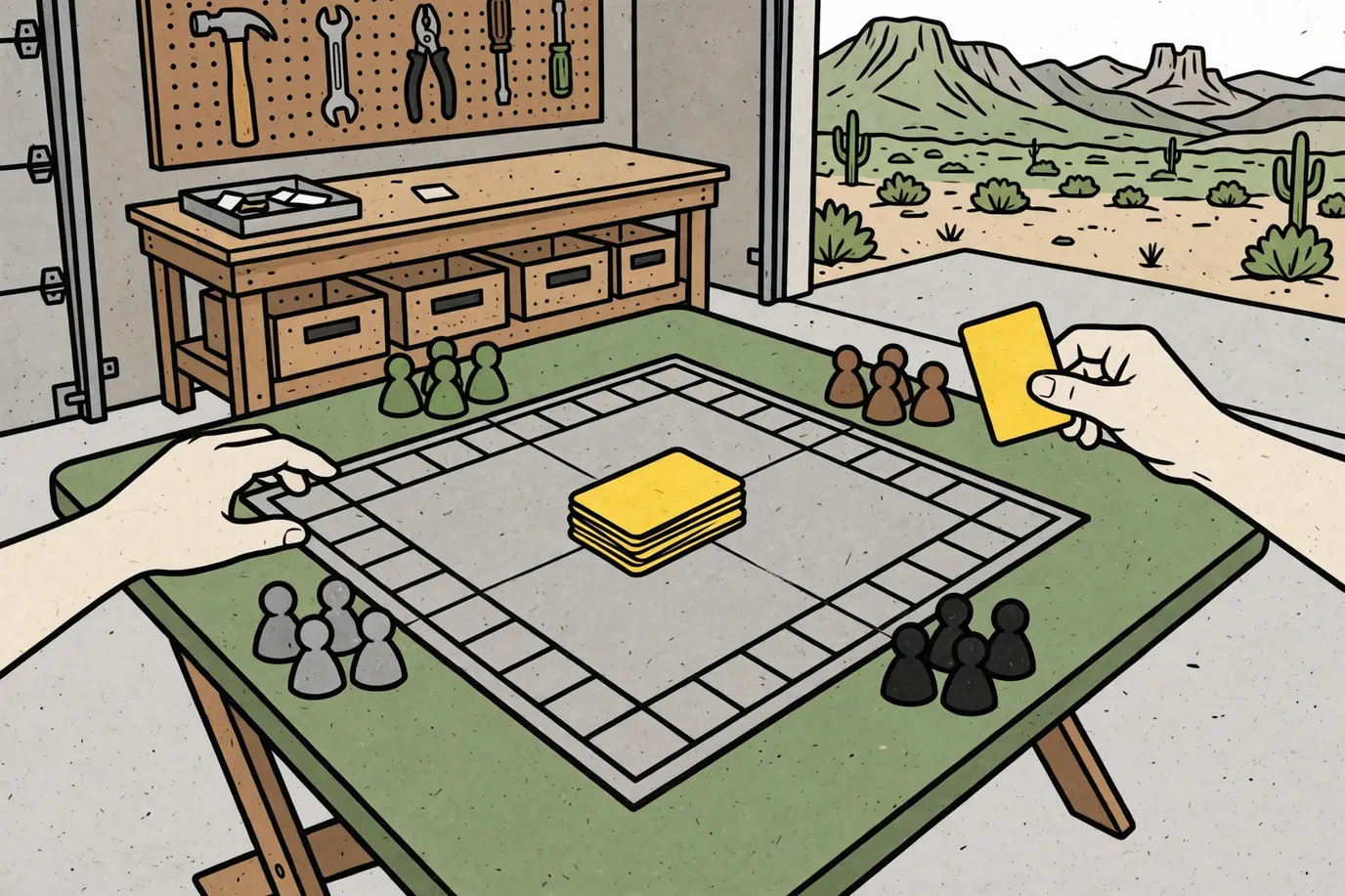
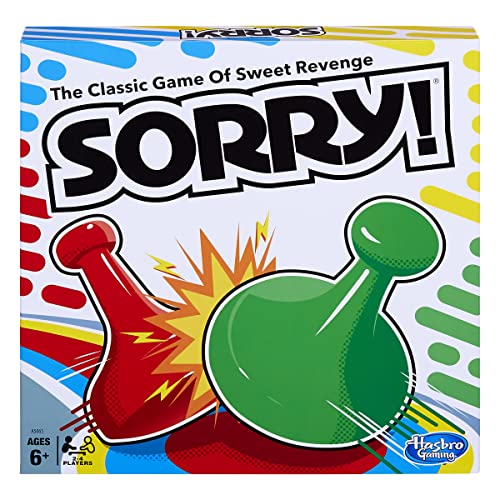
The Sorry board game is a card-driven race for 2 to 4 players, ages 6+ on Hasbro's box. You draw a card, move a pawn, and try to get all of yours from Start to Home before anyone else. The twist is that you can knock other pawns back to Start, and sometimes you have to. Sorry is the only game in my closet where a deck of cards decides who has to be polite.
We earn a commission if you buy through our links, at no cost to you. Disclosure
| Model | Recommended age | Players (min) | Players (max) | Amazon |
|---|---|---|---|---|
Hasbro Sorry!Board & family games More specs
| 6+ yearslisting | 2listing | 4listing | Check price |
Winning Moves Classic Sorry!Board & family games More specs
| 6+ yearslisting | 1listing | 4listing | Check price |
WS Game Company Sorry! Vintage Bookshelf EditionBoard & family games More specs
| 6+ yearslisting | 2listing | 4listing | Check price |
Hasbro Sorry!Board & family games More specs
| 6+ yearslisting | — | — | Check price |
Hasbro Sorry! Disney Villains EditionBoard & family games More specs
| 6+ yearslisting | — | — | Check price |
Hasbro Sorry Pets Behaving BadlyBoard & family games More specs
| — | — | — | Check price |
WS Game Company Sorry! Nostalgia EditionBoard & family games More specs
| 6+ yearslisting | — | — | Check price |




What’s in this listEditions and versions of Sorry sold on Amazon US, matched by the name on the listing. Players, age and play time come from the box or listing. “—” means neither the maker nor the Amazon listing states it.
What the Sorry board game is
Sorry is a race game with a mean streak. Each player has a color, a Start area, a Safety Zone and a Home. You move your pawns clockwise around a square track and into your own Home. First player with all their pawns Home wins.
There are no dice. A shuffled deck decides every move. Draw a card, do what it says, discard it. Some cards move you forward, one moves you back, and a few let you trade places with an opponent or knock them all the way back to Start.
Here's the table version of the box facts, from Hasbro's Sorry rulebook (product code A5065, the 2016 printing):
- Players: 2 to 4
- Ages: 6+
- Contents: game board, 12 pawns, 45 cards
- Pawns per player: 3
- Goal: all three of your pawns from Start to Home
It's competitive. Everyone plays for themselves, and there's no team or co-op mode in the rulebook. It's also a complete game in one box. Nothing in our data for Sorry is an expansion.
How Sorry plays
Everything below is in my own words, from the Hasbro A5065 rulebook. Older and reissued boxes can print different card rules, so if your box came with its own sheet, that sheet wins at your table.
Setup
- Each player takes the three pawns of one color and puts them in the matching Start area.
- Shuffle the cards and set them face down in the middle of the board.
- The youngest player goes first, and play passes to the left.
That's it. Three steps, no money to count out and no cards to deal. If the draw pile runs out, you shuffle the discards and keep going.
A turn
On your turn you draw the top card, follow it and put it on the discard space. You move one pawn, unless the card lets you split the move. In this edition, any card that moves you forward can bring a pawn out of Start.
The part that surprises new players is the forced move. If you can move, you must, even if the move hurts you. If you can't move at all, you lose the turn. Sorry is the only game I know that makes you hurt yourself on purpose and calls it a rule.
What each card does
- 1, 2, 3, 5, 8 and 12: move one pawn forward that many spaces
- 4: move one pawn backward 4 spaces
- 7: move one pawn forward 7, or split the 7 between two pawns
- 10: move one pawn forward 10, or backward 1
- 11: move one pawn forward 11, or swap one of your pawns with an opponent's pawn on the open track
- Sorry card: take a pawn from your Start and bump an opponent's pawn off its space and back to its Start, or move one pawn forward 4
The 7 is the card I'd hand a math class. Seven can be 7 and 0, or 4 and 3, or 5 and 2. That's a whole worksheet of number pairs, and at a game table nobody calls it homework. One catch from the rulebook: if you use part of a 7 to get a pawn Home, you must be able to use the rest on another pawn.
The 11 has its own fine print. You can only swap pawns that are both out on the open track, not in Start, Home or a Safety Zone. If you'd rather not swap and can't move 11, you can pass on the move.
Bumping, jumping and slides
Pawns can jump over other pawns, and each one counts as a space. Land exactly on an opponent's pawn and you bump it back to its Start. You can't land on your own pawn, though. If that's your only move, you lose the turn.
Then there are the slides. Each side of the board has slides in your color. Land exactly on the triangle at the start of one and you zip to the end, bumping every pawn in the way back to Start. That includes your own pawns. A slide in another color does nothing for you. You just stop on the triangle.
The Safety Zone and Home
Your Safety Zone is the short colored path that leads to your Home. Only your pawns can enter it, so it's the one place nobody can bump you. You can't enter it by moving backward, but you can back out of it.
You need an exact count to get into Home. Once a pawn is Home, it stays there for the rest of the game.
Here's a trick that comes straight from the board layout. Your Safety Zone entry sits just behind your Start, and the rulebook lets you pass that entry on a backward move. So a 4 or a 10 on a pawn that just left Start can put it a few spaces from the Safety Zone instead of a whole lap away. Backward is sometimes the fastest way home. It feels wrong the first time. It feels great the second.
How it ends
The first player with all three pawns in Home wins. There's no scoring and no tiebreak in the A5065 rulebook. One player gets there first, and everyone else gets to say what they think of the deck.
Sorry editions on Amazon US right now
Our data for this page lists 7 Sorry listings on Amazon US as of October 2026. The table above shows the players and age each listing states, with a dash where the listing leaves a field out. I won't fill those gaps with guesses. Here's what tells them apart.
The Hasbro boxes
Two listings are the current Hasbro game:
- Hasbro Sorry (B08QN8T28T): ages 6+, 2 to 4 players, not an expansion
- Hasbro Sorry (B076HK9H7Z): ages 6+; the listing gives no player count
These are the boxes closest to the rules above. If you want the game the way Hasbro prints it now, start here. The two listings don't spell out how their contents differ, so read each listing's photos and contents line before you choose.
Winning Moves Classic Sorry
The Winning Moves listing is named Classic Sorry, with the edition marked as classic. It lists ages 6+ and 1 to 4 players, and it's the only Sorry listing in our data with a solo mode on it. The listing doesn't explain how a solo game works. If playing alone is why you're shopping, read that listing's rules description before you buy.
Wooden-pawn reissues from WS Game Company
Two listings are retro reissues, both ages 6+, both with wooden pawns:
- Sorry Vintage Bookshelf Edition: 2 to 4 players; listed with a folding game board, a vintage-style card deck and 16 wooden pawns
- Sorry Nostalgia Edition: listed with a full-size folding board, 16 wooden pawns, a retro card deck and a metal tin
Notice the pawn count. Sixteen pawns is four for each of four colors. The Hasbro A5065 rulebook uses three per player. So these boxes probably come with their own rule sheet, and you should play by that one. Both listings are also marked as resale stock, which means they're sold as vintage reissues rather than current Hasbro production.
If the person you're shopping for already owns a worn-out Sorry board, a wooden-pawn box is the reason to buy a second copy. If it's the family's first copy, a Hasbro box does the same job with fewer pieces to count at cleanup.
Themed editions
- Sorry Disney Villains Edition (Hasbro): ages 6+, with Disney Villains as the licensed theme on the listing
- Sorry Pets Behaving Badly (Hasbro): the listing uses the Sorry name but gives no players, age or contents
For the Disney Villains Edition, the theme is the difference the listing names. For Pets Behaving Badly, the listing doesn't say enough for me to tell you how it plays. Ask for the rule sheet or skip it until the listing fills in.
Check the age label on the listing. Toys with small parts are a choking hazard for children under 3, and Sorry pawns are small parts.
Which Sorry edition fits your table
My one opinion for this page: the age on the box works in both directions. Sorry is a strong first "real" board game because a 6-year-old can play every turn without help once they can read a number and count spaces. The choices are small: which pawn, and sometimes which of two moves. That's exactly the right size of decision at 6. Going the other way, a table of adults who want a long plan will find the same small choices thin by the third game.
A few matches, from the listings:
- A first family copy: one of the two Hasbro boxes, ages 6+
- Playing alone: Winning Moves Classic Sorry, the only listing with a solo mode
- A gift for someone who owns Sorry already: a WS Game Company reissue with wooden pawns
- A family that wants a theme: the Disney Villains Edition, ages 6+
House rule, and it's ours, not Hasbro's: in a first game with a 6-year-old, play with two pawns each instead of three. The game ends sooner, and a bump hurts a little less when the finish line is closer.
Who should skip Sorry
Skip it if your group hates take-that games. Bumping is the heart of Sorry, and the Sorry card exists to send someone home. Some kids laugh at that. Some take it personally for a week.
Skip it, too, if you want a game where a good plan always wins. The deck decides every move. You choose between options, but you never choose the card. A table of grown-ups who want real strategy will get more out of a game where nobody draws their turn.
And skip the 6+ box for a child who can't count spaces forward and back yet. Wait a birthday, or start with a simpler race game.
If you like Sorry, look at these
Pages chosen by what they share with Sorry: a race around a track, pawns that bump each other and 2 to 4 players.
- Trouble: the same race-and-bump idea with a die in a bubble
- Parcheesi: an older race game with blockades
- Ludo: the family tree Sorry shares
- Aggravation: marbles, a shortcut and plenty of bumping
- Classic board games: the wider shelf of old standards
See the Hasbro brand page for the rest of that lineup.
Draw a card, read it out loud, and move before anyone suggests a better move.
Brands in this list
Related
Questions people ask
How many players can play Sorry?
Hasbro's A5065 rulebook and the Hasbro listing in our data both say 2 to 4 players. The board has four colors, one per player. The Winning Moves Classic Sorry listing in our data says 1 to 4 players and lists a solo mode, so check that listing if you want to play alone. No edition in our data lists more than 4.
What age is Sorry for?
Every Sorry edition in our data that states an age says 6+. That includes the two Hasbro boxes, Winning Moves Classic Sorry, the two WS Game Company reissues and the Disney Villains Edition. Kids need to read a short card and count spaces forward and backward. The Pets Behaving Badly listing doesn't give an age.
What is Sorry Sliders?
Sorry Sliders is a separate Hasbro game built on the Sorry name. Hasbro's instruction page describes launching roller pawns down a track so they slide onto a target board, with four game modes and knock-offs onto Sorry spaces. It isn't the card-and-track game on this page, and it isn't among the Sorry listings in our data right now.
What does the Sorry card do?
In Hasbro's A5065 rulebook, the Sorry card lets you take a pawn from your Start, put it on any space held by an opponent's pawn and send that pawn back to its own Start. If you can't do that, the same card lets you move one of your pawns forward 4 instead. If neither works, you lose the turn.
Is there a Sorry Deluxe edition?
There's no edition called Sorry Deluxe among the Sorry listings in our data as of October 2026. The closest things to a step-up box are the two WS Game Company reissues, which list wooden pawns, and the Nostalgia Edition adds a metal tin. Both are marked as resale stock on their listings.
Sources
- Hasbro: Sorry Game rules and instructions (A5065) — accessed 2026-10-23
- Hasbro: Sorry rulebook, A5065 (PDF) — accessed 2026-10-23
- Hasbro: Sorry Sliders Game rules and instructions — accessed 2026-10-23
- CPSC: Small Parts Ban and Choking Hazard Labeling — accessed 2026-10-23