Brand · Telescopes & Stargazing
DWARFLAB Smart Telescopes: Dwarf 3, Dwarf mini and the Tripod
DWARFLAB makes smart telescopes: small units that aim themselves, take the pictures and show them on your phone. Our Amazon US data has three live DWARFLAB listings, the Dwarf 3, the Dwarf mini and a mini tripod with a hydraulic head made for both. There's no eyepiece on either telescope. Your phone is the eyepiece, which means the eyepiece needs charging. I've added it to my checklist, between the red flashlight and the thermos.
We earn a commission if you buy through our links, at no cost to you. Disclosure
DWARFLAB on Amazon US
3 models- Smart & digital telescopes
DWARFLAB Dwarf 3
- Auto GoTo & tracking
- Yes
- Control app
- DWARFLAB app
- Smart & digital telescopes
DWARFLAB Dwarf mini
- Auto GoTo & tracking
- Yes
- Control app
- DWARFLAB app
- Camera sensor
- Sony IMX662 (1/2.8-inch, 2.9μm pixels)
- Telescope & astrophotography tripods
DWARFLAB Mini Tripod with Hydraulic Head for Dwarf mini and Dwarf 3
Check price


Alternatives to DWARFLAB
- Telescope & astrophotography tripods · Celestron
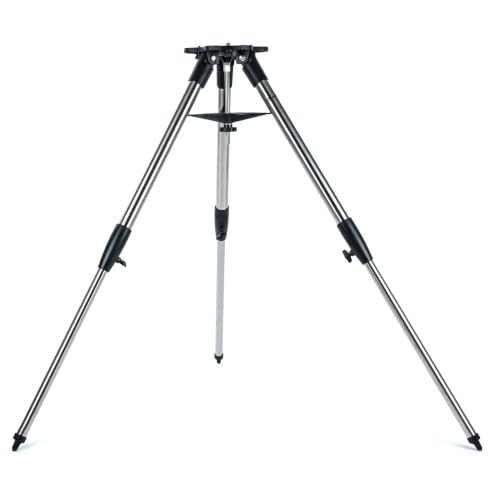
Celestron Heavy Duty CPC Tripod 9.25" & 11"
Check price - Telescope & astrophotography tripods · iOptron
iOptron Tri-Pier for GoTo Mounts
Check price - Telescope & astrophotography tripods · ZWO
ZWO Seestar Fluid Tripod Head TH10
Check price - Telescope & astrophotography tripods · ZWO
ZWO Seestar TC20 Carbon Fiber Tripod
Check price - Telescope & astrophotography tripods · Celestron
Celestron Vibration Suppression Pads Set of 3
Check price - Telescope & astrophotography tripods · Celestron
Celestron Heavy-Duty Alt-Azimuth Tripod
Check price - Telescope & astrophotography tripods · Celestron
Celestron 34" Telescope Tripod Carrying Bag
Check price - Telescope & astrophotography tripods · Celestron
Celestron Tripod for StarSense Explorer Tabletop Dobsonians
Check price - Smart & digital telescopes · ZWO
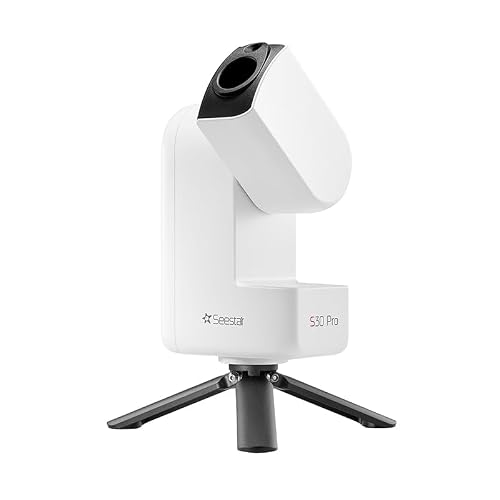
ZWO Seestar S30 Pro
- Auto GoTo & tracking
- Yes
- Smart & digital telescopes · ZWO
ZWO Seestar S30 Pro
- Auto GoTo & tracking
- Yes
- Smart & digital telescopes · ZWO
ZWO Seestar S30 Pro bundle with TH10 head & TC20 tripod
- Auto GoTo & tracking
- Yes
- Smart & digital telescopes · Celestron
Celestron Origin Intelligent Home Observatory
- Aperture
- 152 mm
- Auto GoTo & tracking
- Yes
- Control app
- Origin app





How alternatives are pickedSame type of gear from other brands, closest first: same price tier as DWARFLAB’s own listings at our last check, then the most maker-published specs. No popularity, no paid placement.
What DWARFLAB makes
DWARFLAB telescopes are smart telescopes. Our data tracks the brand in two types, smart telescopes and astrophotography cameras, and its live Amazon US listings are:
- Dwarf 3: smart telescope, GoTo, DWARFLAB app
- Dwarf mini: smart telescope, GoTo, DWARFLAB app, Sony IMX662 sensor (1/2.8-inch, 2.9 μm pixels)
- Mini Tripod with Hydraulic Head for Dwarf mini and Dwarf 3
DWARFLAB's own site describes the Dwarf 3 with uses like deep-sky photography, panoramic shooting, auto tracking, urban stargazing, star trails and time-lapse. It calls the mini its small, light model. Its site doesn't say when the company was founded or where it's based, so we'll leave that out.
With three listings, this page also has an "Alternatives to DWARFLAB" table, built from other smart telescopes and tripods. More on it below.
How a smart telescope works
A smart telescope is a camera, a lens and a motorized mount in one box. You set it on a tripod or a flat surface, connect your phone or tablet through the maker's app, and pick a target from a list. GoTo means the mount finds the target for you from a database. Then the camera takes many short exposures and the software stacks them, so the picture on your screen builds detail the longer it runs.
Three things are different from a regular telescope:
- No eyepiece. You see the sky on a screen, not with your eye at the glass.
- No alignment ritual. The unit handles the pointing; there's no finder to line up.
- Pictures by default. The image you see is the image you save.
That's my one opinion on this page: a smart telescope is a camera first, and it should be bought as one. Ask the question you'd ask about a camera. What do you want pictures of, and who's going to look at them? If the answer is "me, at the eyepiece, in the dark," a regular telescope is the better buy. If it's "the whole family, on the couch, the next morning," a smart telescope earns its place.
DWARFLAB lineup notes
Dwarf 3
The Dwarf 3 lists GoTo and the DWARFLAB app in our data. The listing doesn't give us an aperture or sensor, so the table above shows dashes for those. DWARFLAB's site lists its uses: deep-sky photos, panoramas, tracking, urban stargazing, star trails and time-lapse. That's a broad list, from a city balcony to a dark-sky trip.
This suits someone who wants night-sky photos without assembling a camera, mount and laptop. Skip it if you want to look through glass with your own eye.
Dwarf mini
The Dwarf mini lists GoTo, the DWARFLAB app and a Sony IMX662 sensor at 1/2.8-inch with 2.9 μm pixels. That's a small sensor. Small sensors suit small, bright targets and keep files light. DWARFLAB's site calls the mini its compact model.
This suits a traveler, an apartment dweller, or a family that wants the lightest possible kit. Skip it if you're already sure you want the larger model's features; compare both listings first.
Mini tripod with hydraulic head
The tripod is listed for both the Dwarf mini and Dwarf 3. A hydraulic head lets you tilt and turn smoothly and holds its position. A smart telescope runs for long stretches without being touched, so a steady base matters more than with a handheld camera. If the telescope sits on a wobbly table, every gust shows up in the stack.
Alternatives to DWARFLAB
The alternatives table lists smart telescopes and tripods from other makers. The rule: same type first, smart telescopes with GoTo, then tripods and supports. What each adds:
- ZWO Seestar S30 Pro: three listings, all with GoTo; one gives a 6-hour battery life, and one bundles the TH10 head and TC20 carbon fiber tripod. See our ZWO page.
- Celestron Origin Intelligent Home Observatory: a 152 mm aperture smart telescope with GoTo and the Origin app. A much larger instrument; see our Celestron page.
- ZWO Seestar TH10 head and TC20 tripod: sold separately, for a Seestar.
- Celestron tripods and supports: a heavy-duty alt-azimuth tripod, a tripod for StarSense Explorer tabletop Dobsonians, a heavy-duty CPC tripod, a 34" tripod bag and vibration suppression pads.
- iOptron Tri-Pier: a pier for GoTo mounts.
The tripods are listed for specific instruments. Before you buy one for a Dwarf, check the thread and the stated fit. The vibration pads go under any tripod's legs and help on a deck or a hard patio.
A first night with a smart telescope
The routine is short, which is most of the appeal. It still goes better with a plan.
- Charge everything in the afternoon. The telescope, the phone, and a power bank if you have one.
- Install and update the app indoors, on home WiFi, before you go outside.
- Set the tripod on firm ground and level it. A patio beats a lawn; a lawn beats a deck that bounces when someone walks by.
- Open the lens cover and power on.
- Pick one bright target first. The Moon, if it's up, is a good test that everything works.
- Then pick one deep-sky target and leave it alone. Stacking rewards patience. The picture keeps improving as long as the target stays up and the sky stays clear.
- Save the image before you shut down, and back it up the next day.
Step 6 is the hard one for people used to looking through an eyepiece. The habit is to hop from object to object. With a smart telescope, one target for an hour usually gives a better picture than six targets for ten minutes each.
City skies, dew and power
DWARFLAB's site lists urban stargazing among the Dwarf 3's uses. Stacking many short exposures helps on a bright sky, because the software can average out some of the glow. It doesn't make a city sky dark. A darker site still shows more.
Dew is the quiet problem. On a still, clear night, a cold lens fogs over, and the picture fades slowly enough that you might not notice. Check the lens now and then. If dew is common where you live, read the maker's accessory list for a dew solution before the first humid night.
Power is the other. A long session runs down batteries in the telescope and the phone. Cold nights drain both faster. Plan for it, and keep the phone in a pocket between checks.
Dwarf, Seestar or Origin: how they differ in the data
All three are smart telescopes with GoTo and an app. What our data shows beyond that:
- Dwarf mini is the only one with a stated sensor in our data.
- Seestar S30 Pro is the only one with a stated battery life, 6 hours, on one listing.
- Origin is the only one with a stated aperture, 152 mm.
That's thin for a head-to-head, and I'd rather say so than fill the gaps. Open each maker's listing, find the same three numbers, aperture, sensor and battery, and write them in a row. Then decide.
Theo's take, after looking at all three on his phone at the kitchen table: "So the telescope sends the homework to the phone, and the phone hands it in." He's been teaching seventh grade a long time. He sees homework everywhere.
Smart telescope or camera tracker
If you already own a camera with interchangeable lenses, there's a second route to night-sky photos: a star tracker. A tracker is a small motorized mount that turns your own camera with the sky. It suits wide views: the Milky Way over a ridge, a constellation, a landscape with stars.
The trade is clear. A tracker uses gear you already own and gives you control of every setting, but you polar-align it, focus by hand, and stack the frames on a computer afterward. A smart telescope does the pointing and the stacking for you, and gives you less choice of lens and field. If you enjoy fiddling with settings, look at our star trackers page. If you'd rather sit down while the box works, a Dwarf or one of the alternatives above is the shorter road.
Both are honest hobbies. One has more knobs.
Who should skip a smart telescope
Skip it if you want the eyepiece view. Some people love the moment of putting an eye to the glass and seeing the Moon float there. A smart telescope doesn't offer that moment, by design.
Skip it if you want to learn the sky by hand. Finding things yourself, with a chart and a finder, is how most of us learned the constellations. A smart telescope does that step for you.
And skip it if your phone is already the oldest thing in the house. The app is the control panel. For a regular first telescope, start with our telescopes for kids page or the refractor telescopes guide.
How to pick within DWARFLAB
- Lightest kit for travel or a balcony: the Dwarf mini.
- Broadest list of uses on the maker's site: the Dwarf 3.
- Either one, plus a steady base: add the mini tripod with the hydraulic head.
Write down your phone's operating system before you order, and check the app's requirements on DWARFLAB's site.
Sun safety
Never look at the Sun through a telescope, binoculars, a finder or a camera, or with your eyes, without a certified solar filter made for that purpose and fitted correctly. Eye damage can be instant and permanent.
A smart telescope pointed at the Sun can be damaged without the right filter, even though nobody's eye is at it. Follow DWARFLAB's manual for any solar use, and use only the filter it names. The American Astronomical Society says solar filters belong on the front of the optics.
Charge the phone first. Then the telescope. Then pour the coffee.
Where DWARFLAB shows up
Questions about DWARFLAB
Is DWARFLAB a good brand?
We don't rank brands. What the data shows: three live DWARFLAB listings on Amazon US, the Dwarf 3 and Dwarf mini smart telescopes, both with GoTo and the DWARFLAB app listed, and a mini tripod with a hydraulic head for both. The Dwarf mini lists a Sony IMX662 sensor. Compare it with other smart telescopes on what each listing states.
What is the Dwarf 3 telescope?
A smart telescope from DWARFLAB: camera, lens and motorized mount in one unit, controlled with the DWARFLAB app. Our data lists GoTo. DWARFLAB's own site lists uses such as deep-sky photography, panoramas, auto tracking, star trails and time-lapse. You view and save the images on a phone or tablet.
Is the Dwarf II telescope still sold?
It isn't among the live DWARFLAB listings in our Amazon US data from October 2026. The current listings are the Dwarf 3 and the Dwarf mini, plus a tripod for both. We can't say anything about the Dwarf II's status beyond that.
Dwarf 3 or Dwarf mini?
Both list GoTo and the DWARFLAB app. Our data gives a sensor only for the Dwarf mini: a Sony IMX662, 1/2.8-inch, 2.9 μm pixels. DWARFLAB's site describes the mini as its compact, light model. The listings in our data don't give enough matching specs to compare the two line by line, so read both listings side by side.
Where can I buy DWARFLAB?
The grid above links each DWARFLAB listing on Amazon US with a Check price button. DWARFLAB's own site has a US storefront too. With only three listings, this page also shows alternatives: other smart telescopes and tripods matched by type.
Do I need a computer to use a Dwarf 3?
The listings in our data name the DWARFLAB app as the control, and DWARFLAB's site points to an app download page. That means a phone or tablet runs the telescope. Check the app's system requirements on DWARFLAB's site against your device before you order, and install it at home before the first night out.
Sources
- DWARFLAB: home page — accessed 2026-10-23
- American Astronomical Society: Solar Filters for Optics — accessed 2026-10-23