Board & Card Games · Type
Zingo: The Bingo Game, Its Editions and Who It Fits
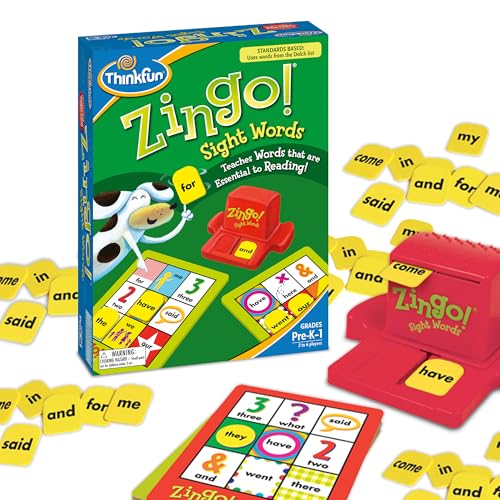
Zingo is a fast matching game in the bingo family from ThinkFun, listed for ages 4 and up. Each player gets a card, a slider called the Zinger hands out tiles, and you match tiles to the pictures, numbers or words on your card. Seven Zingo boxes are on Amazon US in our data, and each one practices a different skill. Bingo usually needs a caller with a good voice. Zingo gives that job to a plastic slide, which has never once mispronounced a number.
We earn a commission if you buy through our links, at no cost to you. Disclosure
| Model | Recommended age | Amazon |
|---|---|---|
Ravensburger Sesame Street Zingo!Kids & preschool games More specs
| 4+ yearslisting | Check price |
Ravensburger Barnyard Zingo!Kids & preschool games More specs
| 4+ yearslisting | Check price |
ThinkFun Zingo 1-2-3 Number Bingo 7703Kids & preschool games More specs
| 4+ yearslisting | Check price |
ThinkFun Zingo! Sight WordsKids & preschool games More specs
| — | Check price |
ThinkFun Zingo Word Builder 7706-TKids & preschool games More specs
| — | Check price |
ThinkFun Zingo Bingo 97700Kids & preschool games More specs
| 4+ yearslisting | Check price |
ThinkFun Zingo! Sight Words Boost Expansion 76472Kids & preschool games More specs
| 4+ yearslisting | Check price |




What’s in this listEditions and versions of Zingo sold on Amazon US, matched by the name on the listing. Players, age and play time come from the box or listing. “—” means neither the maker nor the Amazon listing states it.
What the Zingo game is
Zingo is a matching game built on bingo. Every player holds a card printed with pictures, numbers or words, depending on the edition. Tiles come out of the Zinger, a plastic slider that sits in the middle of the table. When a tile matches a spot on your card, you claim it. The listings call the play type bingo, and the classic box calls itself a game for pre-readers and early readers.
That's the skeleton. The editions change what's printed on the tiles and cards. One box is pictures. One is numbers. Two are words. Two are themed picture sets. One is an add-on pack of new words for a box you already own.
Here's the table version of the box facts, from the listings in our data:
- Maker on the listings: ThinkFun (the two newest boxes name Ravensburger as manufacturer)
- Ages: 4+ on five of the seven listings
- Players: up to 7 on the classic Zingo Bingo (97700), the only listing that gives a number
- What's in a box: a Zinger, 6 double-sided cards and 72 double-sided tiles, per the Zingo 1-2-3 and Word Builder listings
- Co-op or competitive: the listings don't say
- Expansion: one, the Sight Words Boost, which needs a Zinger from another Zingo box
A note before the rules. I couldn't open ThinkFun's own rules pages for any Zingo edition. The maker's instruction site wasn't loading on the day I checked, and the newer maker pages blocked us. So everything below comes from the Amazon listings in our data, and I'll say where the listings stop. The instruction sheet in your box is the rulebook that counts.
How Zingo plays, from the listings
The listings describe the same basic loop on every box.
- Each player takes a card. The cards are double-sided, per the listings that list contents.
- Tiles go into the Zinger. The Sight Words Boost listing says its tiles fit any Zingo Zinger, so the tiles and the slider are made to work together.
- Someone slides the Zinger, and tiles come into view. The Barnyard listing says it plainly: you slide the Zinger to match tiles to the farm pictures.
- If a tile matches a spot on your card, you take it and cover that spot.
- Play keeps going until somebody wins.
What the listings don't tell you: who slides the Zinger, what happens when two players want the same tile, what each side of a double-sided card is for, and exactly how a round ends. Regular bingo ends when one player completes a card. Zingo is sold as bingo, so expect something close to that, and check your box's instruction sheet for the real call.
The classic listing describes the play as fast-paced. That fits the design. In regular bingo you wait for a caller and then search your card. In Zingo the tiles are right there in front of you, so the matching happens with your eyes before anyone has to read anything out loud. The person who spots the match first is the one who moves.
That's also why it works for a 4-year-old. The child doesn't need to know the word "cow." They need to see that the tile and the card have the same cow. Matching is the skill the classic listing names, and it's a skill most kids are working on at that age anyway.
Marisol's take, from across the garage: "Matching is the first measurement anybody learns. Same or not the same. Everything after that is decimals."
Zingo editions on Amazon US right now
Our data for this page lists 7 Zingo boxes on Amazon US as of October 2026. The table above shows the age each listing states, and a dash where the listing leaves it out. Here's what tells them apart, by what each listing says it practices.
Zingo Bingo (97700): the classic picture box
This is the one most people mean when they say Zingo. The listing calls it the newest edition of the game, for pre-readers and early readers, ages 4 and up. It names language and matching skills. It's also the only listing in our data with a player number: it adds an extra card so that up to 7 players can play.
Seven seats matters at a preschool table. A family of four plus two cousins and a neighbor is a normal Saturday, and a game that seats six leaves somebody holding the snack bowl instead of a card.
Zingo 1-2-3: numbers instead of pictures
Zingo 1-2-3 (7703) swaps pictures for numbers. Its listing says play builds counting, simple addition, number sense and word recognition. It lists a Zinger, 6 double-sided cards and 72 double-sided tiles, and ages 4 and up.
The listing doesn't explain how addition shows up on the cards, so I won't guess. What it does tell you is the skill: this is the Zingo for a kid who's already into numbers. If yours counts the stairs every time you climb them, this is the box.
Zingo Sight Words: words on the tiles
Zingo Sight Words (7704) puts words on the tiles. Sight words are the short, common words kids learn to know on sight instead of sounding out. The listing names 72 Sight Words tiles, 6 double-sided cards, 1 Zinger and an instructions and learning guide. The listing in our data doesn't state an age.
It's the only box in our data that lists a learning guide by name. If a teacher has sent home a list of sight words, this is the edition that matches the homework.
Zingo Sight Words Boost: an expansion pack
The Sight Words Boost (76472) is not a full game. Its listing calls it an expansion pack with 24 new words, a new set of tiles and cards, and says they fit any Zingo Zinger. It lists ages 4 and up.
So it needs a Zinger from a Zingo box you already have. Any Zingo box, per the listing, not only Sight Words. If you're buying for a house with no Zingo in it, this box alone won't play.
Zingo Word Builder: building three-letter words
Zingo Word Builder (7706) moves from matching to building. Its listing says play builds vocabulary and teaches spelling patterns, with two levels of play for early readers and more advanced readers. It lists a Zinger, 6 double-sided cards and 72 double-sided tiles. The listing in our data doesn't state an age.
Two levels in one box is the useful fact here. The same box can go from a first reader to a stronger one without a new purchase. Three-letter words are where every reading life starts. It's also where my crossword career peaked.
Barnyard Zingo: the farm set
Barnyard Zingo (76684) is the picture game with a farm theme. The listing names cows, pigs, horses and ducks on the tiles and a barn-shaped Zinger. It's listed for pre-readers and early readers, ages 4 and up, and names memory, matching and early reading skills.
The animals come out of a barn. Somebody at the design table was paying attention.
Sesame Street Zingo: the licensed set
Sesame Street Zingo (45770760) is the licensed line in our data. The listing names Oscar, Big Bird and Elmo on the cards and tiles, a blue Cookie Monster Zinger, and language skills. It's listed for ages 4 and up. The listing also says the whole family or a group of kids can play, without a number.
That's what the listing says, and that's where I'll stop. The skill is the same as the classic box. The pictures are the difference.
Which Zingo fits your kid
My one opinion for this page: pick the Zingo by the skill on the listing, not by the theme. The reason is right in the data. Every listing names what the box practices (matching, counting, sight words, spelling patterns), and the theme only changes the pictures. A Sesame Street box and a barn box both practice matching. Zingo 1-2-3 and Word Builder practice different things entirely.
A few quick matches, from the listings:
- A first Zingo for a 4-year-old: Zingo Bingo (97700), Barnyard Zingo or Sesame Street Zingo, all 4+
- A big group of small kids: Zingo Bingo (97700), the only one that lists up to 7 players
- A kid who likes numbers: Zingo 1-2-3, 4+, listed for counting and simple addition
- Sight-word homework: Zingo Sight Words, then the Boost pack for more words
- A reader who's moving fast: Zingo Word Builder, with two levels listed
- A house that already owns Zingo: the Sight Words Boost, which fits any Zingo Zinger
If you're buying a second Zingo, go up a skill rather than across a theme. A family that owns the classic picture box gets more new play from 1-2-3 or Sight Words than from another picture set.
House rules for a Zingo table
These are house rules, not ThinkFun's. They're optional, and they don't replace the instruction sheet in your box.
- House rule: the youngest player runs the Zinger. The slider is the part every kid wants to touch. Giving the job to the youngest makes the first turn feel like a promotion.
- House rule: say it before you take it. On Sight Words and Word Builder, a player reads the word out loud before the tile goes on the card. It slows the grab a little and puts the reading into the game.
- House rule: keep playing until every card is full. A 4-year-old who loses the first race still gets to finish their card. Whoever finished first gets to help slide.
I'd keep it to three. A game this quick works because there isn't much to explain, and every house rule is one more thing to explain.
Small parts and tile care
Check the age label on the listing. Toys with small parts are a choking hazard for children under 3. Zingo is listed for 4 and up, and a house with a younger sibling should keep the tiles off the floor and back in the box after play.
On tile care, the listings that list contents count 72 tiles. Count them back into the box at the end. A tile under the couch is a picture nobody can match next time, and a younger sibling may find it first.
Who should skip Zingo
Skip it if your youngest player is under 4. Every listing in our data that states an age says 4 and up, and the tiles belong in a house where nobody puts game pieces in their mouth.
Skip it too if the kids at your table are already reading chapter books. Even Word Builder's harder level is listed for more advanced early readers, not for strong readers. For a stronger reader, look at games with more decisions in them.
And skip Zingo if you want a game where everyone wins together. The listings don't describe a cooperative mode, and the classic box talks about fast-paced play, which is a race. If your group needs a team game, start with our family board games page.
Getting Zingo to the table the first time
A first game, kept to what any box needs:
- Clear the table. The Zinger goes in the middle, where every player can reach it.
- Hand out one card each. The editions that list contents have 6 double-sided cards; the classic 97700 box lists enough for up to 7 players.
- Read the instruction sheet first. It's short, and it's the only place the real end-of-game rule lives.
- Play one quick round as practice. Nobody keeps score on the first one.
- Count the tiles back in. 72 on the boxes that list them.
The first round will be loud. The name tells you what's going to be shouted. Warn the neighbors if your walls are thin.
If you like Zingo, look at these
Pages chosen by what they share with Zingo: young players, short rounds and little or no reading.
- Hi Ho Cherry-O: counting fruit in and out, for the youngest players
- Candy Land: color matching with no reading
- Chutes and Ladders: a first game where luck does the deciding
- Spot It: another fast matching game where the quickest eyes win
- Gifts for 4-year-old boys: first games and toys by stated age
Most of these listings name ThinkFun, and the two newest name Ravensburger as manufacturer. Ravensburger's other games are on our Ravensburger brand page.
Load the Zinger, slide it slow, and let somebody else shout first.
Brands in this list
Related
Questions people ask
What age is Zingo for?
Five of the seven Zingo listings in our data say ages 4 and up: the classic Zingo Bingo (97700), Zingo 1-2-3, Sesame Street Zingo, Barnyard Zingo and the Sight Words Boost expansion. The listings for Zingo Sight Words and Zingo Word Builder in our data don't state an age, so check the box before you buy for a specific child.
How many players can play Zingo bingo?
Only one listing in our data gives a number. The classic Zingo Bingo (97700) says it includes an extra card so that up to 7 players can play. Zingo 1-2-3, Zingo Sight Words and Zingo Word Builder each list 6 double-sided cards, so plan on one card per player there. The other listings don't state a player count.
Do you need to read to play Zingo?
Not for every edition. The classic Zingo Bingo and Barnyard Zingo listings describe them for pre-readers and early readers, with picture tiles to match. Zingo Sight Words and Zingo Word Builder are built around words, and the Word Builder listing says it has two levels of play for early and more advanced readers. Zingo 1-2-3 is numbers, not words.
What is the Zingo Sight Words Boost?
It's an expansion pack, not a full game. Its listing says it adds 24 new words, with a new set of tiles and cards that fit any Zingo Zinger. So you need a Zinger from a Zingo box you already own. If the house has no Zingo yet, start with Zingo Sight Words or another full box.
Is Zingo a board game?
There's no board. The boxes in our data list cards, tiles and the Zinger slider, and play happens on the table with each player holding a card. Amazon files the classic Zingo Bingo under board games, and our listings call the play type bingo. It sits on the same shelf as other first games for young kids.
Sources
- CPSC: Small Parts for Toys and Children's Products — accessed 2026-10-23