Board & Card Games · Type
Social Deduction Games: How They Work and Which One Fits
Social deduction games are party games where some players hold a secret, and the rest of the table has to work out who by talking, voting and watching faces. Our data lists 17 of them on Amazon US, from 10-minute werewolf games to a 45-minute Clue spin-off, with minimum player counts from 3 to 5 and ages from 8+ to 14+. The deciding fields are the smallest group the box needs and the age on the label. The rest is how much lying your table enjoys.
We earn a commission if you buy through our links, at no cost to you. Disclosure
| Model | Recommended age | Players (min) | Players (max) | Play time (min) | Play time (max) | Electronic | Amazon |
|---|---|---|---|---|---|---|---|
Asmodee Skull Bluffing & Bidding Party GameParty, trivia, drinking & social deduction games More specs
| 10+ yearslisting | 3listing | 6listing | 30 minlisting | 30 minlisting | — | Check price |
B. toys One Night Ultimate WerewolfParty, trivia, drinking & social deduction games More specs
| — | — | — | 10 minlisting | 10 minlisting | — | Check price |
Bezier Games Ultimate WerewolfParty, trivia, drinking & social deduction games More specs
| — | — | — | — | — | — | Check price |
Bezier Games One Week Ultimate WerewolfParty, trivia, drinking & social deduction games More specs
| 14+ yearslisting | 3listing | 7listing | 45 minlisting | 45 minlisting | — | Check price |
Bezier Games Ultimate Werewolf ExtremeParty, trivia, drinking & social deduction games More specs
| 8+ yearslisting | 3listing | 25listing | 30 minlisting | 60 minlisting | — | Check price |
Bezier Games Ultimate Werewolf ProParty, trivia, drinking & social deduction games More specs
| — | — | — | — | — | — | Check price |
Big Potato The ChameleonParty, trivia, drinking & social deduction games More specs
| 14+ yearslisting | 3listing | 8listing | 15 minlisting | 15 minlisting | — | Check price |
Big Potato The ChameleonParty, trivia, drinking & social deduction games More specs
| 12+ yearslisting | — | — | — | — | — | Check price |
Big Potato The Chameleon Picture EditionParty, trivia, drinking & social deduction games More specs
| 8+ yearslisting | — | — | — | — | — | Check price |
Blue Orange Games Detective ClubParty, trivia, drinking & social deduction games More specs
| — | 4listing | 8listing | 30 minlisting | 45 minlisting | — | Check price |
Blue Orange Games Shadow House MasqueradeParty, trivia, drinking & social deduction games More specs
| 8+ yearslisting | — | — | — | — | — | Check price |
Fantasy Flight Games Plaid Hat Games CrossfireParty, trivia, drinking & social deduction games More specs
| — | 5listing | 10listing | — | — | — | Check price |
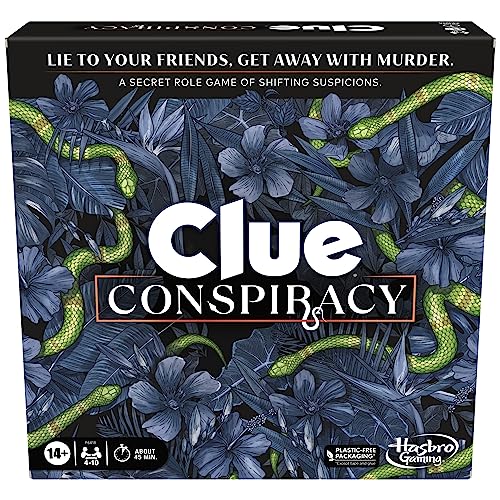
Hasbro Clue ConspiracyParty, trivia, drinking & social deduction games More specs
| 14+ yearslisting | 4listing | 10listing | 45 minlisting | 45 minlisting | — | Check price |
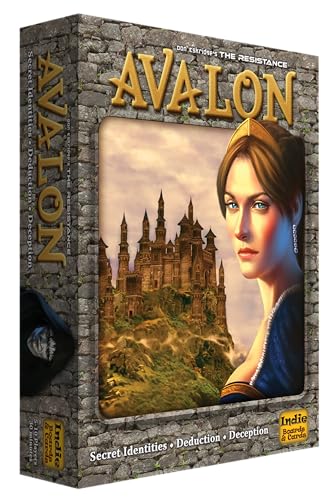
Indie Boards and Cards The Resistance: AvalonParty, trivia, drinking & social deduction games More specs
| 13+ yearslisting | 5listing | 10listing | — | — | — | Check price |
Indie Boards and Cards Avalon Deluxe Big Box (The Resistance Avalon)Party, trivia, drinking & social deduction games More specs
| — | — | — | — | — | — | Check price |
Mattel Jewel HeistParty, trivia, drinking & social deduction games More specs
| 13+ yearslisting | — | — | — | — | — | Check price |
Spin Master Murder PhoneParty, trivia, drinking & social deduction games More specs
| 13+ yearslisting | 4listing | 10listing | — | — | Yeslisting | Check price |




What’s in this listHidden-role and social deduction games, as the publisher describes them. “—” means neither the maker nor the Amazon listing states it.
What is a social deduction game
A social deduction game splits the table into people who know something and people who don't. Some players get a secret: a hidden role, a hidden team or a word everyone else knows except them. The rest of the table has to find them, mostly by talking. Who sounded too sure? Who voted late? Who changed their story?
There's usually very little on the table. A few cards, maybe a token or a timer. The game is the conversation. That's why these boxes are small and why the play time on the box is only a guess: a quiet group finishes fast, and a group that loves to argue doesn't.
Most social deduction games share three parts:
- A secret. Someone gets a role or knowledge the others don't have.
- Talk. Everyone asks, accuses and defends, in the open.
- A vote or a reveal. The table commits to an answer, and the cards say who was right.
The names on the boxes overlap. "Hidden role games" deal secret identities. "Bluffing games" are about saying things that may not be true. "Deduction games" are about working out an answer from clues. Social deduction sits where all three meet. Our data for this page includes games whose publishers describe them as hidden-role or social deduction games, 17 listings in all as of October 2026.
Hidden role games and bluffing games, side by side
A hidden role game hands out identities face down. Bezier Games describes its classic Werewolf as two teams, Villagers and Werewolves, where the Villagers don't know who the Werewolves are. Indie Boards and Cards describes The Resistance: Avalon the same way: a few evil players who know each other, hidden among the good, and one good player who knows the evil ones but has to hint carefully, because being found out loses the game.
A bluffing game may not have roles at all. The bluff is about what you hold or what you claim. Skull, from Asmodee, is listed as a bluffing and bidding party game.
An imposter game sits in between. Big Potato describes The Chameleon this way: everyone but one player sees the secret word, everyone says one word related to it, and the one who doesn't know it bluffs along. Blue Orange describes Detective Club the same way with picture cards: one player, the Conspirator, doesn't know the word and has to invent a reason their card fits.
Here's the trick that ties them all together. Anyone holding a secret has to act like they don't. Anyone without one has to decide who's acting. I teach seventh grade, so I've had a lot of practice at that second job.
What to look at in social deduction games
The table above shows what each listing states. These are the fields that decide whether a game works for your group, in the order I'd check them.
Minimum player count
This is the first number to read, and it matters more here than in almost any other kind of game. Social deduction needs enough people for the secret to hide in. In our data:
- Start at 3: Skull (3 to 6), The Chameleon (3 to 8), Werewolf Extreme (3 to 25) and the One Week box from Bezier Games (3 to 7)
- Start at 4: Detective Club (4 to 8), Clue Conspiracy (4 to 10) and Murder Phone (4 to 10)
- Start at 5: The Resistance: Avalon (5 to 10) and Crossfire (5 to 10)
Several listings, including Bezier's classic and Pro boxes, Avalon Deluxe Big Box, Jewel Heist and Shadow House Masquerade, don't state a player count. Check the box before you buy.
Big Potato's page adds a useful detail: The Chameleon has a special rule for 3 players, giving the Chameleon two guesses if caught, to keep a small game balanced. That's the kind of rule worth knowing about before game night, not during it.
Maximum player count
The top number tells you how big a party the box can take. Werewolf Extreme lists up to 25 players, the largest range in our data. Avalon, Crossfire, Clue Conspiracy and Murder Phone go to 10. Skull stops at 6.
A big top number doesn't mean the game is better at that size. It means the box can seat that many. If your usual group is five, a box that goes to 25 doesn't help you. A box that starts at 5 does.
Age on the listing
Social deduction asks players to keep a straight face, read other people and handle being lied to as part of the game. The ages on the listings reflect that:
- 8+: The Chameleon Picture Edition, Werewolf Extreme, Shadow House Masquerade
- 10+: Skull
- 12+: one of the two Chameleon listings
- 13+: The Resistance: Avalon, Jewel Heist, Murder Phone
- 14+: the other Chameleon listing, the One Week box, Clue Conspiracy
Note that the two Chameleon listings in our data state different ages, 12+ and 14+. Go by the listing you're buying from. Indie Boards and Cards' page lists Avalon at 14+, one year above its listing, so read the box too.
Play time
The box time is an estimate for a group that keeps the talk moving. In our data:
- About 10 minutes: the One Night werewolf listing (Bezier's page says about 10 minutes too)
- 15 minutes: The Chameleon
- 30 minutes: Skull
- 30 to 45 minutes: Detective Club
- 30 to 60 minutes: Werewolf Extreme
- 45 minutes: the One Week box and Clue Conspiracy
Plaid Hat Games puts Crossfire at about 5 minutes per game on its own page. Short games are a feature in this genre. A 10-minute round means a player who got caught early is back in the next game before they've finished their drink.
Moderator, elimination and electronics
These don't have their own column in the table, but they change how a night feels.
- Moderator: Bezier's classic Werewolf uses a moderator who isn't on a team and runs the days and nights. Bezier also offers an app for it. The moderator is the only player at the table with guaranteed job security.
- Elimination: in the classic Werewolf, players are voted out over a series of days and nights, so some people watch the end. Bezier's page for the One Night version says it has no elimination and no moderator.
- Electronic: Murder Phone, from Spin Master, is listed as electronic. The listing doesn't say what the device does, so read it before you buy.
My one opinion for this page: for a first social deduction game, pick one with no player elimination. Bezier's own description of its One Night version makes the case. Nobody sits out, and a game is short enough to play again right away. In a game with elimination, the first person voted out can spend most of the evening watching, and that's a hard way to learn a new game.
Edition
Several games appear in more than one box. Bezier's Werewolf line in our data covers a classic box, a One Night box, a One Week box, an Extreme edition and a Pro edition. Bezier's page says everything in the classic box is included in Extreme, and that the classic box works with Extreme, Pro and the Bonus Roles add-on. Avalon comes as a standard box and a Deluxe Big Box. The Chameleon has two standard listings and a Picture Edition at 8+. Read the edition name before you add to cart, and check that a box isn't an add-on for a game you don't own.
Kinds of social deduction games in our data
Here's how the 17 listings group, by what the publishers and listings say.
- Werewolf games (Bezier Games): the classic box with a moderator, plus One Night, One Week, Extreme and Pro. The widest range of sizes and lengths in one family.
- Team-mission games: The Resistance: Avalon and Avalon Deluxe Big Box. Indie's page says Avalon is standalone, and that it can be combined with The Resistance.
- Imposter and word games: The Chameleon (two listings and a Picture Edition) and Detective Club. One person doesn't know the secret, and everybody talks about it.
- Bluffing and bidding: Skull, 3 to 6 players, 30 minutes.
- Quick hidden-role card game: Crossfire, 5 to 10 players. Plaid Hat's page calls it fast-playing.
- Mystery and heist themes: Clue Conspiracy from Hasbro, Jewel Heist from Mattel, Shadow House Masquerade from Blue Orange and Murder Phone from Spin Master. Their listings give ages and, for some, player counts, but not much about how they play, so I'll stop there.
Lucho's take, after a werewolf round in Bay Three: "I never lie at game night. I just answer a different question than the one you asked."
How to run a good first game
None of these are rules from any box. They're habits that make the first night easier.
- Read the rules before people arrive. Social deduction rules are short, but explaining them while everyone is holding a secret card is not.
- Play one open practice round. Everyone shows their role, and you walk through what each player would do.
- Agree on what's off limits. Looking at someone's card is cheating. Raising your voice is a choice. Decide both before the first round.
- Keep rounds short at first. Start with a box whose listed time is 15 minutes or less if you have one.
- End on a fresh round, not a sore one. If someone got caught three times in a row, deal again and let them hold the secret.
Who should skip social deduction games
Skip this kind of game if your group doesn't enjoy being lied to, even for fun. The whole genre runs on people saying things that aren't true to people they like. If anyone at your table takes a bluff personally, a cooperative game or a word game will be a kinder night.
Skip it, too, if your usual group is two people. Nothing in our data starts below 3. And if most of your group is under 8, wait: the youngest listed age here is 8+, and most boxes start at 12+ or older.
If you like social deduction games, look at these
Pages chosen by what they share: hidden information, talking and larger groups.
- The Chameleon: the imposter word game, in more detail
- Coup: bluffing with hidden cards for a small table
- Crossfire: two very different games that share the name
- Clue: the deduction classic, with a notepad instead of a lie
- Party games: the wider shelf for big groups
- Murder mystery games: scripted mysteries for a dinner or a party
Makers in this list with their own brand pages: Hasbro, Mattel, Spin Master and Blue Orange Games.
Deal the roles, count the chairs, and let the quiet ones talk first.
Brands in this list
Related
Questions people ask
What is a social deduction game?
A game where some players have a secret role or secret knowledge, and the others try to find them by talking, asking questions and voting. The players with the secret try to blend in. Most of the game happens in conversation, not on a board. Werewolf games, The Resistance: Avalon and The Chameleon are common examples.
What is the difference between a hidden role game and a bluffing game?
A hidden role game deals each player a secret identity, and teams form around who is who. A bluffing game can work without roles: in Skull, for example, everyone bids on what's hidden under the table's cards. Many social deduction games do both, since anyone with a hidden role has to bluff to keep it.
What is the best social deduction game for a small group?
Look at the minimum player count first. In our data, Skull, The Chameleon, the One Week werewolf box and Werewolf Extreme start at 3 players. Avalon and Crossfire start at 5, and Clue Conspiracy, Detective Club and Murder Phone at 4. For a group of three, a box that starts at 3 is the only kind that works.
Are social deduction games good for kids?
Some are labeled for kids. In our data, The Chameleon Picture Edition, Werewolf Extreme and Shadow House Masquerade list ages 8+, and Skull lists 10+. Most of the others list 12+, 13+ or 14+. Pick by the age on the listing, and play a practice round where nobody is trying to win.
Do you need a moderator for werewolf games?
For the classic Werewolf from Bezier Games, yes. Its page says a moderator who isn't on either team runs the game through days and nights. Bezier's One Night version needs no moderator, has no player elimination, and its page says a game lasts about 10 minutes. Bezier also offers an app for the classic game.
Sources
- Bezier Games: Ultimate Werewolf — accessed 2026-10-23
- Bezier Games: One Night Ultimate Werewolf — accessed 2026-10-23
- Indie Boards and Cards: The Resistance: Avalon — accessed 2026-10-23
- Big Potato Games: The Chameleon — accessed 2026-10-23
- Blue Orange Games: Detective Club — accessed 2026-10-23
- Plaid Hat Games: Crossfire — accessed 2026-10-23