Board & Card Games · Type
The Chameleon Board Game: How It Plays, Editions and Expansion
The Chameleon board game is a bluffing game for 3 to 8 players, about 15 minutes, from Big Potato. Everyone but one player knows a secret word. Each person says one word about it, and the group has to spot the Chameleon who's faking it. Our data lists five Chameleon boxes on Amazon US, with ages from 8+ on the Picture Edition to 14+ on the original. It's the only game where the safest clue and the most suspicious clue are the same word.
We earn a commission if you buy through our links, at no cost to you. Disclosure
| Model | Recommended age | Players (min) | Players (max) | Play time (min) | Play time (max) | Amazon |
|---|---|---|---|---|---|---|
Big Potato The ChameleonParty, trivia, drinking & social deduction games More specs
| 14+ yearslisting | 3listing | 8listing | 15 minlisting | 15 minlisting | Check price |
Big Potato The ChameleonParty, trivia, drinking & social deduction games More specs
| 12+ yearslisting | — | — | — | — | Check price |
Big Potato The Chameleon Picture EditionParty, trivia, drinking & social deduction games More specs
| 8+ yearslisting | — | — | — | — | Check price |
Big Potato The Chameleon TravelParty, trivia, drinking & social deduction games More specs
| — | — | — | — | — | Check price |
Big Potato The Chameleon Expansion PackParty, trivia, drinking & social deduction games More specs
| — | — | — | — | — | Check price |


What’s in this listEditions and versions of The Chameleon sold on Amazon US, matched by the name on the listing. Players, age and play time come from the box or listing. “—” means neither the maker nor the Amazon listing states it.
What The Chameleon board game is
The Chameleon is a social deduction game. That means the game is about working out who's lying. One player each round is secretly the Chameleon. Everyone else knows the secret word for the round. The Chameleon doesn't.
Each player says one word connected to the secret word. The real players want to show they know it without making it obvious. The Chameleon wants to blend in by guessing what kind of word would fit. Then the table argues, votes, and points at whoever they think is faking.
That's the whole tension. Say a word that's too obvious, and you've told the Chameleon the answer. Say a word that's too clever, and everyone starts looking at you. Big Potato's page puts the job of the group simply: expose the bluffer without letting them blend in.
The box facts, from Big Potato's page and the listings in our data:
- Players: 3 to 8
- Ages: 14+ at the top of Big Potato's page and on one listing; 12+ on another listing and further down the publisher's page
- Time: 15 minutes, with a full game around 15 to 20 per Big Potato's FAQ
- Contents: 40 topic cards, 16 code cards and 2 dice, per Big Potato's page
- Secret words: 800, per the publisher
- Competitive, with one bluffer against the table each round
Where these rules come from
We couldn't find a rulebook for The Chameleon on Big Potato's own website, and we don't use copies posted by other sites. So this page describes the game only from what Big Potato's product pages and the Amazon listings say. That covers how a round works. It doesn't cover the fine print, like exact scoring or how ties in the vote are settled. For that, the rules sheet in your box is the final word.
How The Chameleon plays
Here's the round as Big Potato's page describes it, in my own words:
- Everyone gets a card. One player is secretly the Chameleon.
- A topic card is revealed. It sets the theme for the round.
- The dice are rolled. Everyone except the Chameleon uses their code card and the dice to find the secret word on the topic card.
- Going around the table, each player says one word related to the secret word.
- The Chameleon, who doesn't know the word, says something that sounds like it belongs.
- The group debates and votes on who the Chameleon is.
The dice and code cards are the clever part. They pick the secret word without anyone having to whisper it, and they leave the Chameleon out without anyone having to look away. The Chameleon's best map is the clues the other players give.
With 3 players, Big Potato's page says a caught Chameleon gets two guesses. The page also makes clear the game needs at least 3 people, since the bluffer needs a group to question.
Why one word is so hard
A single word sounds easy until you're the one saying it. You know the secret word is, say, "pancake." If you say "syrup," the Chameleon now knows it's breakfast food, and probably pancakes. If you say "flip," you've given less away, but now somebody at the table is wondering what you're up to.
That's the line every honest player walks. The best clues are words that make sense to people who already know the answer, and stay vague to anyone who doesn't. It's a little like giving homework hints. Too much and the kid copies the answer. Too little and they think you don't know it either.
Playing the Chameleon
When it's your turn to bluff, you've got two jobs. Listen to the clues that came before you, and pick a word that fits most of them. Going late in the order helps, because you've heard more. Going first is rough. You have nothing to go on but the topic card.
The trick is confidence. A Chameleon who pauses for five seconds and then says "food" gets caught. One who says "breakfast" right away often doesn't, even with less information.
A sample round
This is a made-up example, not a card from the box. Five players. The topic is breakfast, and the secret word is pancake. Ana is the Chameleon and doesn't know the word.
- Ben goes first and says "stack." Vague, but it fits.
- Cleo says "griddle." A little closer.
- Ana, the Chameleon, has heard "stack" and "griddle." She says "butter." It fits waffles, toast and pancakes, so it's a safe bet.
- Dev says "flip."
- Eli says "short." As in a short stack.
Now the table talks. Ben's "stack" was vague. Was that caution or a bluff? Ana's "butter" fits, but it fits a lot of things. Eli's "short" made sense only if you knew the word. The vote goes around, and the argument about Ben takes longer than the round did. That's normal.
Tips for a first game
These are habits, not rules from the box.
- Take a breath before the first clue. Give everyone a few seconds with the topic card. A rushed first clue is usually the one that gives the word away.
- No explaining your word. Say it, then stop. A long explanation helps the Chameleon more than anyone.
- One word means one word. Agree before the game whether "ice cream" counts as one word. Settle it once.
- Vote by pointing. Big Potato's page describes catching the Chameleon by pointing. Count to three and everyone points at once. It stops people from following the first vote.
- Rotate who rolls. Pass the dice around the table so nobody gets stuck running the game.
House rule worth trying with a new group: play the first round open. Everyone, including the Chameleon, shows their card afterward and talks through their word choice. That's not a Big Potato rule. It's a quick way to teach what a good clue looks like.
The Chameleon editions on Amazon US right now
Our data for this page lists five Chameleon boxes from Big Potato on Amazon US as of October 2026. The table above shows the players, age and play time each listing gives. Where a listing leaves a field out, you'll see a dash.
The original game, two listings
- The Chameleon (14+): 3 to 8 players, 15 minutes, listed as social deduction
- The Chameleon (12+): listed as social deduction, with no player count or time in our data
Both are listed under the same name and as complete games, not expansions. The listings differ on age, and our data doesn't show any other difference between them. Big Potato's own page carries both ages, 14+ at the top and 12 and up lower down. If the age matters for your table, read the listing you're buying from.
The Chameleon Picture Edition
- The Chameleon Picture Edition: ages 8+, listed as social deduction, not an expansion
Big Potato describes this as the version where the table shares a secret image instead of a secret word. It's also the one box in our data with a starting age below 12. If your group includes younger kids, or adults who'd rather not play a word game, this is the box to look at.
The Chameleon Travel
- The Chameleon Travel: listed as the Travel edition, not an expansion
Big Potato calls it a smaller version for trips. The listing in our data doesn't give players, age or time, and I won't guess what's different inside beyond the size.
The Expansion Pack
- The Chameleon Expansion Pack: listed as an expansion
Big Potato says it adds 40 new topic cards. You need a base game for the code cards and dice. Buy it once your group starts recognizing every topic card in the base box.
Quick matches
- A first copy for teens and adults: The Chameleon, either listing, after checking the age
- A family table with kids 8 and up: the Picture Edition
- For trips and small bags: the Travel edition
- A group that has seen every card: the Expansion Pack
Who The Chameleon suits
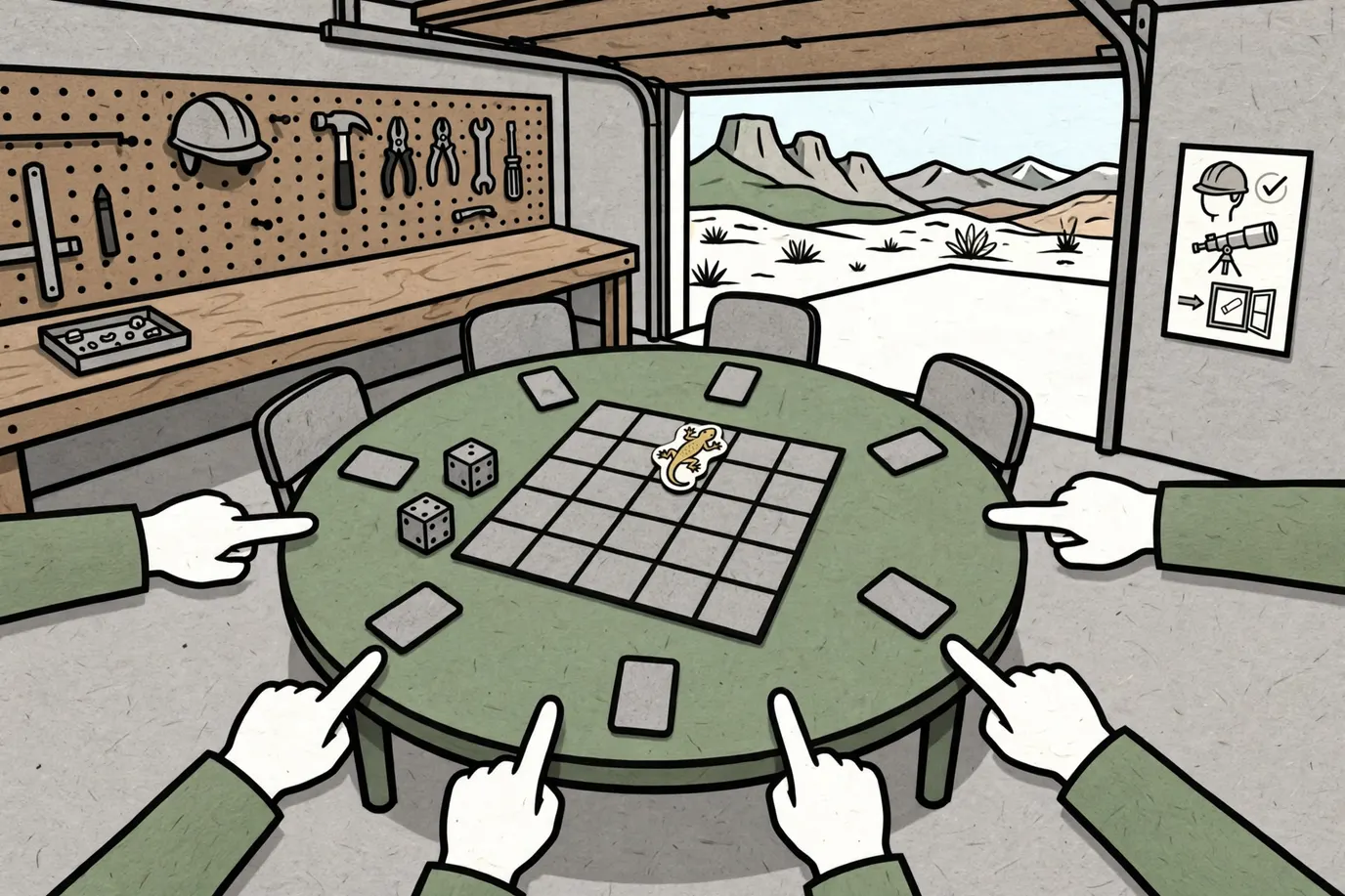
It suits a group of friends who like to talk. The game is mostly debate. The board, such as it is, is one card.
It suits a mixed group too. Big Potato's page notes that it needs no trivia, and everyone plays every round. Nobody sits out while others take turns, and nobody needs to know facts about history or movies.
It also suits a short gap in an evening. Rounds take a few minutes, so you can play three or thirty.
Lucho's take: "At the shop, the guy who says the least about the engine usually didn't look at it." He means it's a tell. He's also very quiet when he's the Chameleon, so the advice cuts both ways.
Who should skip The Chameleon
Skip it if your group doesn't enjoy bluffing. Big Potato's page says so itself: the game is largely about fibbing to your friends. Some people don't like doing that, even in a game.
Skip it if you want a quiet game. The whole thing runs on accusations and arguments.
Skip it with only 2 players. The publisher's floor is 3.
And for the word editions, check the age. The original is listed at 12+ or 14+, and Big Potato's page suggests the word version for ages 12 and up. For younger players, the Picture Edition at 8+ is the box to look at.
If you like The Chameleon, look at these
Pages chosen by what they share with The Chameleon: bluffing, quick rounds and groups of 3 or more.
- Social deduction games: the wider shelf of find-the-liar games
- Coup: a short bluffing card game
- Codenames: one-word clues for two teams
- Telestrations: a passing game where meanings drift around the table
- Party games: the wider shelf for bigger groups
One word each. Say it like you mean it.
Related
Questions people ask
How many players do you need for The Chameleon?
Three to 8, on Big Potato's page and on one of the original listings in our data. Big Potato notes that with 3 players a caught Chameleon gets two guesses at the secret word, and that the game doesn't work with fewer than 3 because the bluffer needs a group to question. The other listings in our data don't give a player count.
What age is The Chameleon for?
It depends on the box. One original listing in our data says 14+, the other says 12+, and the Picture Edition says 8+. Big Potato's own page lists 14+ at the top and says ages 12 and up further down. The Travel and Expansion Pack listings don't give an age. The game asks players to bluff and read each other, so the age is about the social side.
What is The Chameleon Picture Edition?
It's the same bluffing game with pictures instead of words. Big Potato describes the Pictures Edition as swapping the words for images, so the whole table shares a secret image except the Chameleon. The listing in our data gives ages 8+, the youngest age on any Chameleon box in our data. It's listed as social deduction and isn't an expansion.
How long does a game of The Chameleon take?
Big Potato lists 15 minutes, and says a round takes a few minutes while a full game usually runs 15 to 20. The original listing in our data with a time says 15 minutes. Because each round is short, it's easy to play one more or to stop whenever the group wants.
What does The Chameleon Expansion Pack add?
New topics. Big Potato says the Expansion adds 40 new topic cards. It's listed as an expansion in our data, so you need a base game with the code cards and dice. It doesn't change how the game plays. It gives a group that has seen every topic card in the base box something new to describe.
Sources
- Big Potato: The Chameleon — accessed 2026-10-23
- Big Potato: The Chameleon Picture — accessed 2026-10-23