Board & Card Games · Type
Crossfire Game: Two Games, One Name
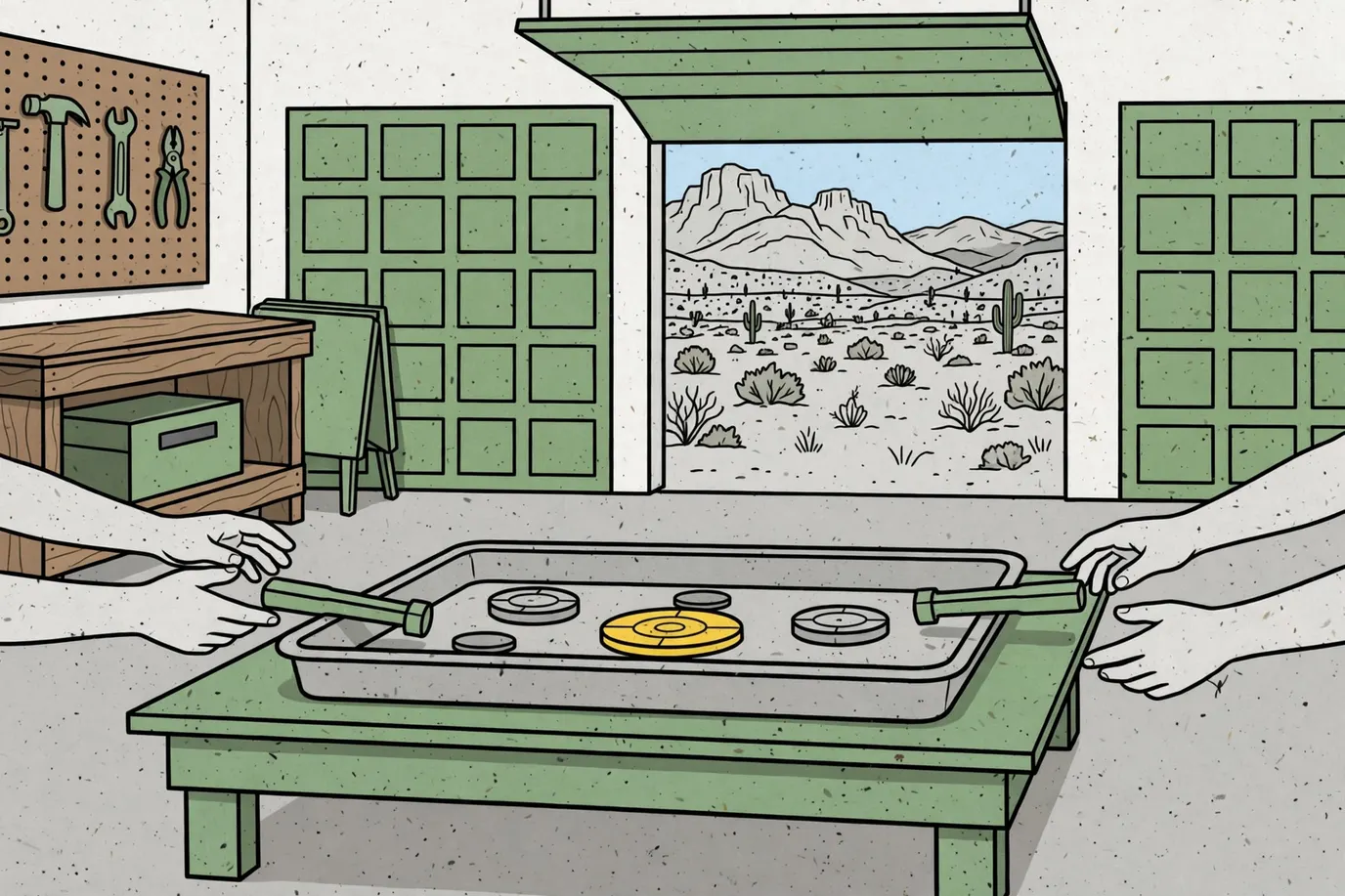
Search for the Crossfire game and you'll find two very different boxes. One is Hasbro's Crossfire, a 2-player game where you shoot metal marbles at two targets, ages 7+ and about 10 minutes on the listing. The other is a hidden-role card game for 5 to 10 players, listed as Plaid Hat Games Crossfire. Same name, nothing else in common. I've sorted them out below, rulebook by rulebook, so the right one ends up under the right tree.
We earn a commission if you buy through our links, at no cost to you. Disclosure
Board & family games
| Model | Recommended age | Players (min) | Players (max) | Play time (min) | Play time (max) | Amazon |
|---|---|---|---|---|---|---|
Hasbro CrossfireBoard & family games More specs
| 7+ yearslisting | 2listing | 2listing | 10 minlisting | 10 minlisting | Check price |

Party, trivia, drinking & social deduction games
| Model | Players (min) | Players (max) | Amazon |
|---|---|---|---|
Fantasy Flight Games Plaid Hat Games CrossfireParty, trivia, drinking & social deduction games More specs
| 5listing | 10listing | Check price |

What’s in this listEditions and versions of Crossfire sold on Amazon US, matched by the name on the listing. Players, age and play time come from the box or listing. “—” means neither the maker nor the Amazon listing states it.
Two games called Crossfire
Before anything else, check which Crossfire you're shopping for. As of 2026-10-23, our data shows two listings on Amazon US with that name, and they share nothing but the word on the box.
| Crossfire | Kind of game | Players | Age | Time |
|---|---|---|---|---|
| Hasbro Crossfire | Dexterity, marble blasters | 2 | 7+ | 10 min |
| Plaid Hat Games Crossfire | Hidden-role card game | 5–10 | 14+ (publisher) | 5 min (publisher) |
The first is a dexterity game. That means your hands decide it: how fast you load, how well you aim. The second is a social deduction game. That means your talking decides it: who you believe, who you point at.
If you're buying for two kids who want to shoot something at a target, it's the Hasbro box. If you're buying for a group of 5 to 10 teens or adults who like arguing about who's lying, it's the card game. If you're buying for one kid and their grandparents, read the next part carefully, because neither one fits a table of three.
My one opinion for this page: buy for the group size you actually have, not the one on the box you wish you had. Crossfire makes the point better than any game I know. One box is exactly 2. The other starts at 5. There's no middle.
Hasbro's Crossfire: how the marble game plays
These notes come from Hasbro's rulebook for Crossfire, product G2919, dated 2026. It's in our own words; the full rules are in the PDF linked in the sources.
What's in the box
The rulebook lists 2 blasters, 18 metal marbles, 2 targets and a game arena. The arena folds into its own case. The cover also says adult assembly is required, and the listing in our data puts the game at 7+ and 10 minutes for 2 players.
Setting it up
- Put the arena on a flat surface, release its lock and open it until it clicks into place.
- Take the marbles and targets out of their compartment.
- Connect the two blasters as the rulebook shows.
- Set both targets in the middle of the arena.
- Each player takes 9 marbles and loads their blaster.
- Set both score trackers to 0.
A round, start to finish
There are no turns. Both players shoot at the same time. The youngest player counts down, and on "fire" everyone starts.
You shoot marbles at either of the two targets. The goal is to push a target into your opponent's endzone. Marbles that end up in your endzone are yours to reload whenever you need them. If a blaster jams, the rulebook says to jiggle the handle to free the marbles.
When both targets are out of play, everyone stops. If a target landed in your opponent's endzone, you move your score tracker up one point. Then the target goes back in the center and the shooting starts again.
How it ends
The first player to 5 points wins. If the score reaches 4 to 4, it's sudden death, and only one target goes back in.
That's the whole game. It's loud, fast and over in about the time it takes to read this section twice. Sam would like it noted that in his countdowns, "fire" sometimes comes right after "two." We're working on the number one.
Storing it
Take the blasters off and store them with their notches lined up, per the rulebook. Put the marbles and targets back in their compartment, then close and lock the arena. A game with 18 metal marbles is a game where you count them before the lid goes on.
Safety: the marbles
The rulebook carries a choking-hazard warning: the toy contains marbles and is not for children under 3. The CPSC lists small balls and marbles among the items that need that kind of warning on toys. If there's a toddler in the house, store the box up high and count the marbles after every game.
Plaid Hat Games Crossfire: how the card game plays
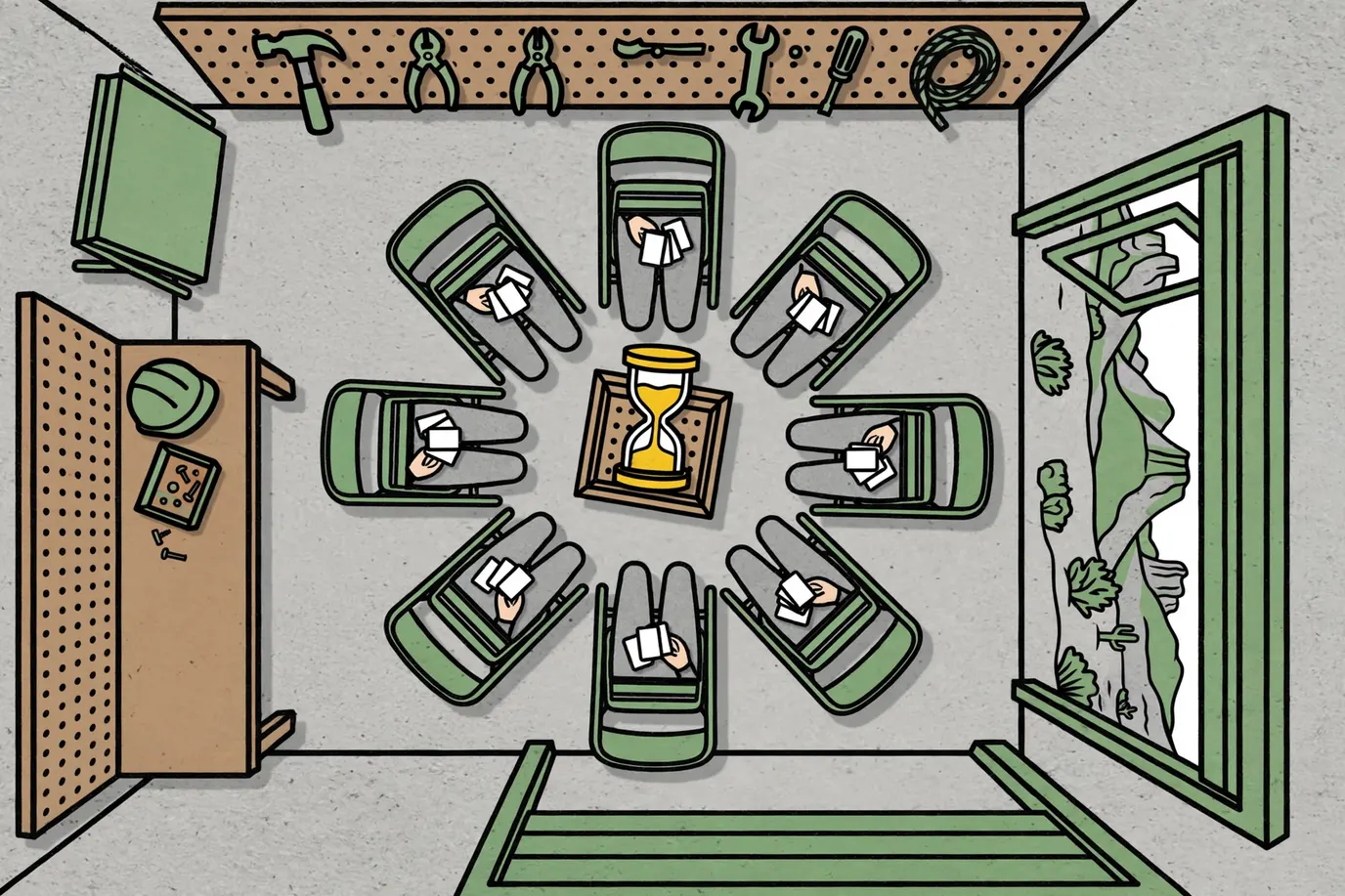
These notes come from the Plaid Hat Games rulebook for Crossfire and the publisher's page. The publisher describes it as a hidden-role game set in its Specter Ops world, for 5 to 10 players, 14+, about 5 minutes per game. The rulebook lists 19 role cards, 3 Sniper Shot cards and a sand timer.
The idea
Somebody at the table is the VIP. Some players are Agents trying to keep the VIP from being shot. Some are Assassins trying to shoot the VIP. A Bystander sits in the middle of it, and depending on player count there may be a Decoy. Nobody knows for sure who's who.
Setup, in short
The rulebook has a chart that says which roles go in for each player count. The dealer deals one role card to each player. Then comes the clever part: each player looks at their card, passes it to the left and looks at the card they just got. After that, small groups of neighbors shuffle their cards together and deal them back out, so you've seen a couple of cards but can't be sure which one you ended up holding.
Three minutes of talking
Start the timer. Everyone claims a role by turning their card a certain way, and you can change your claim any time. You can say anything, true or not. The one thing you can't do is show your card before time runs out.
Time's up
Everyone counts down from 3 and points at one other player at the same moment. The dealer then reads a short script from the rulebook: unarmed roles lower their hands, Agents reveal, anyone shot by an Agent reveals, and finally the VIP reveals and says whether they were shot. If the VIP is shot, the red team wins. If not, the blue team wins. A few roles have their own win conditions, which get checked at this point.
More ways to play
The rulebook has a second mode, Sniper Mode, for 6 to 10 players, where one player is a Sniper handing out Sniper Shot cards to suspected Assassins. It also has special roles to add once your group knows the standard ones, such as an Enforcer who points two fingers and a Bodyguard who protects instead of shooting. The rulebook suggests keeping score across several games if you want a longer evening.
A tip for the first game
The rulebook's strategy notes point at two clues. The first is what people claim: if too many players claim the same role, someone is lying. The second is what you saw during setup: do your neighbors describe the same cards you saw? For a first game, the rulebook suggests asking every player to say out loud what they saw while the cards went around. It turns the three minutes into a puzzle instead of a shouting match, and it teaches new players what to listen for.
Fair warning for a family table: this is a game about pretend-shooting your relatives with a finger, after three minutes of lying to them. Some families find that funny. Some find it a lot. The publisher's age is 14+, and I'd take that seriously.
How to tell the two apart on a listing
The names are the same, so look at three things on the listing before you click.
- Player count. Exactly 2 is Hasbro's marble game. 5 to 10 is the card game.
- The photos. A folding arena with two blasters is Hasbro. A small card box and a sand timer is the card game.
- The maker line. Our data lists the card game as Plaid Hat Games Crossfire, and the marble game under Hasbro.
If a listing shows none of these clearly, that's a reason to keep scrolling.
Who each Crossfire suits
Hasbro Crossfire is for
- Two players, ages 7+ on the listing. Siblings, a kid and a parent, two friends after school.
- Short games. 10 minutes on the listing, first to 5 points per the rulebook.
- Kids who'd rather move than read. The rules fit on one page and there are no cards to read.
The Plaid Hat Games card game is for
- Groups of 5 to 10. Teen parties, adult game nights, a family reunion of the right size.
- Ages 14+ on the publisher's page. The listing doesn't state an age.
- Groups that like talking more than sitting still. The whole game is three minutes of talk and one big reveal.
Who should skip Crossfire
Skip Hasbro's Crossfire if you have a child under 3 at home and nowhere high to keep the box. It's 18 metal marbles. Skip it, too, if your usual game night is three or more people, since it's strictly 2-player.
Skip the card game if your group is under 5, because it doesn't play with fewer. Skip it if lying in a game upsets anyone at your table, or if pointing finger guns at each other isn't your family's style. A cooperative game will go over better.
And if you're thinking of a Crossfire from your own childhood, read the listing photos before you buy. Hasbro's rulebook in our sources is dated 2026, and we don't have data on older boxes.
If you like Crossfire, look at these
Chosen by what they share with one of the two games: 2-player action, or hidden roles and bluffing.
- Coup: a short bluffing card game with hidden characters
- Social deduction games: more games where the question is who's lying
- Connect 4: another quick game for two
- Hungry Hungry Hippos: a fast game where speed beats strategy
- Party games: games for bigger groups
Hasbro's other games are on the Hasbro brand page.
Count the players first. Then count the marbles.
Brands in this list
Related
Questions people ask
How many players is the Crossfire board game?
It depends which Crossfire you mean. Hasbro's marble blaster game is for exactly 2 players, per its rulebook and listing. The Plaid Hat Games card game is for 5 to 10 players, per its rulebook, the publisher's page and the listing. There's no setting that turns one into the other, so count your players before you pick.
What age is Crossfire for?
Hasbro's Crossfire is 7+ on the listing and the rulebook cover. The rulebook also carries a choking-hazard warning because the game contains marbles, and it's not for children under 3. The Plaid Hat Games Crossfire card game is listed at 14+ on the publisher's page. The Amazon US listing for it in our data doesn't state an age.
How do you win Crossfire?
In Hasbro's Crossfire, you score a point each time you drive a target into your opponent's endzone, and the first player to 5 points wins, per the rulebook. In the Plaid Hat Games card game, you win with your team or role: the blue side wins if the VIP isn't shot, the red side wins if the VIP is shot, and some special roles have their own goals.
How long does a game of Crossfire take?
Hasbro's Crossfire lists 10 minutes on its listing. The Plaid Hat Games card game lists 5 minutes per game on the publisher's page, and its rulebook gives players 3 minutes of talk before everyone points. Both are short enough that most groups play several in a row.
Does Hasbro's Crossfire need assembly?
The rulebook says adult assembly is required. You connect the blasters, open and lock the game arena on a flat surface, and set the targets and score trackers. When you're done, the blasters come off and the marbles and targets go back in their compartment inside the folded arena.
Sources
- Hasbro: Crossfire Game instructions (G2919) — accessed 2026-10-23
- Hasbro: Crossfire rulebook, G2919 (PDF) — accessed 2026-10-23
- Plaid Hat Games: Crossfire — accessed 2026-10-23
- Plaid Hat Games: Crossfire rulebook (PDF) — accessed 2026-10-23
- CPSC: Small Parts for Toys and Children's Products — accessed 2026-10-23