Board & Card Games · Type
Clue Board Game: Rules, History and Editions
The Clue board game is a deduction race for 3 to 6 players on the classic rulebook, ages 8+: a murder at a mansion, three cards hidden in an envelope, and you win by naming the suspect, the weapon and the room before anyone else. The newer Hasbro box adds a two-player variant. Our data lists 19 editions on Amazon US, from the classic box to Clue Junior, Master Detective and a cooperative escape game. I'll take the detective notepad over the dice any night.
We earn a commission if you buy through our links, at no cost to you. Disclosure
Board & family games
| Model | Recommended age | Players (min) | Players (max) | Play time (min) | Play time (max) | Amazon |
|---|---|---|---|---|---|---|
Winning Moves Clue Master DetectiveBoard & family games More specs
| 10+ yearslisting | 3listing | 10listing | 45 minlisting | 60 minlisting | Check price |
Hasbro Retro Series Clue 1986 EditionBoard & family games More specs
| 8+ yearslisting | 3listing | 6listing | — | — | Check price |
Hasbro ClueBoard & family games More specs
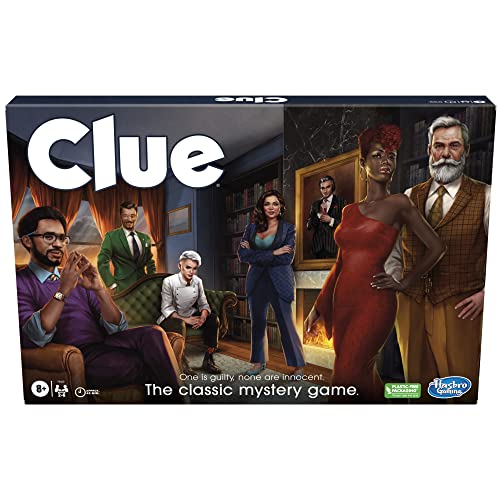
| 8+ yearslisting | 2listing | 6listing | — | — | Check price |
Hasbro Clue Junior Case of The Broken ToyBoard & family games More specs
| — | 2listing | 6listing | — | — | Check price |
Hasbro Clue ReimaginedBoard & family games More specs
| 8+ yearslisting | 2listing | 6listing | — | — | Check price |
USAopoly Clue Bob's BurgersBoard & family games More specs
| 8+ yearslisting | 2listing | 6listing | 60 minlisting | 60 minlisting | Check price |
USAopoly Clue Scooby-DooBoard & family games More specs
| 8+ yearslisting | 3listing | 6listing | 60 minlisting | 60 minlisting | Check price |
USAopoly Clue SquishmallowsBoard & family games More specs
| 8+ yearslisting | 2listing | 6listing | 60 minlisting | 60 minlisting | Check price |
USAopoly Clue PeanutsBoard & family games More specs
| 8+ yearslisting | 2listing | 6listing | 60 minlisting | 60 minlisting | Check price |
Winning Moves Clue Classic EditionBoard & family games More specs
| 8+ yearslisting | 3listing | 6listing | — | — | Check price |
WS Game Company Clue Luxury EditionBoard & family games More specs
| — | 3listing | 6listing | — | — | Check price |
WS Game Company Clue Vintage Bookshelf EditionBoard & family games More specs
| 8+ yearslisting | 3listing | 6listing | — | — | Check price |
Hasbro Clue Wizarding World Harry Potter EditionBoard & family games More specs
| 8+ yearslisting | 3listing | 5listing | — | — | Check price |
Spin Master Clue Giant EditionBoard & family games More specs
| — | 2listing | 4listing | — | — | Check price |
Hasbro Clue Escape: The Illusionist's ClubBoard & family games More specs
| 10+ yearslisting | — | — | — | — | Check price |
Hasbro CLUE Home AloneBoard & family games More specs
| 8+ yearslisting | — | — | — | — | Check price |
USAopoly Clue Disney The Nightmare Before ChristmasBoard & family games More specs
| 8+ yearslisting | — | — | — | — | Check price |
USAopoly Clue Universal MonstersBoard & family games More specs
| — | — | — | — | — | Check price |




Party, trivia, drinking & social deduction games
| Model | Recommended age | Players (min) | Players (max) | Play time (min) | Play time (max) | Amazon |
|---|---|---|---|---|---|---|
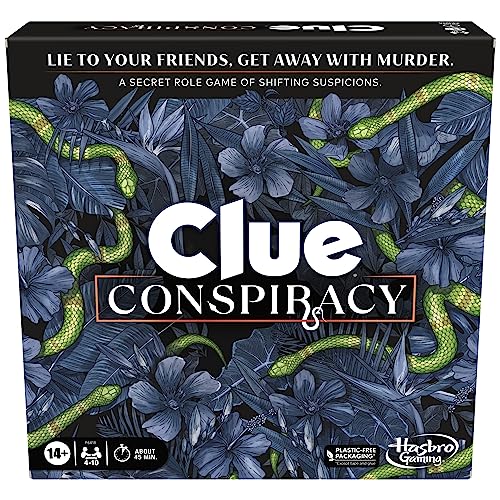
Hasbro Clue ConspiracyParty, trivia, drinking & social deduction games More specs
| 14+ yearslisting | 4listing | 10listing | 45 minlisting | 45 minlisting | Check price |
What’s in this listEditions and versions of Clue sold on Amazon US, matched by the name on the listing. Players, age and play time come from the box or listing. “—” means neither the maker nor the Amazon listing states it.
What the Clue board game is
Clue is a deduction game. A crime has happened in a mansion. Three cards are hidden in an envelope: one suspect, one weapon and one room. Everyone else's cards are dealt out, so each player starts the game knowing a few things that are definitely not in the envelope. You move from room to room, make guesses, and watch who can prove you wrong. The first player to name all three hidden cards correctly wins.
It's competitive, not cooperative. Everyone is racing for the same answer, with their own notes, and only one person can make the winning accusation.
Here's what the classic Parker Brothers instruction book (product 00045) states on the box facts:
- Players: 3 to 6
- Ages: 8+
- Board: a mansion with 9 rooms
- Pieces: 6 suspect pawns, 6 miniature weapons
- Cards: 21 in all, one for each suspect, weapon and room
- Extras: a pad of detective notebooks, a Case File envelope, 2 dice
Hasbro's newer Clue rulebook (product A5826) lists 2 to 6 players and ages 8+, and adds a few things I'll get to below.
A little math before we start, because I can't help it. Six suspects times six weapons times nine rooms is 324 possible answers in the envelope. Every card you see knocks out a whole slice of them. That's the game, really: a 324-option problem that gets smaller every turn, with dice.
How Clue plays
The rules below are in my own words. The main source is the Parker Brothers Classic Detective Game instruction book, product 00045. Where Hasbro's newer A5826 rulebook does things differently, I say so.
Setup
- Put each suspect pawn on its start space, even the ones nobody is playing. Unplayed suspects can still be guilty, so they stay on the board.
- Put each weapon in a different room.
- Sort the cards into suspects, weapons and rooms. Shuffle each pile face down.
- Without looking, take the top card of each pile and slide all three into the Case File envelope.
- Shuffle the rest together and deal them all out. Some players can end up with one more card than others. The rulebook says that's fine.
- Everyone takes a notebook sheet and checks off the cards in their own hand. Those can't be in the envelope.
The suspect called Miss Scarlet always moves first, and play goes left from there. The A5826 rulebook adds a fallback: if nobody is playing her, the player sitting next in order from her start space goes first.
Moving
On your turn you roll the dice and move that many squares. You can go up, down, left or right, but never diagonally. You can't land on or pass through a square another suspect is standing on, and you can't use the same square twice in one move.
The four corner rooms are linked in pairs by secret passages. If you start your turn in one, you can skip the roll and move straight to the room in the opposite corner.
You enter a room through a door. The moment you're inside, you stop, even if your roll had squares left over. A pawn standing in a doorway blocks it.
Making a suggestion
When you enter a room, you can make a suggestion. Name a suspect, a weapon and the room you're standing in. Move that suspect and that weapon into your room, where they stay.
Then the player on your left checks their hand. If they hold any of the three cards you named, they secretly show you one. If they hold more than one, they choose which. If they hold none, the next player checks, and so on around the table. As soon as one card is shown, the suggestion is done. Mark that card on your sheet. It's not in the envelope.
A few finer points from the 00045 book:
- One suggestion per room visit. To suggest again, go to a different room, or leave and come back on a later turn.
- You can name cards from your own hand, to mislead or to test someone.
- If someone pulls your pawn into a room with their suggestion, on your next turn you can stay and make a suggestion there without rolling.
Making an accusation
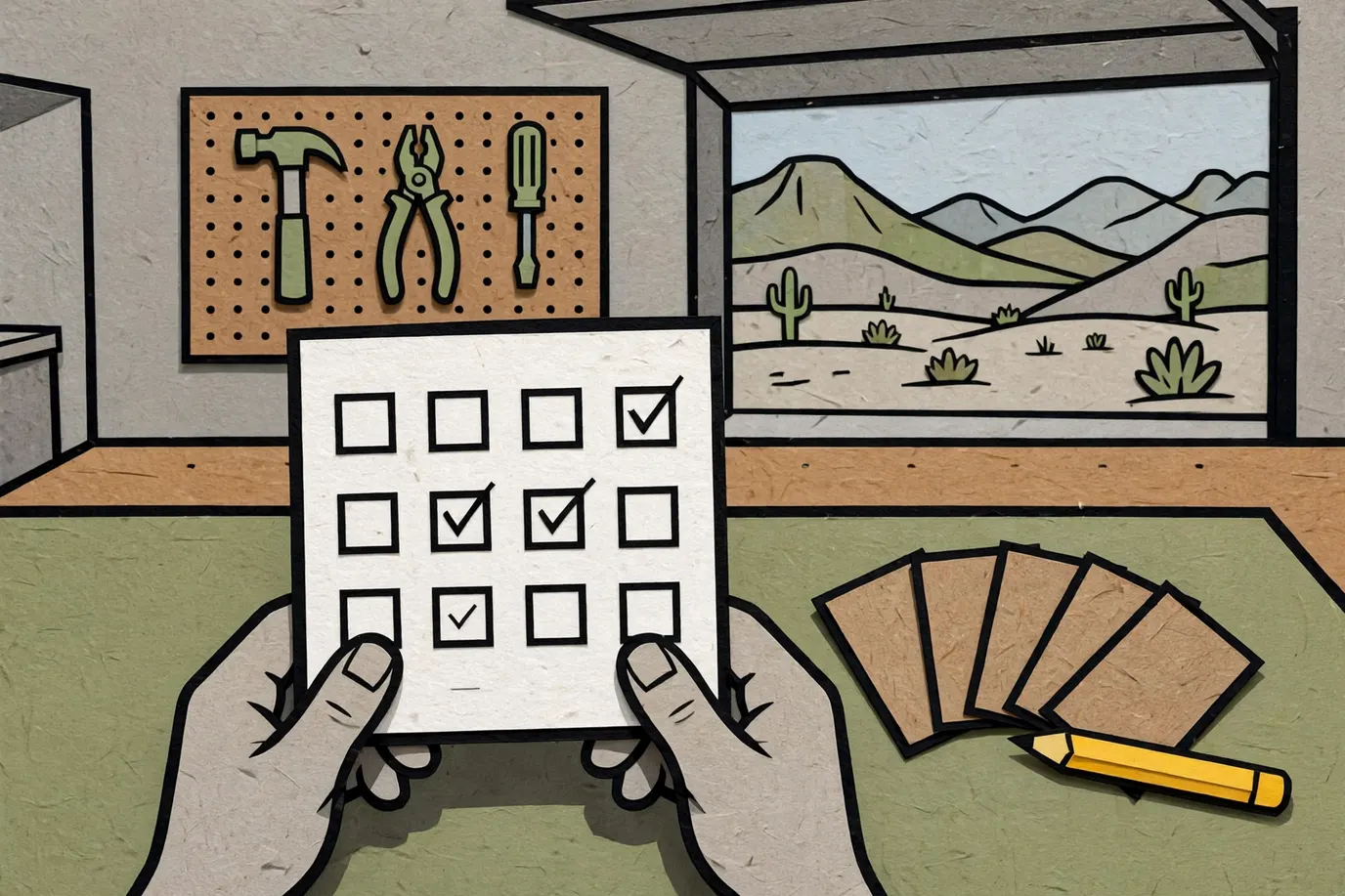
When you think you know all three cards, you can make an accusation on your turn. Name a suspect, a weapon and a room, then look in the envelope where nobody else can see.
You get one accusation per game. If all three cards match, you win, and you lay them out for the table. If even one is wrong, you quietly put the cards back. You can't win anymore and you stop taking turns, but you stay in the game as a card holder: you still show cards when someone's suggestion names one of yours.
The 00045 book lets you name any room in an accusation. The A5826 rulebook adds one condition: you have to be standing in a room to accuse, though not necessarily the one you name.
What the newer Hasbro rulebook adds
Hasbro's A5826 rulebook keeps the same core game and adds two things.
- Clue cards. Nine extra cards, shuffled into their own pile. When the dice show a magnifying glass, you draw one and do what it says. Remove them and you're playing the traditional game.
- A two-player variant. After the first setup steps, four of the leftover cards go face down into four rooms. When you walk into a room with one, you peek at it in secret before making your suggestion. Putting them in the corner rooms makes a shorter game.
Lucho's take on the weapons: "A wrench in the kitchen is the least suspicious thing that ever happened in a house." He has a point. He's also never been the one holding it.
Where Clue came from
The Strong National Museum of Play, which runs the National Toy Hall of Fame, tells it this way. Anthony Pratt, a pianist, saw murder-mystery party games at hotels where he worked. He and his wife Elva designed a board game in 1943, and he was granted a patent in 1947. Post-war shortages delayed production. Waddington's Games of London published it as Cluedo in 1949, and its American partner Parker Brothers brought out a slightly modified version called Clue the same year. Clue joined the Hall of Fame in 2017.
Clue editions on Amazon US right now
Our data for this page lists 19 Clue editions and versions on Amazon US as of October 2026. The table above shows players, age and play time where each listing states them. A dash means the listing doesn't say, and I won't guess.
The classic game
These six are the closest to the rulebook above.
- Hasbro Clue: 2 to 6 players, ages 8+. Contents listed as a gameboard, a card-revealing mirror, 6 character tokens, 6 miniature weapons, 30 cards, a detective notepad and 2 dice. Thirty cards matches the A5826 count: the 21 crime cards plus 9 Clue cards.
- Winning Moves Clue Classic Edition: 3 to 6 players, ages 8+, listed as the classic edition
- Hasbro Clue Reimagined: 2 to 6 players, ages 8+, with 6 gold-plated zinc weapon tokens and sculpted character movers per the listing
- WS Game Company Clue Luxury Edition: 3 to 6 players, listed as a deluxe edition; no age stated
- Hasbro Retro Series Clue 1986 Edition: 3 to 6 players, ages 8+, a retro reissue; marked as resale stock
- WS Game Company Clue Vintage Bookshelf Edition: 3 to 6 players, ages 8+, a retro reissue; marked as resale stock
If you have exactly two players, look at the editions listing 2 as the minimum: Hasbro Clue and Clue Reimagined. If you want the 1986 look, the Retro Series box is the one, but read the seller details since it's listed as resale.
Bigger or different games
- Winning Moves Clue Master Detective: 3 to 10 players, ages 10+, 45 to 60 minutes. The widest player count in our data for a classic-style Clue.
- Hasbro Clue Conspiracy: 4 to 10 players, ages 14+, 45 minutes, listed as social deduction. Not the same game as classic Clue.
- Hasbro Clue Escape: The Illusionist's Club: ages 10+, listed as cooperative. Everyone works together, which classic Clue never does.
- Spin Master Clue Giant Edition: 2 to 4 players, listed as a giant edition
Clue Junior
Hasbro Clue Junior Case of The Broken Toy lists 2 to 6 players and is marked as a junior edition. The listing doesn't give a starting age. It's the one to look at for kids not ready for the classic game's 8+, but check the box for the age before you buy.
Themed editions
Eight editions put Clue on a licensed theme. I'll name them as the listings do and leave the themes alone.
- USAopoly Clue Bob's Burgers: 2 to 6 players, 8+, 60 minutes; 6 metal tokens, 21 rumor cards, scoring pad
- USAopoly Clue Scooby-Doo: 3 to 6 players, 8+, 60 minutes
- USAopoly Clue Squishmallows: 2 to 6 players, 8+, 60 minutes; board, 6 movers, 6 item tokens, 6 personality cards, 21 rumor cards, 21 support cards, clue sheet pad, 2 dice
- USAopoly Clue Peanuts: 2 to 6 players, 8+, 60 minutes
- USAopoly Clue Disney The Nightmare Before Christmas: 8+
- USAopoly Clue Universal Monsters: no players or age listed
- Hasbro Clue Wizarding World Harry Potter Edition: 3 to 5 players, 8+
- Hasbro CLUE Home Alone: 8+
Some of these swap the classic cards for differently named ones, like rumor cards and item tokens. The listings don't spell out rule changes, so I won't claim any. If the person you're shopping for already owns plain Clue, a theme they like is the reason for a second box.
Check the age label on the listing. Toys with small parts are a choking hazard for children under 3. The miniature weapons and tokens in most Clue boxes are small parts.
Who the Clue board game suits
It suits a table that likes to think out loud and then regret it. Clue rewards careful notes more than lucky rolls. A player who marks every card they see, and every suggestion nobody could disprove, usually wins.
It also suits a range of ages from the 8+ on the box up. The deduction is real but not heavy. You can teach it in one game, and players get noticeably better by the third.
Who should skip it
Skip it if your usual table is two people and you want the classic rules. The 00045 rulebook starts at 3. The newer Hasbro box has a two-player variant, so pick that edition, or look at Guess Who? for a two-player deduction game.
Skip it too if nobody at your table likes keeping notes. Without them, Clue turns into a long walk between rooms.
And skip the classic box for a child under 8. Clue Junior exists for a reason.
If you like Clue, look at these
Pages chosen by what they share with Clue: deduction, hidden information and a table of 3 or more.
- Murder mystery games: more solve-the-case boxes
- Social deduction games: find the liar at the table
- Guess Who?: two-player deduction by yes-or-no questions
- Classic board games: the rest of the long-running family shelf
Several makers are listed on Clue editions, which is why more than one brand shows up in the table. See the Hasbro and Spin Master brand pages for more of their lineups.
Mark the sheet. Trust the sheet. Then check the envelope.
Brands in this list
Related
Questions people ask
When was Clue invented?
The Strong National Museum of Play says Anthony Pratt and his wife Elva designed the game in 1943, and Pratt was granted a patent in 1947. Waddington's Games of London published it as Cluedo in 1949, and Parker Brothers released a slightly modified version called Clue in the US the same year. The National Toy Hall of Fame inducted Clue in 2017.
Who invented Clue?
Anthony Pratt, a pianist, and his wife Elva, per the Strong National Museum of Play. The museum says Pratt got the idea from murder-mystery party games he saw at hotels where he worked. Post-war shortages held up manufacturing for several years, which is why a game designed in 1943 reached stores in 1949.
How many players can play Clue?
The Parker Brothers classic rulebook we read says 3 to 6 players. Hasbro's newer rulebook (A5826) says 2 to 6 and adds a two-player variant that hides a few extra cards in the rooms. Among the editions in our data, Clue Master Detective lists 3 to 10 and Clue Conspiracy lists 4 to 10. Clue Giant Edition lists 2 to 4.
Who makes Clue?
Hasbro, which owns Parker Brothers, the US publisher since 1949. In our data, Hasbro is listed on the classic Clue box, Clue Reimagined, Clue Junior, Clue Conspiracy and Clue Escape. Other makers are listed on specific editions: Winning Moves (Classic Edition, Master Detective), USAopoly (themed editions), WS Game Company (Luxury and Vintage Bookshelf) and Spin Master (Giant Edition).
What is Clue Junior?
The version for younger players. In our data it's Clue Junior Case of The Broken Toy from Hasbro, listed for 2 to 6 players and as a junior edition. The listing doesn't state a starting age, so check the box before buying for a child under 8. The classic game lists 8+.
Is there a Clue card game?
Not among the editions listed on Amazon US in our data right now. None of the 19 editions here is listed as a card game. Clue Conspiracy is the closest thing here to a different way to play: a social deduction game for 4 to 10 players, ages 14+, about 45 minutes per the listing.
Sources
- Hasbro: Parker Brothers Clue Classic Detective Game instruction book, 00045 (PDF) — accessed 2026-10-23
- Hasbro: Clue (A5826) instructions page — accessed 2026-10-23
- Hasbro: Clue rulebook, A5826 (PDF) — accessed 2026-10-23
- The Strong National Museum of Play: Clue, National Toy Hall of Fame — accessed 2026-10-23
- CPSC: Small Parts Ban and Choking Hazard Labeling — accessed 2026-10-23