Board & Card Games · Type
Mouse Trap Game: How It Plays and Which Box to Get
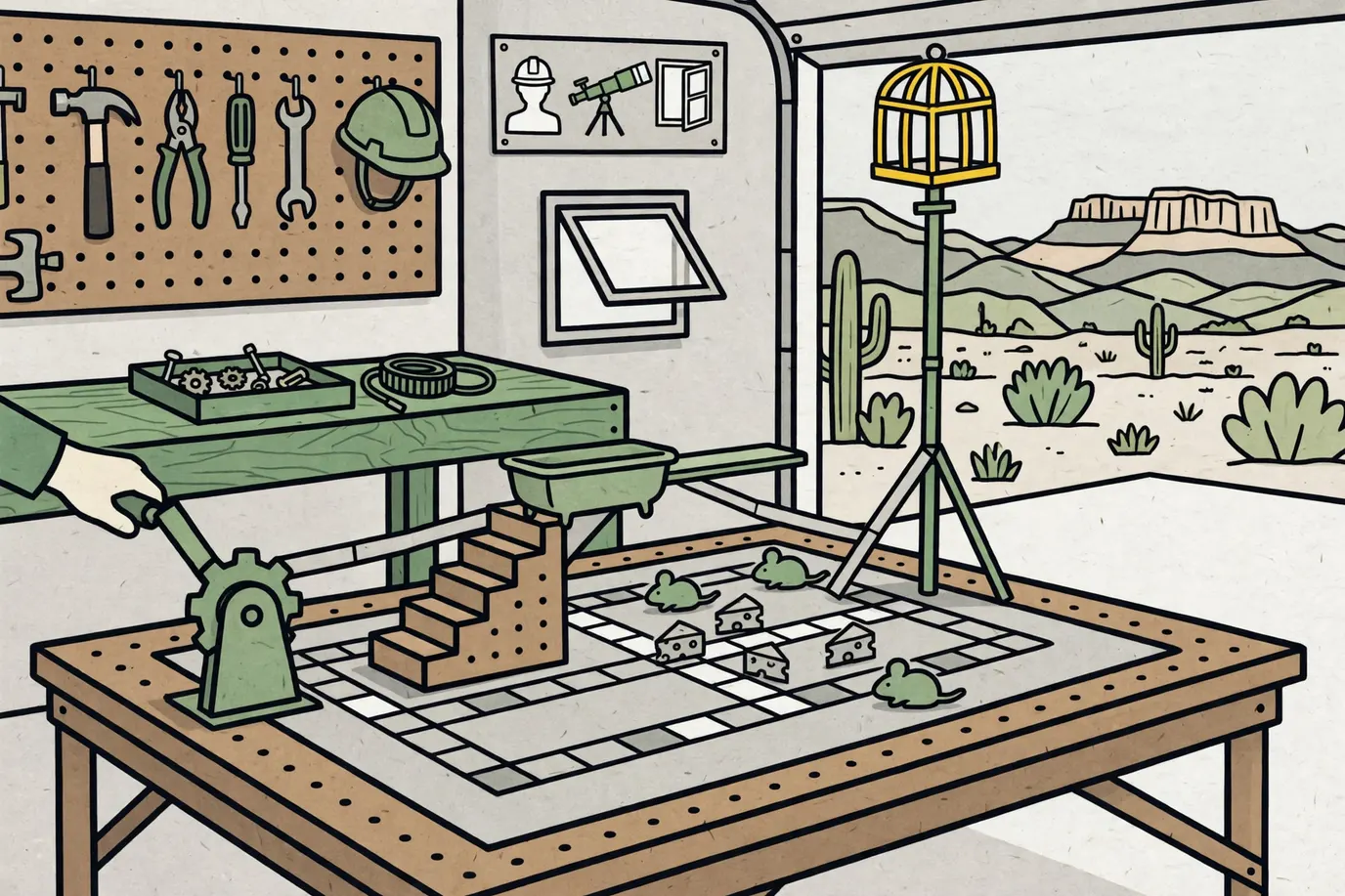
The Mouse Trap game is a board game for 2 to 4 players, ages 6+ on Hasbro's box: build a chain-reaction contraption on the board, move your mouse around collecting cheese, and send other players into the trap. The first player with six cheese wedges wins. Our data shows three Mouse Trap listings on Amazon US, all from Hasbro and all listed for ages 6+. It's the only game in my closet where setting up is half the fun.
We earn a commission if you buy through our links, at no cost to you. Disclosure
| Model | Amazon |
|---|---|
Hasbro Mouse TrapBoard & family games More specs
| Check price |
Hasbro Mouse TrapBoard & family games More specs
| Check price |


What’s in this listEditions and versions of Mouse Trap sold on Amazon US, matched by the name on the listing. Players, age and play time come from the box or listing. “—” means neither the maker nor the Amazon listing states it.
What the Mouse Trap game is
Mouse Trap is a roll-and-move board game with a machine in the middle. Before you play, you build a chain-reaction contraption onto the board: a crank, a boot, a staircase, a bathtub, a diving board and a cage on a pole, among other pieces. Then each player moves a mouse around a path, collecting cheese wedges. Land on the right space and you get to send another player's mouse to the danger zone and set the whole machine off. If the cage drops on that mouse, you take one of their wedges.
The first player with six cheese wedges wins.
Here's the table version of the box facts, from Hasbro's Mouse Trap rulebook (product C0431, printed 2016):
- Players: 2 to 4
- Ages: 6+
- Adult assembly required
- In the box: game board, 4 mouse pawns, a marble, 24 contraption parts, a rubber band, 24 cardboard cheese wedges and a die
- Goal: six cheese wedges, a full cheese wheel
- Not co-op: every mouse for itself
The rulebook carries a choking-hazard warning because the game contains a marble. It says not for children under 3, and I'll say the same thing again further down.
How Mouse Trap plays
The rules below are in my own words, from Hasbro's Mouse Trap rulebook for product C0431. The same two-page sheet holds the rules on one side and the assembly guide on the other.
Before the first game
The cheese wedges come on a cardboard sheet. Punch them out and recycle the leftover cardboard. Then comes the main event: building the trap.
Building the contraption
The assembly guide walks through the build in 21 numbered steps, with pictures. You don't need to memorize it. Here's the shape of it, so you know what you're in for:
- Lock the first base into slots on the board, then add the stop sign and the lamp post.
- Hook the rubber band between the base and the stop sign. That band is what powers everything.
- Fit the boot to the lamp post, so the boot sits against the stop sign.
- Build the staircase on its two sets of legs and set it in place.
- Add the second base, the rain gutter, the ladder, the wrench and the broom with its little bucket.
- Add the third base with the plumbing, bathtub and short ramp, then the diving board and the diver.
- Add the fourth base with the washtub and the cage pole, and balance the cage on top.
The first bucket holds the marble at the top of the stairs. When the stop sign is pulled back and let go, one part knocks into the next, down the line, until the cage drops off its pole.
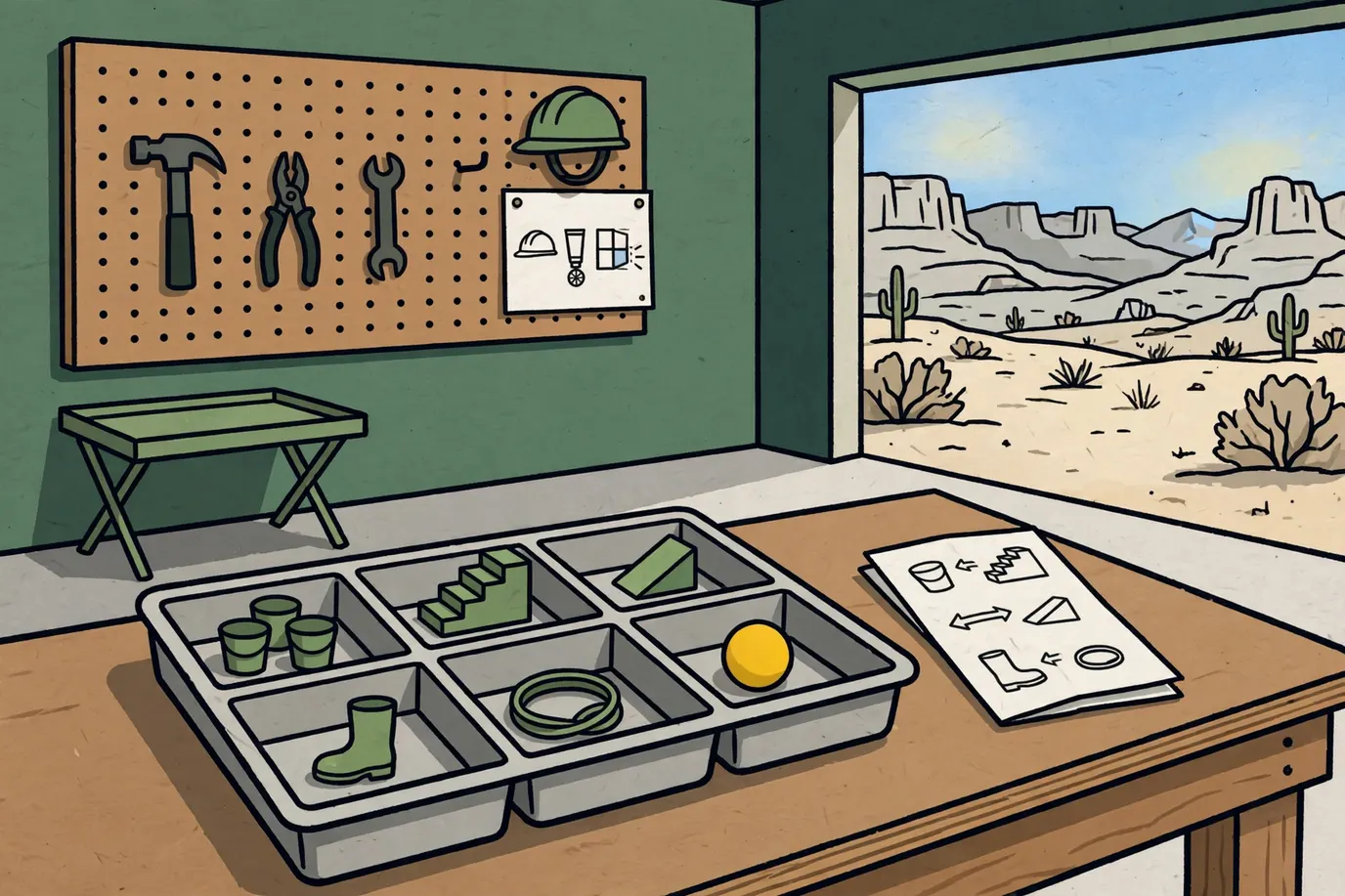
The rulebook says adult assembly is required, and I'd add that it goes much easier with the parts laid out first. Marisol's take: "Twenty-four parts and a rubber band is a kit, not a game. Lay them out on a tray, in order, before step one." I'd planned to start by dumping the bag on the table. She's right.
Setting up the board
- Lay the board flat on a steady surface. The trap is easy to jostle.
- Build the contraption, as above.
- Give each player one cheese wedge to start.
- Put two cheese wedges on the Start space. Those are a bonus for the first player to get all the way around.
- Pile the rest of the wedges near the board. That's the cheese stash.
- Everyone picks a mouse and puts it on Start.
A turn
- Roll the die to decide who goes first. Play then goes to the left.
- Move your mouse clockwise along the path, that many spaces.
- Do what the space says.
If you land on a space where another mouse already sits, you move ahead to the next open space. Mice don't share.
The spaces
- Yellow, Add-a-Cheese: take one wedge from the stash.
- Green, Steal-a-Cheese: take one wedge from any other player.
- Red, Lose-a-Cheese: put one of your wedges back in the stash. If you have none, you're still in the game.
- Purple: nothing happens. It's the most honest space on the board.
- Mousehole tunnel: you may travel through the tunnel to the space at the other end, if the colors match.
- Blue, Launch-the-Trap: the big one, below.
- The Cheesy Danger Zone: the space under the cage.
Launching the trap
When you land on a blue Launch-the-Trap space, you pick any one player and move their mouse to the Cheesy Danger Zone, right onto the cheese. Then you pull back the stop sign and let it go. If the cage comes down on that mouse, you take one cheese wedge from them.
A few details from the rulebook that come up a lot:
- If a mouse is already in the danger zone, you can still send another one. Each mouse caught gives up one wedge to you.
- You can send a mouse with no cheese to the trap. There's just nothing to take.
- If you land in the danger zone by exact count, you stop there, but the trap doesn't go off. You're a sitting target for the next player who lands on blue.
- A caught mouse isn't out. After the trap is reset, it stays in the danger zone and starts from there next turn.
That last rule means a caught mouse goes right back to sitting under the cage. It's not a smart mouse.
Resetting the trap
Whoever launched it resets it. The rulebook breaks it into five short steps: stand the bucket back up on the stairs with the marble in it, turn the broom back into place, latch the wrench to hold it, put the diver back on the end of the diving board, and hang the cage carefully. After a few rounds, most players can do it without looking at the sheet.
The two choices you actually make
Most of Mouse Trap is the die. But the rulebook hands you two real decisions:
- Take the tunnel or not. A mousehole tunnel is optional. Sometimes the far end puts you nearer the yellow spaces. Sometimes it parks you next to a blue space someone else is about to land on.
- Who goes to the trap. On a blue space you pick the victim. The usual answer is whoever has the most cheese, because a wedge taken from the leader slows down the player closest to six. Sending a mouse with no cheese does nothing for you.
How it ends
Passing Start doesn't end anything. The game keeps going around the board until someone has six wedges. That player wins.
When you're done, the rulebook says to take the trap apart so the game stores easily. Next game, you build it again. Some tables count the rebuild as part of the game.
What to settle before you play
The rulebook is clear, but a few things are worth agreeing on out loud:
- Who's allowed to pull the stop sign, the player who landed on blue or the youngest player at the table
- Whether a failed launch, where the cage doesn't drop, gets a second try (the rulebook doesn't offer one)
- Where the trap gets built, since moving a built board is how parts fall off
House rule: some tables let the player who landed on blue choose a younger player to pull the stop sign for them. The cheese still goes to the player who landed on blue. That's a house rule, not a Hasbro rule, and it keeps everyone involved.
House rule: a test launch before the first roll. Build it, launch it once with no mouse in the zone, reset it. If something sticks, you find out before it matters.
Mouse Trap listings on Amazon US right now
Our data for this page lists three Mouse Trap listings on Amazon US as of October 2026, all from Hasbro and all named simply Mouse Trap. The table above shows what each listing states.
- Mouse Trap (B00000DMFD): ages 6+, 2 to 4 players, listed as a family game
- Mouse Trap (B09NB1DPTC): ages 6+, 2 to 4 players
- Mouse Trap (B01ISKSRK8): ages 6+, player count not listed
None of them is an expansion, and none is marked as resale stock. The listings don't give a play time, and they don't say which version of the rulebook is in each box. Our rules come from Hasbro's C0431 rulebook, printed 2016. If you're buying for a specific look, compare the listing photos.
With three listings under the same name, there isn't much to choose between in our data. Pick the one that lists the details you want to confirm, like the player count.
Who Mouse Trap suits
Mouse Trap fits a family table where at least one grown-up enjoys building things. It suits:
- Kids 6 and up who like cause-and-effect toys as much as games
- 2 to 4 players, with room around the board for everyone to watch the launch
- Families who want luck over strategy, so the youngest has a fair shot
- Anyone who wants a first game that's also a small building project
The game itself is simple. Roll, move, do what the space says. The fun is watching a machine you built go off, and seeing whether the cage actually drops.
Who should skip Mouse Trap
Skip it if nobody in the house wants to do the assembly. The rulebook says adult assembly is required, and the trap has to be built every time you play and taken apart afterward.
Skip it too if your group wants strategy. Most of the game is the die, and the trap either catches the mouse or it doesn't.
And skip it for now if there's a child under 3 in the house. The game contains a marble and lots of small parts, and Hasbro's rulebook carries a choking-hazard warning. Check the age label on the listing. Toys with small parts are a choking hazard for children under 3. Make sure the marble goes back in the box after every game.
If you like Mouse Trap, look at these
Picked by what they share with Mouse Trap: a physical gadget, simple rules and a family table.
- Operation: a steady-hand game with a buzzer
- Hungry Hungry Hippos: fast, loud and all about the machine
- Candy Land: a gentle first race game for younger kids
- Family board games: more boxes for a mixed-age table
- Don't Break the Ice: another game where the board falls apart on purpose
For more from the maker, see the Hasbro brand page.
Pull the stop sign, then hold your breath. The cage takes its time.
Brands in this list
Related
Questions people ask
How do you win Mouse Trap?
Be the first player to collect six cheese wedges and make a full cheese wheel. In Hasbro's rulebook (C0431), you get wedges from yellow spaces, by stealing on green spaces, by catching other mice in the trap, and from the two bonus wedges on Start for the first player to go all the way around.
How many players can play Mouse Trap?
Two to four. Hasbro's rulebook for the current game lists 2 to 4 players, and there are four mouse pawns in the box. Two of the three Mouse Trap listings in our data also say 2 to 4. The third doesn't list a player count.
What age is Mouse Trap for?
Ages 6+. That's on Hasbro's rulebook and on all three Mouse Trap listings in our data. The rulebook also says adult assembly is required, and it carries a choking-hazard warning because the game contains a marble. Keep it away from children under 3.
Is Mouse Trap hard to put together?
It takes a while the first time. Hasbro's rulebook shows the contraption going together in 21 numbered steps, with four bases, and it says adult assembly is required. After a launch, resetting the trap takes five short steps. When you put the game away, the rulebook says to take the trap apart.
How long does a game of Mouse Trap take?
None of the three listings in our data gives a play time, and Hasbro's rulebook doesn't print one. Plan extra time for the first game, because the contraption has to be built before anyone rolls. Later games go faster if you keep the bases sorted in the box.
Sources
- Hasbro: Mouse Trap rulebook and assembly guide, C0431 (PDF) — accessed 2026-10-23
- CPSC: Small Parts Ban and Choking Hazard Labeling — accessed 2026-10-23