Board & Card Games · Type
Don't Break the Ice Game: Rules, Editions and Who It Suits
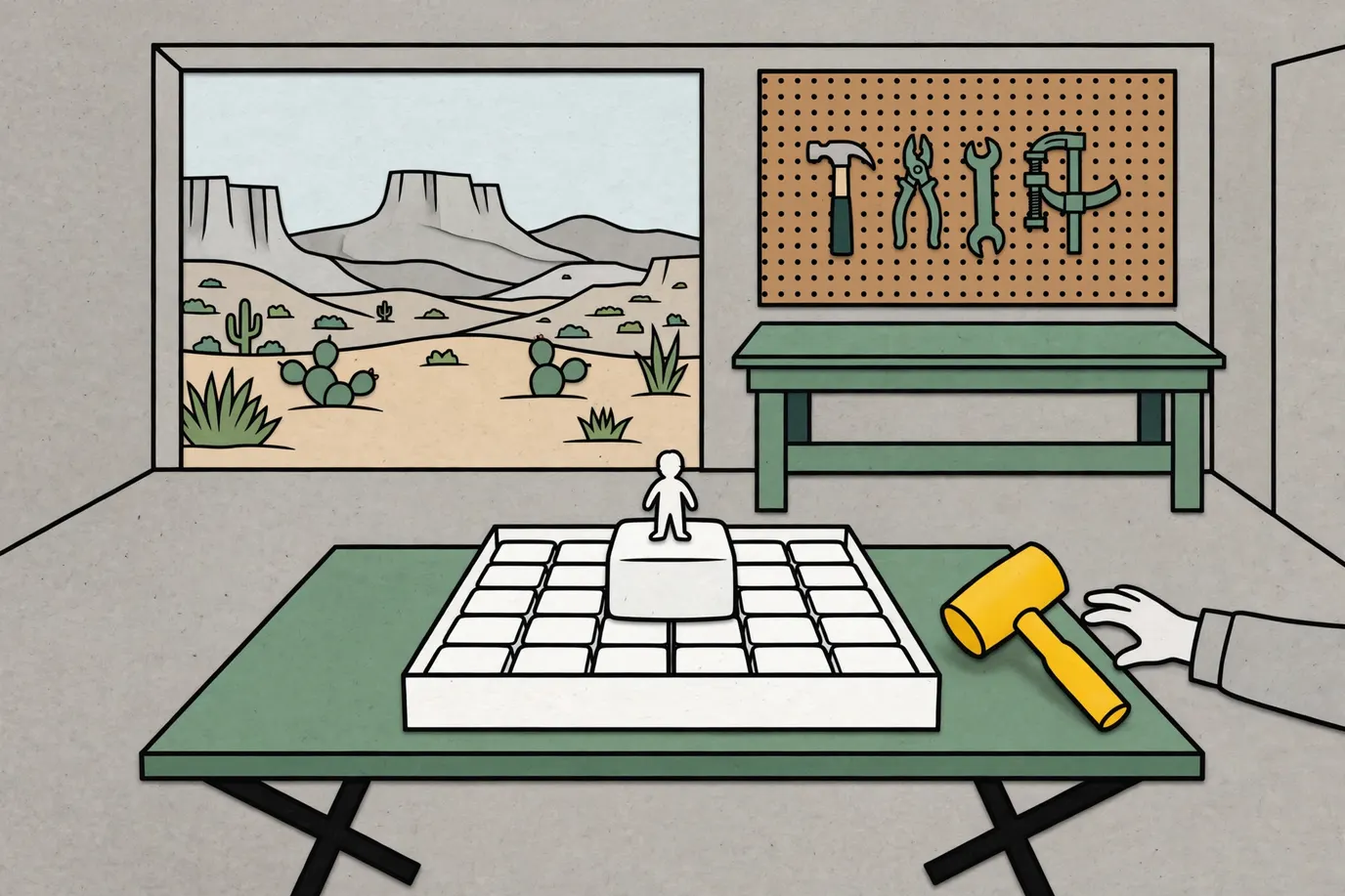
The Don't Break the Ice game is a tap-and-hope game for ages 3+ on every listing we found: fill a plastic tray with ice blocks, set a figure on top, and take turns tapping blocks out with a mallet. Whoever drops the figure is out, and the last player still standing wins. The classic box lists 2 to 4 players. The whole rule sheet fits on one page, which in my house makes it a favorite before anyone opens the tray.
We earn a commission if you buy through our links, at no cost to you. Disclosure
| Model | Players (min) | Players (max) | Amazon |
|---|---|---|---|
Hasbro Don't Break The IceKids & preschool games More specs
| 2listing | 4listing | Check price |
Hasbro Don't Break The Ice Mammoth EditionKids & preschool games More specs
| 2listing | 4listing | Check price |
Hasbro Don't Break The Ice Disney Frozen 2 EditionKids & preschool games More specs
| — | — | Check price |


What’s in this listEditions and versions of Don'T Break The Ice sold on Amazon US, matched by the name on the listing. Players, age and play time come from the box or listing. “—” means neither the maker nor the Amazon listing states it.
What the Don't Break the Ice game is
Don't Break the Ice is a dexterity game, which means the skill is in your hands, not on a score card. Every listing in our data files it as "dexterity / fine motor." You build a sheet of plastic ice in a tray, set a figure on the one big block, and then the table takes turns tapping blocks out from below the surface. The figure stays up until somebody taps the wrong one.
There's no reading, no counting and no board. A turn takes a few seconds. That's why it shows up on so many preschool shelves: a 3-year-old can follow every rule after watching one turn.
The classic rule sheet comes from the Milton Bradley Company, and Hasbro now hosts it on its instructions site as product 04784. Here are the box facts from that sheet and Hasbro's page:
- Players: 2 to 4
- Ages: 3 and up
- Contents: 2 mallets, 1 large and 32 small ice blocks, a two-part ice tray, 1 figure
- Play style: competitive, with players knocked out one at a time
- Expansions: none listed
One small mystery for the record. The old Milton Bradley sheet names a polar bear as the figure. Hasbro's current instructions page for the same product number lists an "Iceman figure." So the figure has two names depending on which Hasbro page you read, and I won't promise which one is in a box shipping today. The listings don't say either.
How Don't Break the Ice plays
The steps below are in my own words, from two Hasbro rule sheets: the classic Milton Bradley sheet (04784) and the Disney Frozen 2 Edition sheet (F0010). Where the two differ, I say so.
Setting up the tray
- Take the blocks out of the bag. Both sheets tell you to throw the bag away, and that's worth doing before a toddler finds it.
- Put the tray together upside down. The classic tray is two halves that connect. The Frozen 2 tray sits on cardboard legs that you fold and tab together the first time, and that box is marked for adult assembly.
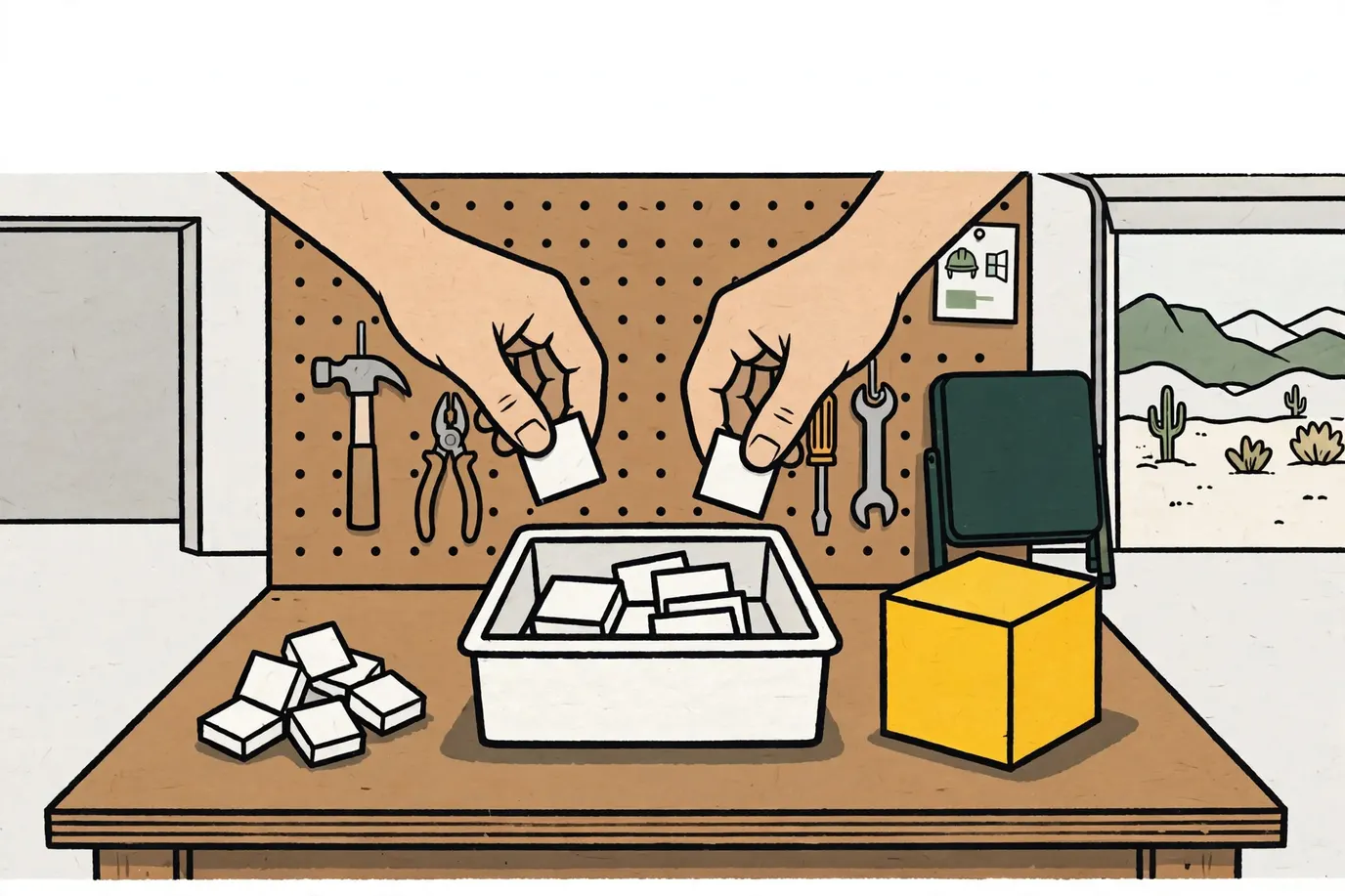
- With the tray still upside down, fill it with the small blocks, open side up. Both sheets warn that the last block in each row has to be squeezed in. That's normal. A tight fit is what holds the ice together.
- Put the large block anywhere you like.
- Flip the tray right side up and set the figure into the slot on the large block.
A turn, start to finish
On the classic sheet, players share the two mallets when more than two people play. The Frozen 2 sheet has the youngest player start, with play moving to the left.
- Pick any block still in the tray.
- Tap it with the mallet.
- Keep tapping that same block until it drops through the bottom of the tray.
Step 3 is the whole game. Once you start on a block, you're committed. If your block drags its neighbors down with it, that's allowed. If it drags the figure down too, that's your turn and your game.
The rule that you must keep tapping the same block, even after you see the ice cracking around it, is the cruelest sentence a 3-year-old will ever hear. It's also the reason the game works. Without it, everyone would tap, panic and switch.
Who's out and who wins
If the figure falls through on your turn, you're out. Reset the blocks and the remaining players start a new round. Both sheets say this. The last player who hasn't dropped the figure is the winner.
A quick bit of math, since I can't help it. A game that knocks out one player per round needs one round fewer than the number of players. Four players means three rounds, and three trays to refill. Plan your snack around round two.
Resetting between rounds and putting it away
A game that ends by knockout gets reset a lot, so the reset matters. On the Frozen 2 box, the sheet says to take the cardboard legs off before you refill the tray, because the blocks go in with the tray upside down. Putting it away is the same move in a different order: legs off, slide the tab out and fold them, lift the token off the large block, reset the blocks in the tray, and everything goes back in the box.
The classic sheet is shorter on this, but the setup steps run the same way: tray upside down, blocks in, flip. If the filled tray fits back in your box, refill it before you put it away, and the next game starts with one flip. That's not a Hasbro rule. It's a parent rule, and it saves the squeezing for a day with more patience in it.
The Frozen 2 solo mode
The Frozen 2 sheet adds a one-player game: tap blocks out one at a time and count how many you remove before the figure drops. Then try to beat your number. The classic sheet has nothing like it, but there's no reason the idea can't travel. House rule: on the classic tray, the solo count is how a kid practices before the cousins arrive.
Small taps and other table advice
The classic sheet says a little thinking keeps the figure from sinking. It doesn't say what kind. My advice here is mine, not Hasbro's:
- Start at the edges, far from the large block.
- Watch which blocks are touching the large block. Those are the ones holding the figure up.
- Tap lightly and more often. A hard tap moves more than one block.
- Leave the "safe-looking" block next to the figure for the next player.
Lucho's take: "Tap it like a lug nut you don't trust yet. Small hits, and listen to it." He works on engines all week, so he has opinions about how hard to hit things.
For a first game with a 3-year-old, keep it simple. Let them choose the block, then help them keep tapping the same one. The rule about not switching is the only one that needs teaching more than once.
Check the age label on the listing. Toys with small parts are a choking hazard for children under 3.
Don't Break the Ice editions on Amazon US right now
Our data for this page lists 3 Don't Break the Ice editions on Amazon US as of October 2026, all from Hasbro. The table above shows what each listing states. Where a listing leaves a field out, the table shows a dash.
Don't Break The Ice (the classic box)
This is the box closest to the rule sheet above. The listing says ages 3+ and 2 to 4 players. Hasbro's instructions page for this product number lists 2 mallets, 1 large and 32 small blocks, the figure and the game frame. If you want the game the way the old Milton Bradley sheet describes it, start here.
Don't Break The Ice Mammoth Edition
The Mammoth Edition listing says ages 3+ and 2 to 4 players, and files it as a dexterity game like the others. I couldn't find a Hasbro rule sheet for this edition on Hasbro's instructions site, so I can't tell you what's in the box beyond the listing. The name suggests a different figure on the large block. The listing doesn't give a block count or a mallet count, and I won't guess.
Don't Break The Ice Disney Frozen 2 Edition
This is the licensed edition in our data. The listing gives ages 3+ and leaves the player count out. Hasbro's rule sheet for it (F0010) fills in the gaps:
- Players: 1 to 4, with a solo mode
- Contents: an ice tray frame, 2 cardboard legs, 1 large and 21 small plastic blocks, 1 mallet, 1 cardboard character token
- Adult assembly required for the legs
So the practical differences from the classic box are real. It has fewer small blocks, 21 against the classic sheet's 32, which means shorter rounds. It has one mallet instead of two, so everyone passes the same one. The figure is a folded cardboard token rather than a plastic one. And it's the only edition in our data with a printed solo mode.
Which one to pick
- The game as the classic rule sheet describes it: Don't Break The Ice
- A kid who'll practice alone between games: the Disney Frozen 2 Edition, for its solo mode
- Shorter rounds for a younger table: the Frozen 2 Edition, with fewer blocks per tray
- Two mallets so nobody waits for the handoff: the classic box
- Something different on the large block: the Mammoth Edition, with the caveat that the listing tells us very little
All three list the same starting age, 3+. If you're shopping for a 2-year-old, none of these fit yet. Wait for the birthday.
Who should skip Don't Break the Ice
Skip it if your group wants a game with choices that last longer than one tap. Don't Break the Ice is short, loud and mostly luck with a little hand control. That's the point for a preschool table and a short evening for a table of adults.
Skip it too if anyone at your table hates sitting out. Players are knocked out one at a time, and the first one out watches the rest of the round. For a 3-year-old, that wait can feel long. Some families fix this by playing short rounds and resetting fast.
And skip it for now if your youngest is under 3. Every listing says 3+, and the figure and blocks are small enough that the age label matters.
If you like Don't Break the Ice, look at these
Pages chosen by what they share with Don't Break the Ice: a steady-hand game, a young starting age, a short round.
- Jenga: pull a block, don't drop the tower
- Operation: a steady-hand game with a buzzer instead of a falling figure
- Hungry Hungry Hippos: fast, loud and no reading
- Hi Ho Cherry-O: a first game for preschoolers, with counting
- Family board games: the wider shelf for mixed ages
The rule sheet came from the Milton Bradley Company, and the boxes now carry the Hasbro name. See the Hasbro and Milton Bradley brand pages for the rest of each lineup.
Tap small, watch the middle, and keep the mallet on the table between turns.
Brands in this list
Related
Questions people ask
How do you play Don't Break the Ice?
Build the tray upside down, fill it with ice blocks, flip it and set the figure on the large block. On your turn, tap one block with the mallet and keep tapping that same block until it drops through, even if other blocks fall with it. If the figure falls on your turn, you're out. The last player left wins. That's the classic Milton Bradley rule sheet, in our words.
How many players can play Don't Break the Ice?
The classic edition's rule sheet and its Hasbro instructions page both say 2 to 4 players, and the classic and Mammoth Edition listings say the same. Hasbro's instructions page for the Disney Frozen 2 Edition (F0010) says 1 to 4, because that box adds a solo mode. The Frozen 2 listing itself doesn't state a player count.
What age is Don't Break the Ice for?
All three editions in our data list ages 3 and up, and Hasbro's instructions pages for the classic and Frozen 2 boxes say 3+ as well. No listing gives an upper age. In practice the game asks for turn-taking and gentle taps, not reading, so the rules work for a 3-year-old and a grandparent at the same table.
How many ice blocks come in Don't Break the Ice?
The classic rule sheet lists 1 large block and 32 small ones, plus 2 mallets and a two-part ice tray. The Disney Frozen 2 Edition sheet (F0010) lists 1 large block and 21 small ones, a single mallet and cardboard legs for the tray. The Mammoth Edition listing in our data doesn't give a block count.
Can you play Don't Break the Ice alone?
The Disney Frozen 2 Edition rule sheet includes a solo mode: count how many blocks you can tap out before the figure falls, then try to beat that number. The classic rule sheet has no solo mode, but the same counting idea works with any box. Call it a house rule if you use it there.
Sources
- Hasbro: Don't Break the Ice instructions (04784) — accessed 2026-10-23
- Hasbro: Don't Break the Ice rule sheet, Milton Bradley Company (PDF) — accessed 2026-10-23
- Hasbro: Don't Break the Ice Disney Frozen 2 Edition instructions (F0010) — accessed 2026-10-23
- Hasbro: Don't Break the Ice Disney Frozen 2 Edition rule sheet, F0010 (PDF) — accessed 2026-10-23
- CPSC: Small Parts for Toys and Children's Products — accessed 2026-10-23