Board & Card Games · Type
Hanabi: The Cooperative Card Game, Rules and Editions
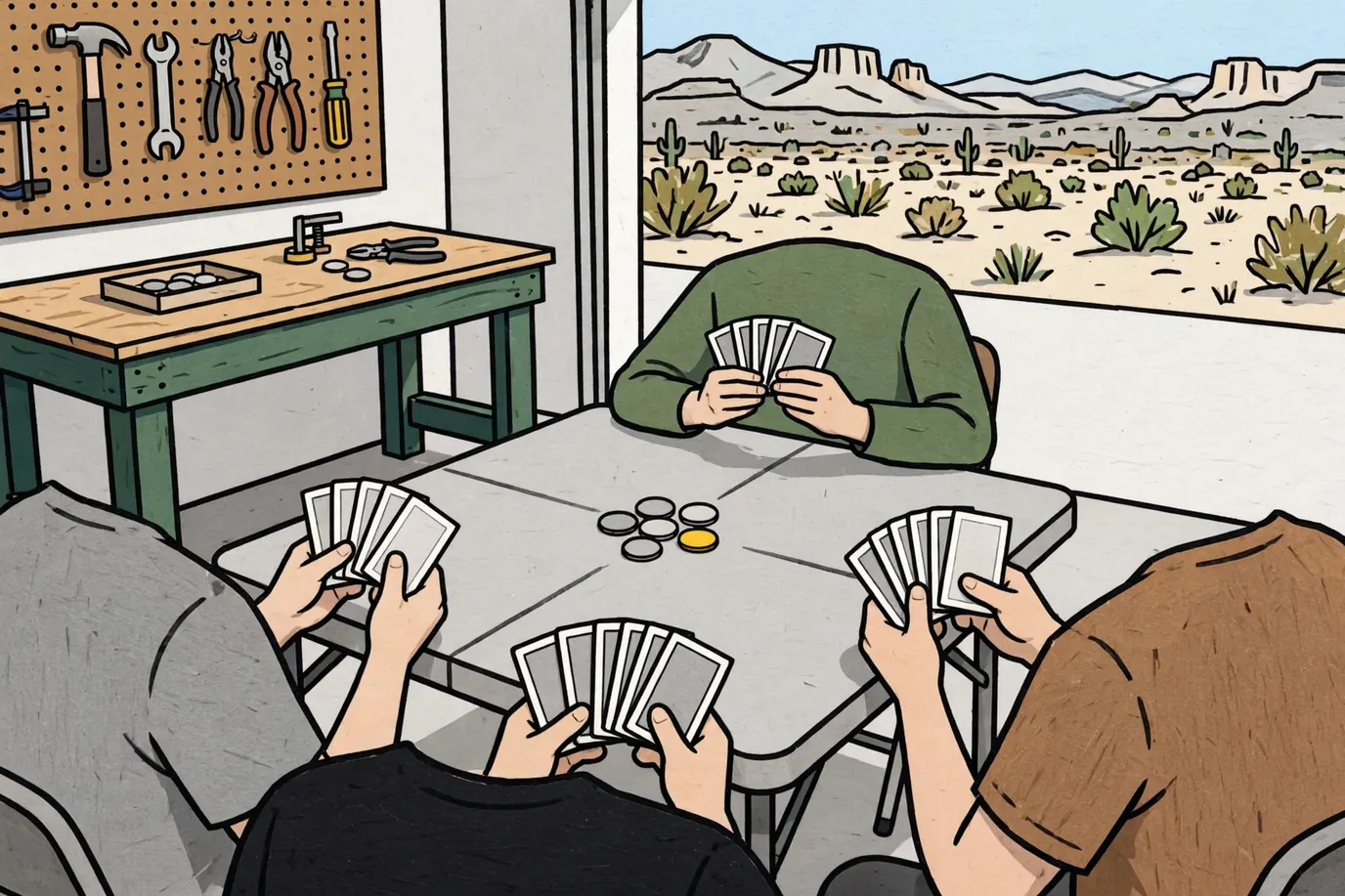
Hanabi is a cooperative card game for 2 to 5 players, 20 to 30 minutes on the Amazon listing, where you hold your cards facing away from you. Everyone else can see your hand. You can't. The team builds five fireworks in number order by giving each other careful clues, and you win or lose together. The listings on Amazon US right now are R&R Games' Hanabi and its Black Powder add-on. It's the only game in my closet that asks you to trust other people about your own hand.
We earn a commission if you buy through our links, at no cost to you. Disclosure
| Model | Players (min) | Players (max) | Play time (min) | Play time (max) | Amazon |
|---|---|---|---|---|---|
R&R Games HanabiCard games | 2listing | 5listing | 20 minlisting | 30 minlisting | Check price |
R&R Games Hanabi: Black PowderCard games | — | — | — | — | Check price |


What’s in this listEditions and versions of Hanabi sold on Amazon US, matched by the name on the listing. Players, age and play time come from the box or listing. “—” means neither the maker nor the Amazon listing states it.
What the Hanabi card game is
Hanabi is a cooperative card game. The whole table is one team of fireworks makers who mixed up their supplies before a show. Your job is to lay out five fireworks, one in each color, each built as a run of cards from 1 to 5.
The twist is how you hold your hand. You pick your cards up backward, with the fronts facing everyone else. You can see every hand at the table except your own. The only way to learn what you're holding is from clues your teammates give you, and clues are limited.
That's it. No board, no dice, no score pad. A deck of cards, a handful of tokens and a lot of careful pointing.
The box facts, from the R&R Games listing on Amazon US and R&R's own rulebook:
- Players: 2 to 5 (listing and rulebook agree)
- Play time: 20 to 30 minutes on the listing
- Ages: not stated on the listing; the rulebook says 8+
- Mode: fully cooperative, one shared score
- Contents in the rulebook: 60 cards in 6 colors, 8 blue clock tokens, 4 black fuse tokens
- Expansion: no, this is the base game
In each color the deck has three 1s, two 2s, two 3s, two 4s and one 5. That spread matters, and I'll come back to it. Five of the six colors make the basic game. The sixth, multicolor, is for the advanced variants.
How Hanabi plays
The rules below are in my own words, from R&R Games' Hanabi rules sheet (the 2013 English edition, designed by Antoine Bauza). The sheet is two pages long and still fits in a full strategy section and four variants. Some rulebooks could learn from it.
Setup
- Put the 8 blue clock tokens face up on the table. These are your clues.
- Stack the 4 black fuse tokens nearby, in the order the rulebook shows. These are your mistakes.
- Take out the multicolor cards for a basic game. Shuffle the other 50 into a face-down deck.
- Deal 5 cards each with 2 or 3 players, or 4 cards each with 4 or 5 players.
- Everyone picks up their hand without looking, fronts facing out.
The rulebook is firm on step 5. Peeking at your own cards isn't a small foul in this game. It breaks the whole thing.
A turn
The rulebook says the player wearing the most colorful clothing starts, and play goes clockwise. Nobody at our table will admit to owning a loud shirt, so it goes to a vote, and the vote takes longer than the first round.
On your turn you must do exactly one of three things. You can't pass.
- Give a clue. Spend one blue token by moving it to the box lid. Then tell one teammate about their hand: either every card of one color, or every card of one number. You have to point to all of them. If a teammate holds two green cards, you can't point at just one.
- Discard a card. Put one card from your hand face up on the discard pile and draw a new one without looking at it. This brings one blue token back from the lid to the table. You can't discard if all 8 blue tokens are already out.
- Play a card. Put one card from your hand on the table. If it starts a new firework (a 1) or is the next number in an existing one, it stays there. If it doesn't fit, it goes to the discard pile and the team takes a black fuse token. Then draw a replacement.
A clue has to point at actual cards. You can't tell someone "you have no yellow." The rulebook calls that out by name, because it's the first loophole every new group tries.
Clues are the whole economy
You start with 8 clues and every clue costs one. You only get them back by discarding, or by finishing a firework. Playing a 5 returns a blue token for free, unless all 8 are already on the table.
So every turn is a trade. A clue helps a teammate now. A discard buys a clue for later, but it throws away a card that someone might have needed. And with only one 5 in each color, discarding a 5 means that firework can never be finished.
I like that the game is honest about it. There's no perfect turn. There's only the turn that costs the team the least.
What you can't say
The rulebook has a whole section on talking. When it's your turn, teammates shouldn't comment or try to steer you. The only clues that count are the ones paid for with a blue token. That means no hints like "careful," no groans, no long looks at someone's hand.
The same section says the group is free to set its own rules on talking, and suggests a few harmless comments, like admitting you still don't know anything about your hand. Dana's ruling, made at the end of a long shift: no sighing. A sigh is a clue, and we can't afford it.
How the game ends
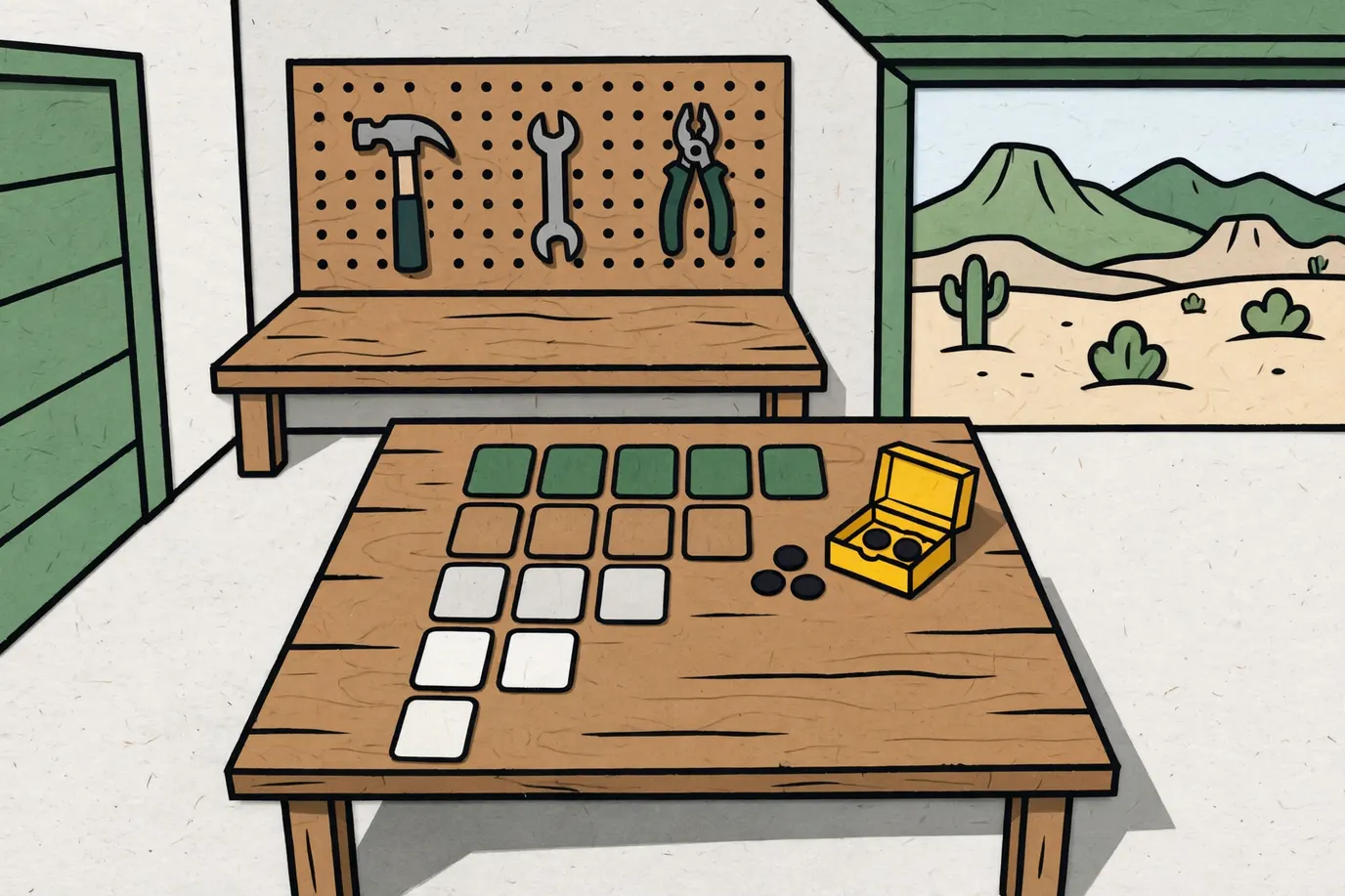
There are three ways out, per the rulebook:
- Three mistakes. When the third black fuse token goes into the lid, the game ends at once and the team loses.
- All five fireworks done. If the team completes all five colors before the deck runs out, it's a full win with the top score of 25.
- The deck runs out. When someone draws the last card, every player, including that one, takes one final turn. Then the game ends.
For the score, add the highest card in each firework. A 5 in every color is 25. The rulebook pairs each score band with a short line about how the crowd reacted, from booing at the bottom to stunned silence at 25. We read the band out loud at the end of every game. It softens a 14.
Strategy the rulebook suggests
R&R's sheet includes a strategy section, which most card games skip. In my own words:
- Rearrange your hand after a clue. If a teammate tells you two cards are blue, move them to one end so you remember which ones they were.
- Check the discard pile any time. It's face up for a reason. If both blue 3s are gone, the blue firework stops at 2, and that changes what's worth saving.
- Discarding blind is a risk. If you throw away a card nobody gave you a clue about, you might lose something the team needed. Sometimes you'll have no choice.
- Know which firework is dead. Once a firework can't be finished, its cards are safe to discard to win back clues. The rulebook suggests sliding the last card of that color slightly out of line so everyone remembers.
My one opinion for this page: play by the strict talking rule for your first few games. The rulebook lets you loosen it later, but the strict version is where the game teaches you to give clues that say more than they seem to. Loosen it first and the table never learns that skill.
Variants from the rulebook
These four variants are printed in R&R's rules sheet. They're official, not house rules. All of them bring the sixth color, multicolor, into the game.
- Variant 1: add multicolor as a sixth, separate firework. The top score becomes 30.
- Variant 2: the same, but with only one multicolor card of each number, which makes the sixth firework much harder.
- Variant 3: multicolor cards are wild for clues. You can't call out multicolor as a color; instead those cards answer to every color clue. They still build their own sixth firework.
- Variant 4: the game doesn't end when the deck runs out. You keep playing with shrinking hands until all fireworks are done or the team loses, and only a perfect show counts.
Variant 3 is the one that breaks brains. A clue about red suddenly includes cards that aren't red. Try it after the basic game feels easy, not before.
House rules, labeled as house rules
These aren't in the rulebook. They're what some tables do.
- House rule: no-sigh table. Already covered above, and enforced.
- House rule: open first game. For a brand-new player, everyone plays the first game with hands face up, talking out loud about which clue they'd give. Then flip the cards around and play it straight.
Hanabi editions on Amazon US right now
Our data for this page lists 2 Hanabi products on Amazon US as of October 2026, both from R&R Games. The table above shows what each listing states.
Hanabi, the base game
Hanabi (R&R Games) is listed at 2 to 5 players and 20 to 30 minutes. The listing in our data doesn't give an age; R&R's rulebook says 8+. Everything on this page about rules applies to this box. If you're new to the game, this is the one you need, and it's the only one you need for a long time.
It's also a small box. A deck of cards and twelve tokens fits in a coat pocket, which makes it a decent pick for travel or a restaurant table that's waiting on food.
Hanabi: Black Powder
Hanabi: Black Powder (R&R Games) is the second listing. Our data has no players, age or play time for it. R&R's own Hanabi page lists Black Powder as an expansion sold as cards. The listing data doesn't describe what the cards do, so I won't either. Read the listing's description before you buy.
An expansion needs the base game. If you don't own Hanabi yet, buy Hanabi first. If you do and your group can hit 25 without sweating, Black Powder is the add-on in our data to look at.
Who should skip Hanabi
Skip it if your group loves table talk. Hanabi is a quiet game by design, and the best moments are long silences followed by one very careful clue. A loud group will either break the rules or feel muzzled.
Skip it if someone at your table hates losing as a team. One player's wrong card can cost everyone a fuse token. The game is built for groups who can laugh that off together.
Skip it for kids younger than the rulebook's 8+. The memory load is real: you're tracking clues about cards you can't see, sometimes for several turns.
And if you play mostly two-player games, Hanabi works at 2, but it's a different feel. With two, every clue goes to the same person, and the game becomes a long, quiet conversation between two people who aren't allowed to talk.
If you like Hanabi, look at these
Pages chosen by what they share with Hanabi: cooperative play, limited communication, or a short card game.
- Mysterium: a cooperative game built on limited clues
- Codenames: one-word clues and careful pointing, played in teams
- Pandemic: cooperative, with a board and more open discussion
- Card games: the wider shelf of card-only games
Hold your cards backward. Trust the table.
Related
Questions people ask
How many players is Hanabi?
The R&R Games listing on Amazon US says 2 to 5 players, and R&R's rulebook says the same. Hand size depends on the group: the rulebook deals 5 cards each with 2 or 3 players and 4 cards each with 4 or 5 players. Everyone plays on the same team, so a bigger group means more clue-givers, not more opponents.
How long does Hanabi take?
The R&R Games listing says 20 to 30 minutes. A game ends when the deck runs out and everyone has one last turn, when the team completes all five fireworks, or right away if the team makes its third mistake. That keeps games short, so two or three in a row fits one evening.
What age is Hanabi for?
The Amazon listing in our data doesn't state an age. R&R Games' rulebook says ages 8+. The game asks players to remember clues about cards they can't see and to read what teammates meant, so it suits older kids and adults better than a first card game for young children.
Is Hanabi a cooperative game?
Yes. R&R's rulebook calls it a cooperative game: the players don't play against each other but work together toward one goal. The whole team shares one score at the end, up to 25 points in the basic game. There's no winner and loser at the table, just one team result.
What is Hanabi Black Powder?
It's listed on Amazon US by R&R Games as Hanabi: Black Powder, and R&R's own Hanabi page lists it as a Black Powder expansion made of cards. Our data has no players, age or play time for the listing, so read it for contents before you buy. You'll need the base Hanabi game to use an expansion.
Sources
- R&R Games: Hanabi rules (PDF) — accessed 2026-10-23
- R&R Games: Hanabi product page — accessed 2026-10-23