Board & Card Games · Type
Poetry for Neanderthals: The One-Syllable Word Game
Poetry for Neanderthals is a team word-guessing game from Exploding Kittens: you describe a word to your team using only one-syllable words, and if you slip, an opponent bonks you with an inflatable stick. It's listed for ages 7+ and 2 or more players, with 200 cards, and the publisher's page says about 15 minutes. One edition is listed on Amazon US in our data. I tried to write this whole intro in one-syllable words first. It did not go well.
We earn a commission if you buy through our links, at no cost to you. Disclosure
| Model | Recommended age | Players (min) | Cards | Amazon |
|---|---|---|---|---|
Exploding Kittens Poetry for NeanderthalsCard games More specs
| 7+ yearslisting | 2listing | 200listing | Check price |

What’s in this listEditions and versions of Poetry For Neanderthals sold on Amazon US, matched by the name on the listing. Players, age and play time come from the box or listing. “—” means neither the maker nor the Amazon listing states it.
What Poetry for Neanderthals is
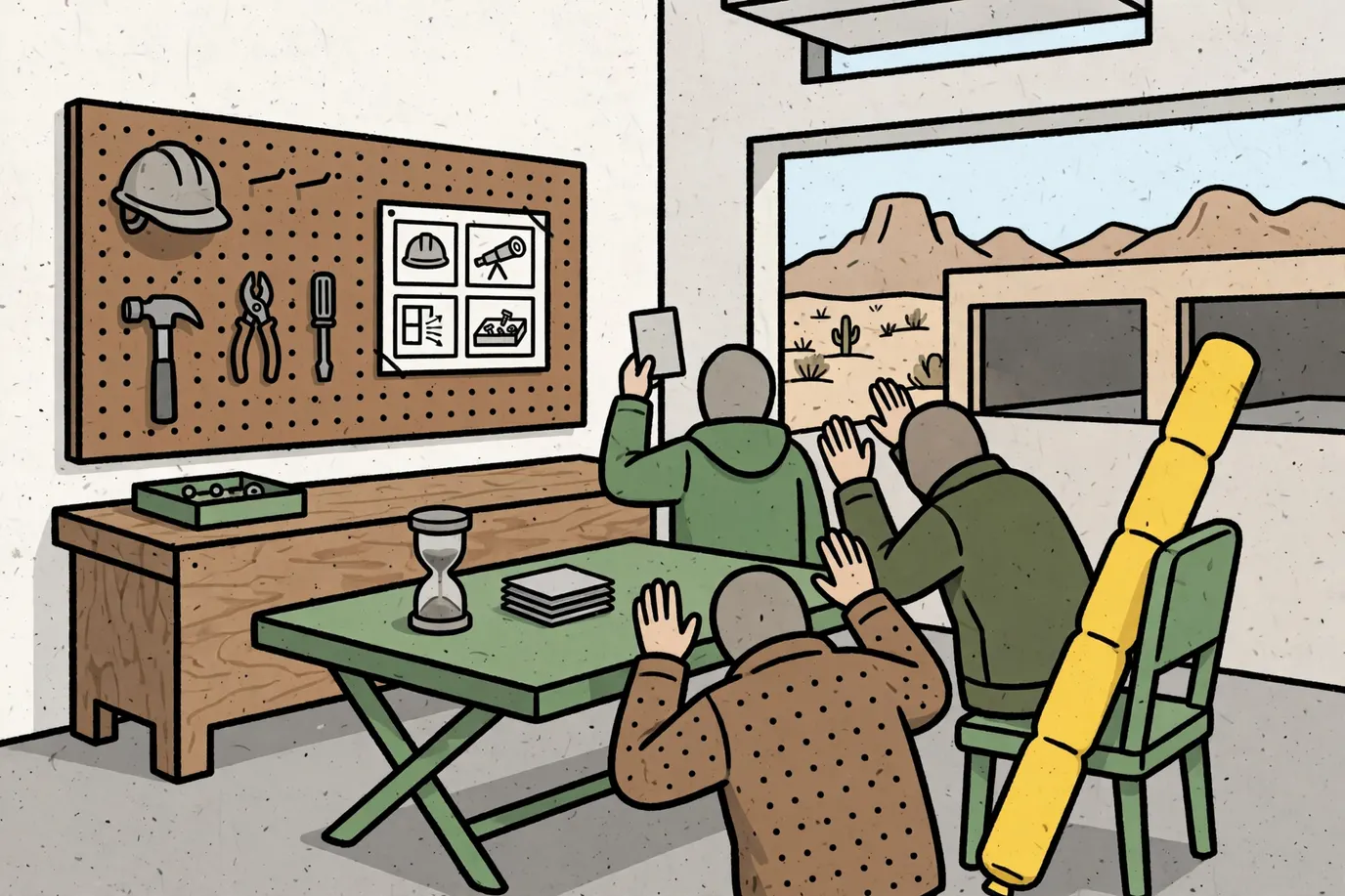
Poetry for Neanderthals is a word-guessing party game with one strange rule. When you give clues, you can only use words with one syllable. "Ocean" is out. "Sea" is in. "Vacation" is out. "Trip" is in. Your team shouts guesses, and you keep going in short, lumpy sentences until they get it or the sand runs out.
The twist that makes it a party game is the Judge. A player from the other team stands next to you holding an inflatable stick. Use a two-syllable word, or any word printed on your card, and the Judge says no and bonks you with it. The rulebook asks for gently. It adds a hedge to that, and I'd follow the gentle part.
Here's the table version of the box facts, from the Exploding Kittens rulebook, the publisher's product page and our listing data:
- Players: 2+ on the listing and the publisher's page
- Age: 7+
- Play time: about 15 minutes, per the publisher's page; the listing doesn't say
- Cards: 200, double-sided, on the listing and the publisher's page
- Timer: a 90-second sand timer
- Co-op or competitive: two teams compete; a cooperative mode for 2 or 3 players
- Expansions: the publisher's page lists a More Cards box; it isn't in our Amazon data
How Poetry for Neanderthals plays
The rules below are in my own words from the Exploding Kittens instruction sheet dated January 2024, which the publisher links from its product page. The sheet opens by telling you to go watch the video instead of reading it. I read it anyway. It's short, and it's funnier than most.
Setup
- Split into two teams. The rulebook names them Team Glad and Team Mad. Uneven teams are fine.
- Sit so the teams alternate around the table: one of yours, one of theirs.
- Team Glad goes first and picks its first Poet. Put the Poet Point Slate in front of that player.
- The Poet picks which color side of the cards everyone reads from, gray or orange. That choice holds for the whole game.
- Stack the cards with that color face down.
- A player from Team Mad takes the NO Stick. They're the first Judge.
A turn as the Poet
- The other team starts the 90-second timer.
- You draw the top card. It has a 1-point word, the easy one, and a 3-point phrase, the hard one.
- Talk your team toward either one, using only one-syllable words.
- Your whole team can shout as many guesses as they like, all at once.
- When someone gets it, say yes and put the card on the right spot on your slate.
- Draw the next card and keep going until the sand runs out.
The same Poet stays up for the whole 90 seconds. When time is up, any card you've earned points on goes to the slate, then every card on the Poet's slate moves to the Team Point Slate. Then the other team picks a Poet, and your team picks a Judge.
The 1-point word and the 3-point phrase
You choose where to start. Most cards have a short word and a longer phrase built around it.
- Start with the word. If your team says it, you can bank 1 point, or keep going for the phrase. But if you slip while chasing the phrase, you lose the point you had, and the card goes to Oops.
- Start with the phrase. If your team says the 1-point word along the way, call it out and carry on as if you'd started with the word.
- Skip. Before you've earned anything on a card, you can skip it. It goes to Oops, which is minus 1.
A single card is never worth more than 3 points. So the choice every card asks is the same: take the sure point, or risk it for three. It's a press-your-luck game hiding inside a word game.
What the Poet can and can't do
Allowed:
- Words with one syllable, and only those
- Any word on the card, once a teammate has already said it out loud
Not allowed:
- Any word on the card, part of one, or a form of one, before your team says it
- Gestures or acting it out
- "Sounds like" or "rhymes with"
- Initials and abbreviations
- Other languages
The sheet's catch-all is my favorite rule in any party game: if it feels like cheating, it is. That's the whole appeals process, printed in one line.
Here's my own example, not the rulebook's. Say the word is "toaster." You can't say "kitchen," "bread" is fine, "machine" is out. So you try: "This box makes bread hot. It pops up the bread when it is done." Every one of those words is one beat. The rulebook's tip is the same idea: talk in full sentences, don't just say one word and wait.
The Judge and the NO Stick
When it's the other team's turn, someone on your team is the Judge. You stand next to the Poet, watch the card, and listen. A slip gets a "No" and a bonk with the inflatable stick, and the Poet's current card goes on the Oops spot.
Arguments happen. Is "fire" one syllable or two? It depends on who's saying it. The rulebook handles this nicely. The Poet can call "Wait" and tip the timer on its side, and the group decides. The sheet then asks everyone to remember it's a game. It's the gentlest rule about rule disputes I've read in a box.
Lucho's take: "My tía already talks in one syllable when she's mad. She'd never get bonked."
How the game ends
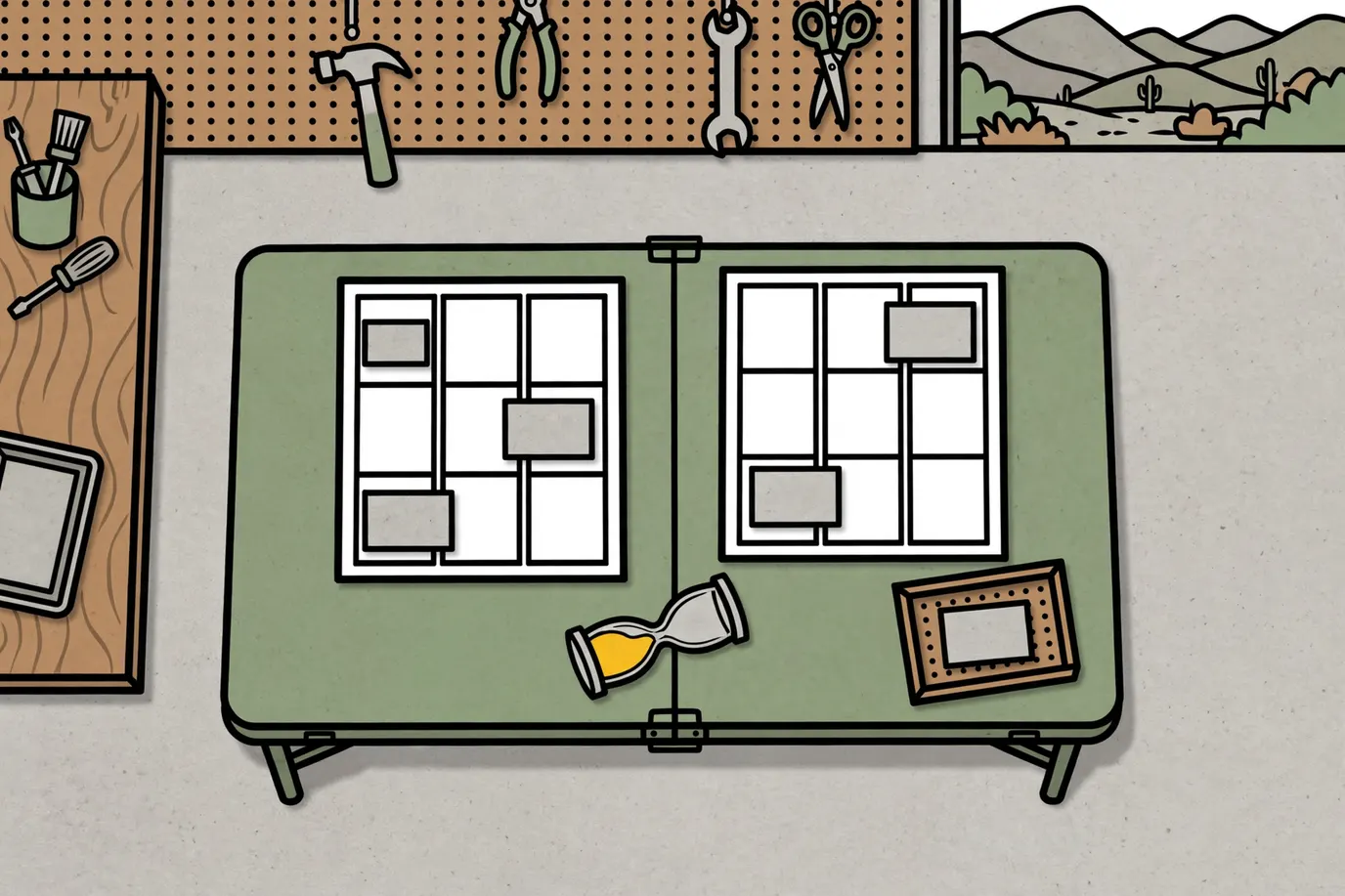
When each team has had 3 turns, add up the cards on each side of the Team Point Slate. Most points wins. A tie means one more round each, as many times as it takes.
The 2- or 3-player mode
With 2 players, you're on the same team. You take turns as the Poet and the guesser, using only the Poet Point Slate. After each of you has been the Poet 3 times, you add up your points and look your total up on a chart printed in the rulebook. The chart's bottom band gives a team of low scorers a blunt verdict, and the top band gives them a very fancy one.
With 3 players, the rulebook has everyone rotate through three roles, starting with the Poet. The online copy of the sheet we read doesn't show the full rotation clearly, so check the rulebook in your box for that part.
The Poetry for Neanderthals edition on Amazon US
Our data for this page lists one Poetry for Neanderthals listing on Amazon US as of October 2026. It's from Exploding Kittens, listed for ages 7+ and 2 or more players, tagged as a word game, with 200 cards. The table above shows those fields.
There's no second edition or spin-off in our data right now, so there's no version to choose between. The publisher's product page also lists a More Cards box that adds about 2,000 more words and phrases. That box isn't in our Amazon data, so I can't point you to a listing for it. If you play often enough to start recognizing cards, that's the add-on to look for later.
Who Poetry for Neanderthals suits
It suits a group of four or more that likes talking over each other. Two teams of two is the smallest version of the main game, and it gets louder and better from there. It also suits mixed ages, as long as the youngest player can read the card. A 7-year-old makes a very good guesser on a team of grown-ups, because kids don't overthink.
A word on the age. The 7+ on the listing is about reading and word sense, not about the stick. The Poet has to read a phrase, find one-beat words for it and dodge the words on the card, all against a 90-second clock. For a first game with younger readers, put them on the guessing side and let the adults take the first few turns as Poet.
It's a quick setup too. One deck, two slates, a timer and the stick. Most of the setup is deciding who's on which team.
House rules for mixed tables
These are not in the rulebook. They're optional, and they're ours.
- Kids get a free slip. A young Poet's first slip of the turn gets a warning, not a bonk.
- The phrase is for grown-ups only. Younger Poets go for the 1-point word on every card, so they never lose a point chasing the 3.
- Judges rotate every card. Everybody on the other team gets a turn with the stick.
Settle them before the first card. Once the stick is out, every rule turns into a debate.
Who should skip Poetry for Neanderthals
Skip it if your group is usually two people who want a competitive game. The 2-player mode is cooperative: you're scoring together against a chart, not against each other.
Skip it if anyone at your table hates being put on the spot. Every player takes turns as the Poet, talking fast in front of everyone with the clock running. And skip it if your crowd doesn't enjoy a little physical comedy. The inflatable stick is soft, but it's still somebody bonking you, and not every family finds that funny.
Skip it for players younger than the 7+ on the listing, too. Someone who can't yet read the card can still shout guesses, but can't take a turn as Poet.
If you like Poetry for Neanderthals, look at these
Pages chosen by what they share with this game: teams, a timer, and describing a word under a rule.
- Taboo: describe the word without the forbidden list
- Catch Phrase: describe it before the buzzer goes off
- Codenames: one-word clues for a whole team
- Exploding Kittens: the publisher's best-known card game
- Party games: the wider shelf for a crowd
Short words. Long guesses. Hold the stick gently.
Related
Questions people ask
How do you play Poetry for Neanderthals?
On the Exploding Kittens rulebook, two teams take turns. Your team's Poet draws a card and has 90 seconds to get teammates to say the word or phrase on it, speaking only in one-syllable words. A Judge from the other team holds the NO Stick and bonks the Poet for any slip. After each team has had 3 turns, the team with more points wins.
How many players do you need for Poetry for Neanderthals?
The listing and the publisher's page say 2 or more. The main game is two teams, and the rulebook says the teams don't have to be the same size. With only 2 or 3 players, the rulebook has a separate mode: everyone is on one team, players take turns as the Poet, and you score against a chart instead of against another team.
How does scoring work in Poetry for Neanderthals?
Each card has an easy word worth 1 point and a harder phrase worth 3. Get the word and you can bank 1 point or push on for the phrase. Break a rule or skip a card and it goes on the Oops spot, worth minus 1. The rulebook says a card can never earn more than 3 points. Points from the Poet's slate move to the team slate after each turn.
What age is Poetry for Neanderthals for?
The Amazon listing in our data and the Exploding Kittens product page both say 7+. The Poet has to read the card and sort words by syllable count on the clock, and guessers have to know the word or phrase. A strong 7-year-old reader can do it, especially as a guesser on a team with adults.
What comes in the Poetry for Neanderthals box?
The rulebook lists 200 Poetry Cards, a 90-second sand timer, a Poet Point Slate, a Team Point Slate, the inflatable NO Stick and a repair patch for it. The publisher's page describes the stick as 2 feet long and the cards as double-sided. The Amazon listing in our data states 200 cards.
Sources
- Exploding Kittens: Poetry for Neanderthals — accessed 2026-10-23
- Exploding Kittens: Poetry for Neanderthals instructions, January 2024 (PDF) — accessed 2026-10-23