Board & Card Games · Type
Perfection Game: The Timer, the Tray and the Versions
The Perfection game is a race against a wind-up timer: you push plastic shapes into matching holes in a tray, and if the timer runs out before you finish, the tray pops up and throws the shapes in the air. It's for 1 or more players, ages 5+ on Hasbro's rules sheets, and a round lasts about a minute. The Perfection versions on Amazon US include the classic game, Perfection Pop Up and a 2-player Duel Mode. Nobody has ever played it calmly.
We earn a commission if you buy through our links, at no cost to you. Disclosure
Board & family games
| Model | Players (max) | Amazon |
|---|---|---|
Hasbro Perfection Plus 2-Player Duel ModeBoard & family games More specs
| 2listing | Check price |
Hasbro Perfection Pop UpBoard & family games More specs
| — | Check price |


Kids & preschool games
| Model | Recommended age | Amazon |
|---|---|---|
Hasbro PerfectionKids & preschool games More specs
| 4+ yearslisting | Check price |
Hasbro PerfectionKids & preschool games More specs
| 5+ yearslisting | Check price |


What’s in this listEditions and versions of Perfection sold on Amazon US, matched by the name on the listing. Players, age and play time come from the box or listing. “—” means neither the maker nor the Amazon listing states it.
What the Perfection game is
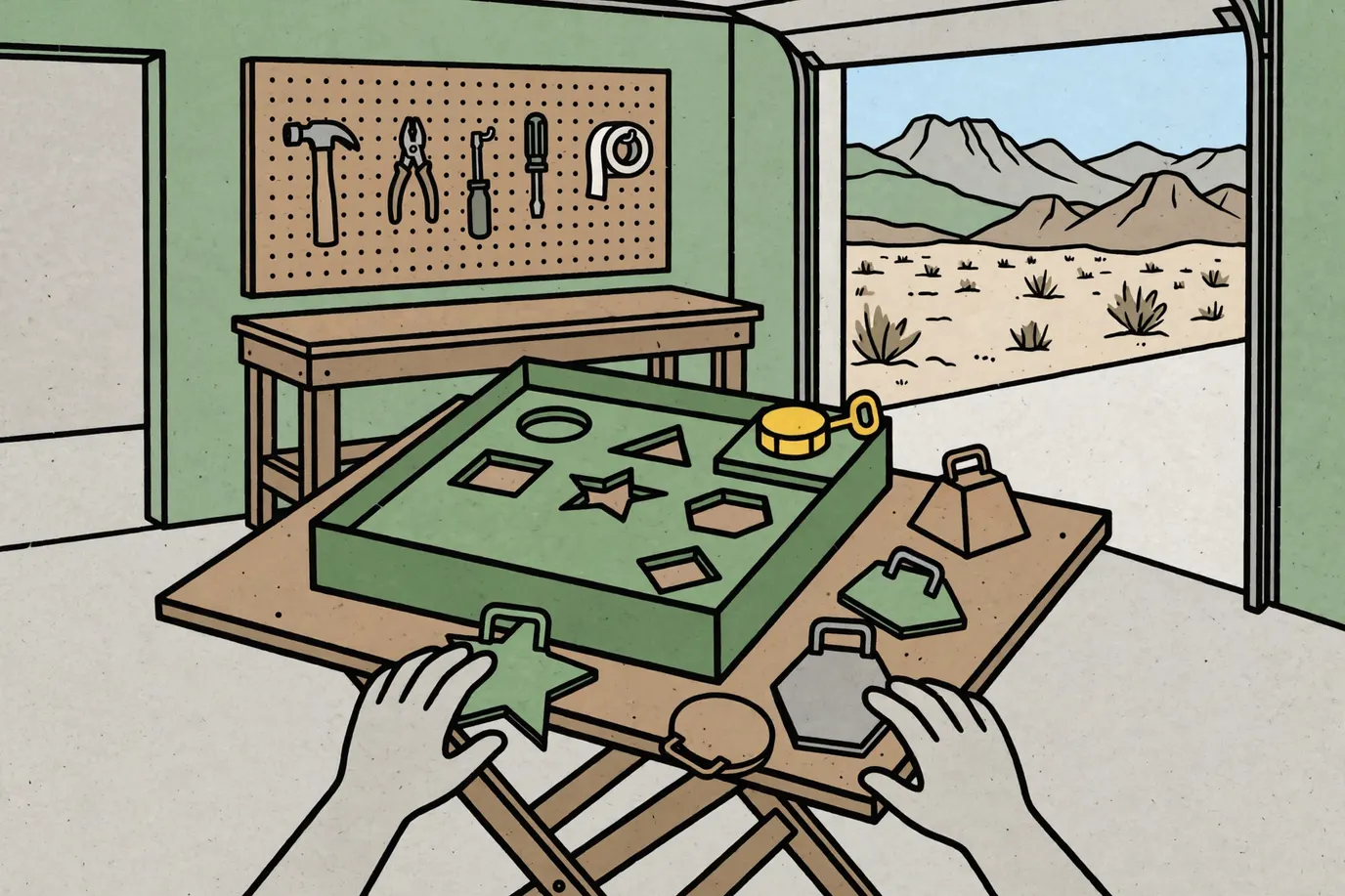
Perfection is a speed game with one rule that matters: fit every shape into its hole before the timer runs out. The game unit is a square tray full of geometric holes, with a dial timer on the side. You wind the timer, press the tray down, flip a switch and start grabbing shapes. Finish in time and you stop the clock. Don't, and the spring-loaded tray pops up and sends the shapes flying across the table.
That's the whole game. No board to read, no cards, no score pad. Hasbro's F7697 page says no reading is required, and it describes the game as practice for focus, hand-eye coordination and shape matching. My version: the box keeps time, and the players try to keep their nerve.
Here's the table version of the box facts, from Hasbro's two current rules sheets and our listing data:
- Players: 1 or more on both sheets; 1 to 2 on the Duel Mode listing
- Age: 5+ on both sheets; one listing in our data says 4+
- Round length: one timer run; 60 seconds on the classic sheet
- Shapes: 25 on the classic sheet, 24 on the 2023 sheet, 50 on the Duel Mode listing
- Batteries: neither sheet mentions any; you set the timer by turning a dial
- Co-op or competitive: competitive against the clock, a rival or both
How the Perfection game plays
I read two Hasbro rules sheets for this page. The first is the classic Perfection sheet, item C0432, dated 2016, with 25 shapes and one tray. The second is the newer Perfection sheet, item F7697, dated 2023, with 24 shapes in two colors and a tray you can rebuild. The rules below are in my own words. Where the two sheets differ, I say which is which.
The first time you open the box
The classic sheet tells you to snap the shapes out of the plastic frame they come on and smooth any rough edges with an emery board or sandpaper. Then the frame goes in the trash. The classic sheet also says adult assembly is required. Do this part before anyone is sitting at the table waiting.
Setup on the classic sheet (C0432)
- Pick a first player.
- Spread all 25 shapes next to the game unit and mix them up.
- Turn every shape so its handle points up.
- Set the switch on the unit to STOP.
- Turn the timer dial clockwise until it stops at 0.
- Push the pop-up tray down.
Handles up is the rule people skip, and it's the one that matters. A shape lying handle-down costs you a second just to flip it, and you only have sixty of them.
A turn on the classic sheet
- Flip the switch to START. The timer begins.
- Fit shapes into their matching holes as fast as you can.
- If every shape is in before time runs out, flip the switch back to STOP right away. Your turn is over, and the number the arrow points to on the dial is the time the next player has to beat.
- If the time runs out first, the tray pops and scatters the shapes. Your turn is over, and the full 60 seconds is still the time to beat.
Then the next player sets all 25 shapes out again, handles up, and takes a turn. The player who fills the tray in the shortest time wins. Playing alone, you just try to beat your own last time.
The sheet also has a note for parents that I like: with younger kids, play without the timer first, so they can learn where each shape goes. Add the ticking once they know the tray.
What changed on the 2023 sheet (F7697)
The F7697 version keeps the race but changes the tray and adds a head-to-head mode.
- A tray you can rebuild. It comes with 5 tray panels. Before you play, you slide them into the unit in any arrangement, rotated, flipped or swapped, until each one clicks. Hasbro's page counts more than 250 possible layouts. So a kid who has memorized the tray gets a new one.
- 24 shapes in two colors. 12 red and 12 yellow, instead of 25 in one set.
- A POP button. Pressing it pops the tray on purpose.
Setup is otherwise the same: switch to STOP, dial clockwise to 0, tray pushed down.
Single-Player Mode (F7697)
Put all 24 shapes in one pile, handles up. Start the timer and fill the tray. If you finish, stop the switch and read your time off the dial, then try to beat it. If the tray pops first, count the shapes you didn't place, and aim for a smaller number next time. That second part is a nice touch. A popped tray still gives you a score.
Multi-Player Mode (F7697)
- Split the shapes by color: 12 red on one side of the unit, 12 yellow on the other, handles up.
- With more than 2 players, divide into two teams. The sheet says the teams don't have to be exactly even.
- Each side takes a color.
- Start the timer and race to fill the holes for your color.
- The first player or team to place all of theirs presses the POP button and wins.
If the timer beats everyone, the tray pops on its own. Then each side counts the shapes they didn't place, and fewer left over wins. If both sides finish at the same moment, whoever hits the POP button first takes it.
Marisol's take, after reading the sheet over my shoulder: "Twenty-four shapes, twenty-four holes. Every one has to close. That's a traverse, not a game." I didn't argue. She had the sheet.
Perfection versions on Amazon US right now
Our data for this page lists four Perfection listings on Amazon US as of October 2026, all from Hasbro. The table above shows age and players wherever a listing states them, and a dash where it doesn't. Here's what tells them apart, from the listing facts only.
Perfection (two listings)
Two listings carry the plain Perfection name.
- One lists ages 4+ and 1 or more players.
- The other lists ages 5+ and 1 or more players, and tags the game as an action game with a pop-up and shape skills.
Neither listing names an item number or a shape count, so I can't tell you which rules sheet comes in each box. If the tray layout matters to you, look at the photos: the F7697 version has the two-color shapes and the panel tray.
Perfection Pop Up
Listed for ages 5+, 1 or more players, with a solo mode. The listing doesn't give a shape count or item number. Read it as the same timer race unless the listing photos show otherwise.
Perfection Plus 2-Player Duel Mode
This is the one built for two at once. It lists ages 5+, 1 to 2 players and a solo mode, and its contents line says 25 red and 25 yellow shapes. That's 50 shapes, which matches neither rules sheet I read, so its own rules will differ in the details. The two-color idea is the same one the F7697 sheet uses for its head-to-head mode.
If your house has two kids who both want the timer at the same time, this is the version whose listing says so.
Which Perfection version fits your table
My one opinion for this page: the age on the box works in both directions. Both Hasbro sheets print 5+, and three of the four listings agree. One listing says 4+. I'd go with the maker's 5+, because the game asks a kid to match shapes against a clock, and a clock is a lot of pressure for a 4-year-old. Going the other way, the warning on both sheets about small parts and children under 3 is about choking, not about how clever a toddler is.
Here's how I'd match versions to houses:
- One kid, practicing alone: any listing with 1 or more players; the timer is the opponent
- Two kids who race each other: the 2-Player Duel Mode listing
- A family that takes turns and compares times: the classic rules, one player at a time
- A kid who has the tray memorized: a version with rearrangeable panels, if the listing photos show them
Check the age label on the listing. Toys with small parts are a choking hazard for children under 3. Count the shapes back into the storage compartment when you're done, so none end up on the floor where a younger sibling plays.
House rules for mixed ages
These aren't on either Hasbro sheet. They're optional, and they're ours.
- Head start for the younger player. The older player waits until the younger one has placed three shapes, then starts.
- One hand behind the back. For grown-ups playing against kids. It evens things out fast.
- No-pop practice round. Leave the switch on STOP and just fill the tray, the way the classic sheet suggests for young players. Nobody is out. Everybody learns the tray.
The F7697 sheet already handles uneven teams by saying they don't need to be even. Anything past that is up to your table, and a head start usually settles more arguments than a rematch does.
Who should skip the Perfection game
Skip it if anyone at your table hates being timed. The ticking is the game, and you can turn it off, but then you have a shape sorter. Skip it, too, if you want a game for a big group at once. The classic sheet has players take turns, and the newer two-sided mode splits everyone into just two teams.
And skip it for kids younger than the age on the box. Both Hasbro sheets say 5+. A younger child will be happier with shapes and no clock at all, and the small-parts warning applies to every version.
If you like Perfection, look at these
Pages chosen by what they share with Perfection: quick hands, a short round and something that can go wrong in a hurry.
- Operation: steady hands, a buzzer and small pieces
- Simon: a memory race against an electronic game unit
- Don't Break the Ice: tap carefully or the middle drops
- Kanoodle: fitting shapes, with no timer at all
- Jenga: one wrong move and the whole thing comes down
Every listing on this page is from Hasbro. See the Hasbro brand page for the rest of its game lineup.
Handles up, switch on, and trust your hands.
Brands in this list
Related
Questions people ask
How do you play Perfection?
On Hasbro's classic sheet (C0432), you set the timer, press the tray down and flip the switch to START. Then you fit all 25 shapes into their holes. Finish first and flip the switch to STOP, and the dial shows your time for the next player to beat. Run out of time and the tray pops. The fastest full tray wins.
How long is the Perfection timer?
Sixty seconds on the classic rules sheet. Hasbro's C0432 sheet says that if your tray pops, the original 60 seconds stays the time to beat. When a player does finish, the arrow on the dial shows where the timer stopped, and that becomes the new target. The newer F7697 sheet doesn't print a number, so check the dial on your unit.
How many shapes are in Perfection?
It depends on the version. Hasbro's 2016 classic sheet (C0432) lists 25 shapes. The 2023 sheet (F7697) lists 24: 12 red and 12 yellow, plus 5 tray panels you can rearrange. The 2-Player Duel Mode listing in our data says 25 red and 25 yellow shapes. Check the contents line on the listing if the count matters to you.
Can two people play Perfection at the same time?
On the F7697 sheet, yes. Multi-Player Mode splits the shapes by color, and two players or two teams race on the same tray, with the first to finish pressing the POP button. On the older C0432 sheet, players take turns and compare times. The Duel Mode listing in our data says 1 to 2 players.
What age is Perfection for?
Both Hasbro rules sheets print 5+, and three of the four listings in our data say 5+. One listing named Perfection says 4+. I'd go by the 5+ on the maker's sheet. All versions carry a choking warning for small parts, not for children under 3.
Sources
- Hasbro: Perfection instructions (C0432) — accessed 2026-10-23
- Hasbro: Perfection rules sheet, C0432 (PDF) — accessed 2026-10-23
- Hasbro: Perfection board game instructions (F7697) — accessed 2026-10-23
- Hasbro: Perfection rules sheet, F7697 (PDF) — accessed 2026-10-23
- CPSC: Small Parts for Toys and Children's Products — accessed 2026-10-23