Collectible Figures · Type
Sofubi Soft Vinyl Figures
Sofubi is the Japanese word for soft vinyl figures: chunky, hollow, hand-pulled from metal molds and painted, mostly monsters and heroes. On Amazon US right now the sofubi we can confirm are a short list, mostly from one long-running kaiju line, sorted tallest first. Short lists are my favorite kind. I can read every row before my coffee goes cold.
We earn a commission if you buy through our links, at no cost to you. Disclosure
| Model | Recommended age | Height | Character | Amazon |
|---|---|---|---|---|
Bandai Movie Monster Series Destoroyah VS Godzilla DestoroyahVinyl, sofubi and designer figures More specs
| — | 6 inlisting | Destoroyahlisting | Check price |
Bandai Movie Monster Series Destoroyah (Series 2)Vinyl, sofubi and designer figures More specs
| 4+ yearslisting | 6 inlisting | Destoroyahlisting | Check price |
Bandai Movie Monster Series Godzilla 2016 (Series 2)Vinyl, sofubi and designer figures More specs
| 4+ yearslisting | 6 inlisting | Godzilla 2016listing | Check price |
Bandai Movie Monster Series Burning Godzilla (Series 2)Vinyl, sofubi and designer figures More specs
| 4+ yearslisting | 6 inlisting | Burning Godzillalisting | Check price |
Bandai Movie Monster Series Godzilla King Ghidorah 2001Vinyl, sofubi and designer figures More specs
| 4+ yearslisting | — | King Ghidorah 2001listing | Check price |
MegaHouse My Hero Academia Nyanto! The Big Heroaca Cat Katsuki Bakugo Mega Cat PVinyl, sofubi and designer figures More specs
| — | — | Katsuki Bakugo (HeroAca cat)listing | Check price |


What’s in this listSoft vinyl (sofubi) figures, as the maker or listing describes them, tallest first. “—” means neither the maker nor the Amazon listing states it.
What sofubi is
Sofubi is soft vinyl, said the Japanese way. It's a kind of figure made from liquid vinyl that is cast in a metal mold, pulled out by hand, then painted and put together. The result is a chunky, hollow figure with bold, simple shapes and painted details.
Most sofubi are monsters and heroes. That's where the style started, and it's still most of what you'll find. Artists make their own designs in the same method too, and those are a world of their own.
On this page, a figure gets a row only when the maker or the listing calls it sofubi. That rule keeps the table short. Plenty of vinyl figures look similar. If the listing doesn't say sofubi, it goes with designer toys and vinyl figures, not here.
How sofubi is made
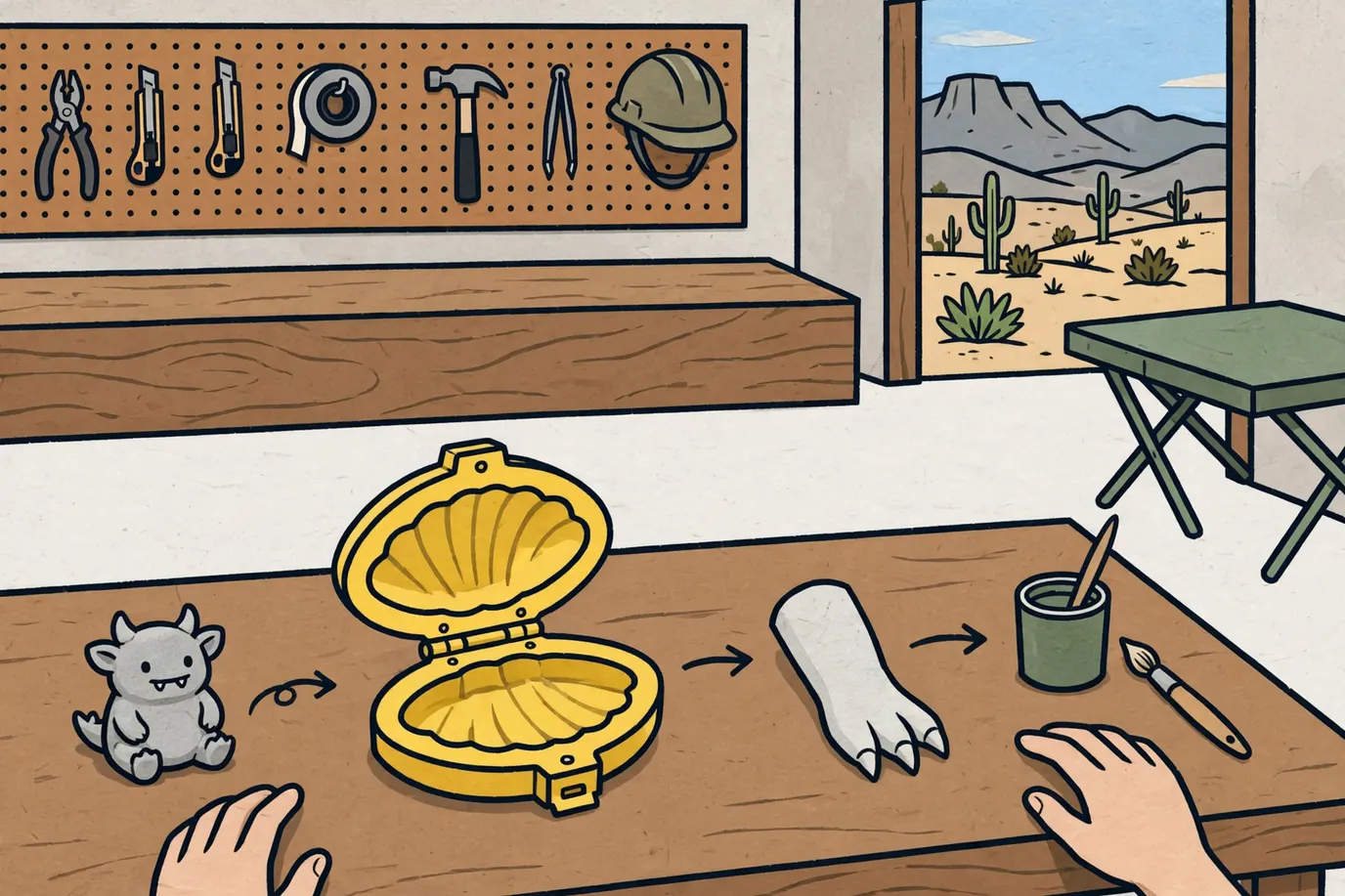
The Japan Times ran a long feature on sofubi, and its walkthrough of the factory method is the clearest one I've read. Here's the short version, in order:
- Sculpt: a wax prototype of the figure
- Mold: metal molds made from that sculpt
- Pour: liquid vinyl into the molds, with air bubbles removed in a vacuum chamber or a centrifuge
- Heat: the molds go into a hot bath until the vinyl sets, and the extra vinyl drains out for reuse
- Cool and pull: the parts cool in water and come out of the mold by hand
- Finish: trim, paint, often with metal paint masks, and assemble
That fourth step is why sofubi is hollow. The vinyl sets in a layer against the inside of the mold, and whatever is left drains out. A hollow figure is light for its size. The pull in step five is also why the shapes stay simple. The parts have to come out of a small opening without catching.
The feature says around eight companies can be involved in one toy, from the sculptor to the mold maker to the painter. At the shop, it takes two of us to agree on tire pressure. Eight companies agreeing on one vinyl monster is a different kind of teamwork.
Where sofubi comes from
The Japan Times feature quotes Maruyama Toys, a factory that has made sofubi since the Showa era, saying the method is nearly the same as when sofubi first went on sale more than 60 years ago. That's a long time to keep a recipe. Lots of shop manuals I've worked from changed more in five years.
The same feature traces the newer designer side to the 1990s and 2000s, when independent designers started making their own figures. They drew on monster movies, hero TV series and giant robot cartoons, but made new characters. It names Medicom Toy, founded in 1996, as one of the big companies in that world.
So when you see the word sofubi, you're looking at one of two things. Either a licensed character from a long-running monster or hero line, or an artist's own design made the old way. Our table right now is almost all the first kind.
What's in our sofubi table
Six figures make the cut, per the listings, as of our October 2026 data. Five come from Bandai's Movie Monster Series:
- Destoroyah VS Godzilla Destoroyah, 6 in on the listing
- Destoroyah (Series 2), 6 in, ages 4+
- Godzilla 2016 (Series 2), 6 in, ages 4+
- Burning Godzilla (Series 2), 6 in, ages 4+
- Godzilla King Ghidorah 2001, ages 4+, no height stated
The sixth is from MegaHouse: a My Hero Academia figure of Katsuki Bakugo drawn as a cat, from its Big Heroaca Cat line. Its listing calls it sofubi and doesn't state a height or an age.
The order is tallest stated height first. Four rows tie at 6 in, so they sit together at the top. The two with no stated height sit at the bottom. That's not a judgment on those figures. It's just where a blank lands in a sort.
What to look at on a sofubi listing
A sofubi listing is usually short. Read these fields, in this order, and you'll have read the useful part.
Type: does the listing actually say sofubi
This is the field the whole page hangs on. The maker or the listing has to use the word sofubi or soft vinyl for this model. Plenty of vinyl figures share the look but not the method, and some sellers use "vinyl" loosely.
If you care about the method, the word matters. If you only want a chunky monster for a desk, it matters less. Either way, read it. It's in the title or the first bullets when it's there.
Height: the line's size class
Sofubi lines tend to stick to a size class. In our table, four figures list 6 in. That's handy, because a row of figures from one line stands even on a shelf.
A height on a listing for a monster figure can be tricky, though. A long tail or wings can make a figure wider or longer than it is tall. The listing gives one number. Your shelf has three. If the shape is long, leave extra room side to side.
Age: the one sofubi line that often has one
Here's something sofubi does better than most collectible figures. Four of our six listings state an age: 4 and up. Most anime scale figures and statues list no age at all, or list a teen age.
That makes sofubi one of the few kinds in this section you can think about for a kid who meets the listed age. Read the age on that exact listing, not on another figure from the same line. If the listing doesn't say, we don't print an age, and you shouldn't assume one.
Series and character: named as the listing names them
The series and character columns show what the listing says. You'll see movie names spelled out in full, like "Godzilla vs. Destoroyah" on the first row, and character names with years, like "Godzilla 2016" and "King Ghidorah 2001."
We name the series and stop there. The toy maker is the brand on our pages.
Series number and line name
Bandai's listings in our table say "Series 2" on three figures. A series number on a listing helps you tell a newer release from an older one with the same character. The first row, "Destoroyah VS Godzilla Destoroyah," doesn't carry a series number, and the second, "Destoroyah (Series 2)," does. Those are separate listings. Read both titles before you decide which one you're after.
Material and paint
Sofubi is soft vinyl by definition. The listing may say vinyl or PVC. The paint is the other half. The Japan Times feature describes factory painters spraying through metal masks to get clean edges on each color. That's where most of the look comes from, since the shapes themselves are simple.
Kinds of sofubi you'll run into
Three kinds show up when you start looking. Only the first is in our table right now.
Licensed monster and hero lines. Long-running lines of movie monsters and TV heroes, made to a steady size class. Bandai's Movie Monster Series is the one in our table.
Character and mascot sofubi. Characters redrawn in a softer, rounder style, like the MegaHouse cat figure in our table. These lean toward desk pieces.
Artist and designer sofubi. Original designs by independent artists, made the old way and often in small runs. The Japan Times feature covers this side in depth. We don't have any in the table yet. When a listing on Amazon US calls one sofubi and the maker checks out, it'll get a row.
My one opinion: sofubi is the best first figure for a kid old enough for the label
If a kid in your house meets the listed age and wants a figure of their own, sofubi is where I'd start. Here's the reason you can check: four of the six listings in our table say ages 4 and up. Most figures in this section list no age or a teen age, and many come with spare hands, stands and pegs. A simple vinyl shape pulled from a mold is a different kind of object from a figure with twenty tiny parts.
That's not the same as "unbreakable," and I'm not promising anything about how a figure holds up. I'm saying the listing gives you an age to work from, which is more than most figures do.
Theo's take: "It's the only figure shelf Sam is allowed to dust. He takes it very seriously."
Safety and small parts
Small parts: Check the age label on the listing. Toys with small parts are a choking hazard for children under 3.
The CPSC bans children's products meant for kids under 3 that have parts small enough to fit its small parts test cylinder. A listed age of 4 and up is the maker's call for that figure. If a figure comes with any extra piece, like a stand or a small accessory, keep it with the figure and away from younger siblings.
Care and display
Soft vinyl is a soft plastic. Good Smile Company's blog, writing about its own soft PVC figures, explains that the plasticizer that keeps the material soft slowly comes to the surface and leaves a tacky film. It says figures sealed in packaging get sticky faster because the plasticizer has nowhere to go.
So a few habits make sense:
- Dust dry: a soft brush first
- Out of direct sun: a window shelf is the wrong shelf
- Let it breathe: out of a sealed bag once it's on display
- Gentle wash only if needed: the blog's method is a neutral detergent, no sponge, soft cloth to dry
- No erasers on paint: the blog warns they can lift it
Check the figure maker's care notes first. Materials differ from maker to maker, and the maker knows its own vinyl.
Who should skip sofubi
Skip it if you want a figure you can pose in lots of ways. Sofubi shapes stay simple because the parts have to come out of the mold by hand, so posing isn't what they're built for. For that, look at action figures and the posable lines elsewhere in this section. If you like Japanese makers in particular, Kaiyodo's page covers its posable figures.
Skip it if you want fine detail in every strand of hair. That's what anime scale figures and statues are for. Sofubi trades that for bold shapes and paint.
And skip this table for now if you're after artist sofubi. Our data doesn't have any confirmed listings for it yet.
Where to go next
For the whole section, start at figures. For one-pose figures with more detail, see anime figures and statues.
Check the age line, then give it a spot at eye level.
Brands in this list
Related
Questions people ask
What is sofubi?
Sofubi is a Japanese toy made from soft vinyl. The word comes from the Japanese way of saying 'soft vinyl.' The Japan Times describes the method: liquid vinyl goes into metal molds, the molds are heated until it sets, and the parts are pulled out by hand, trimmed, painted and put together. Most sofubi are monsters and heroes, but artists make their own designs too.
Are soft vinyl figures the same as vinyl figures?
Not quite. 'Vinyl figure' is a wide label that covers many styles, including mass-made boxed figures and blind boxes. Sofubi means the Japanese soft vinyl style and method. On our pages a figure counts as sofubi only when the maker or the listing calls it that. Everything else goes with designer toys and vinyl figures instead.
What age are sofubi figures for?
Read the listing. Four of the six figures in our table list ages 4 and up, per the listings. The other two don't state an age, so we don't print one. Even with an age on the box, check for small parts. Toys with small parts are a choking hazard for children under 3.
How tall are sofubi figures?
It depends on the line. In our table, four of the six figures list a height of 6 in on the listing. The other two don't state one. Sofubi are hollow, so a tall one doesn't have to be heavy, but measure the shelf gap anyway before you buy.
How do you clean a soft vinyl figure?
Start dry with a soft brush. Good Smile Company's blog says soft PVC figures turn tacky when the plasticizer that keeps them soft comes to the surface, and suggests a gentle hand wash with a neutral detergent, no sponge, then a soft cloth. It also warns erasers can lift paint. Check the figure maker's care notes first, since materials differ.
Sources
- The Japan Times: Sofubi: Plastic fantastic — accessed 2026-10-23
- Good Smile Company, Kahotan's Blog: DIY Nendoroid Repairs Part 2: Cleaning Dirt and Stickiness off Figures — accessed 2026-10-23
- U.S. Consumer Product Safety Commission: Small Parts for Toys and Children's Products — accessed 2026-10-23