Board & Card Games · Type
Stratego Board Game: Rules, Ranks and Editions
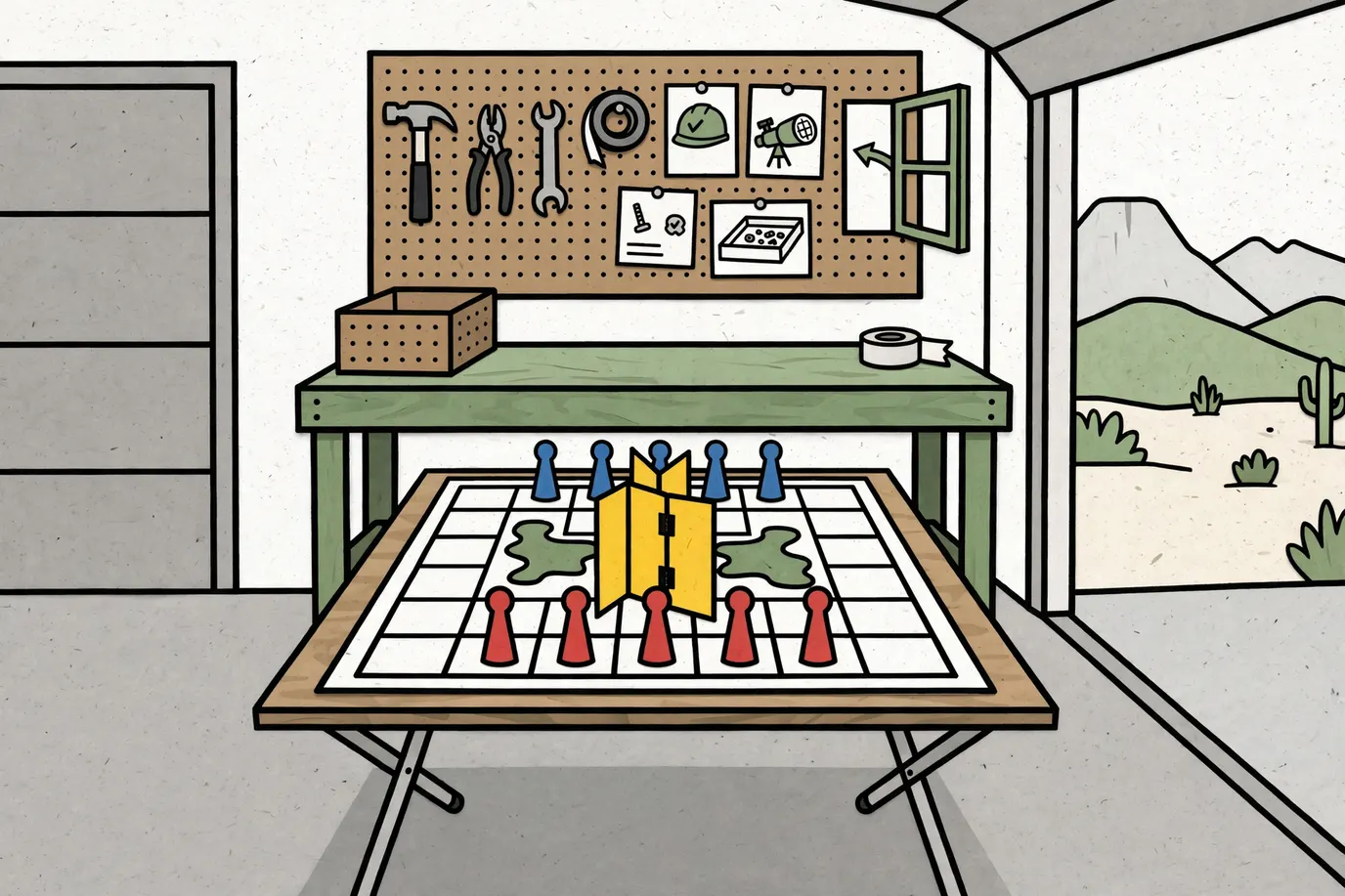
The Stratego board game is a two-player battle of hidden pieces: you set up an army of 40 behind a screen, then try to capture the other player's flag without knowing which piece is which. Every listing in our data that gives a player count says exactly 2, and the ones that give an age say 8+. It's a game about memory and nerve more than luck. There are no dice in the box, so there's nobody to blame but the bomb you forgot.
We earn a commission if you buy through our links, at no cost to you. Disclosure
Board & family games
| Model | Players (min) | Players (max) | Amazon |
|---|---|---|---|
Hasbro Stratego NostalgiaBoard & family games More specs
| 2listing | 2listing | Check price |
Jumbo Stratego Original - Bilingual (with Battle Cards)Board & family games More specs
| — | — | Check price |
Milton Bradley StrategoBoard & family games More specs
| — | — | Check price |
Milton Bradley Stratego 1986 EditionBoard & family games More specs
| — | — | Check price |


Strategy & hobby games
| Model | Amazon |
|---|---|
Jumbo Stratego Quick BattleStrategy & hobby games More specs
| Check price |
PlayMonster Stratego OriginalStrategy & hobby games More specs
| Check price |


What’s in this listEditions and versions of Stratego sold on Amazon US, matched by the name on the listing. Players, age and play time come from the box or listing. “—” means neither the maker nor the Amazon listing states it.
What the Stratego board game is
Stratego is a capture-the-flag game for two. Each player sets up an army in secret on their half of the board. The pieces stand upright, with the rank facing you and a plain back facing your opponent. Neither of you knows what the other has put where.
Then you take turns moving one piece at a time. When two pieces meet, both players say their rank out loud, and the lower rank leaves the board. Find and capture the other flag and you win.
The box facts, from the PlayMonster Stratego Original rulebook:
- Players: 2
- Ages: 8 and up
- Pieces per player: 40 in Stratego Original
- The board: a 10-by-10 grid with two lakes in the middle that nobody can enter or cross
- Goal: capture the other player's flag
There's no co-op mode, no team mode and no dice. It's head to head. It's also a complete game in its own box. None of the Stratego listings in our data is an expansion.
How Stratego Original plays
The rules below are in my own words, from the PlayMonster Stratego Original rulebook. That box includes three games: Stratego Duel, Stratego Original and a variant with an Infiltrator piece. I'll start with Original, since that's the game most boxes are built around. Jumbo's instruction booklet (item 19945) describes the same Original game, with the same 40-piece army.
The pieces and their ranks
Every movable piece has a rank number. Higher beats lower. Here's an army in Stratego Original:
- Marshal (10): 1 piece, the highest rank
- General (9): 1
- Colonels (8): 2
- Majors (7): 3
- Captains (6): 4
- Lieutenants (5): 4
- Sergeants (4): 4
- Miners (3): 5, the only pieces that can defuse a bomb
- Scouts (2): 8, the only pieces that can move more than one square
- Spy (1): 1, the lowest rank, with one big exception
Then there are 6 bombs and 1 flag. They have no rank, and they never move. A flag and six bombs that stay put all game: that's the defensive line, and it's also why you can't bluff with your flag by walking it around.
Setup
- Flip a coin or draw lots for colors. Red always goes first.
- Put the screen across the middle of the board.
- Place all 40 of your pieces in the four rows closest to you, one per square, rank facing you.
- Leave the two middle rows with the lakes empty.
- Take the screen away when you're both ready.
Setup is a real part of the game, not a chore before it. The rulebook says outright that it decides whether you win or lose. A good setup takes a while. A first-timer's setup takes longer.
A turn
On your turn you move one piece one square: forward, back, left or right. No diagonals, no jumping over pieces and no stepping into the lakes. Bombs and the flag can't move at all.
Scouts are the exception. A Scout can travel any number of empty squares in a straight line, like a rook in chess, as long as nothing is in the way. That makes Scouts the cheap way to find out what the other army has up front.
Two rules stop the game from stalling. You can't shuffle a piece back and forth between the same two squares more than three times in a row. And you can't chase an opponent's piece around the board forever. The rulebook has a name for the first one, the "two field" moves rule, and a clear answer for who has to stop first: whoever started the back-and-forth. I've graded essays with less clear policies on stalling.
Attacking
When your piece is next to an enemy piece, you can attack it. Tap it, say your rank, and your opponent says theirs.
- The lower rank loses and comes off the board.
- If the attacker wins, it moves into the empty square.
- If the defender wins, it stays where it was.
- Equal ranks both come off.
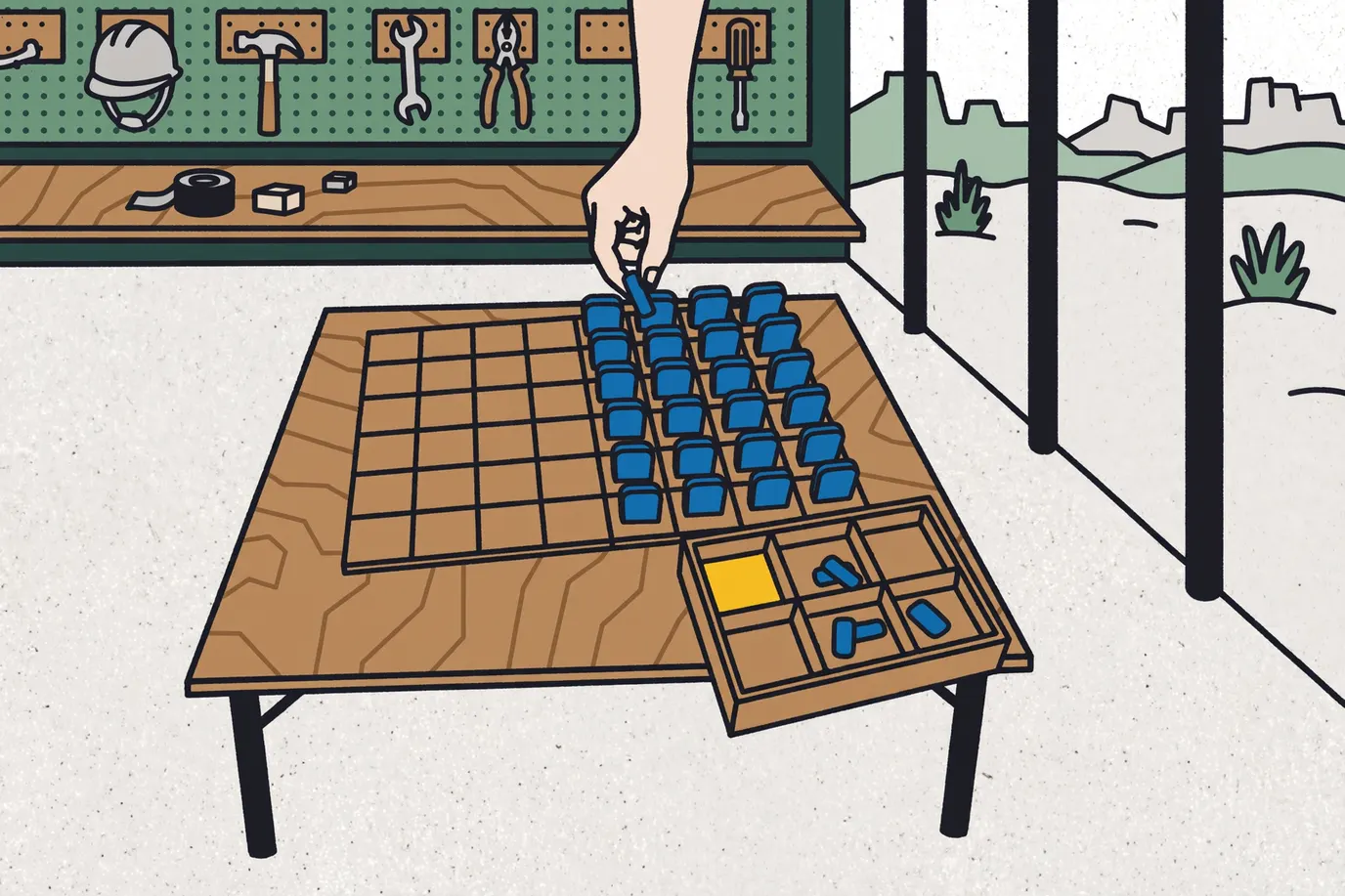
You never have to attack. Captured pieces go on the sorting tray beside the board, where both players can see them. That tray matters more than it looks. It's your count of what the other side has left.
The special rules that make the game
- Bombs: any piece that attacks a bomb loses, and the bomb stays put. Only a Miner can attack a bomb and win. The Miner removes it and takes its square.
- The Spy: the lowest rank, so almost anything beats it. But if the Spy attacks the Marshal, the Spy wins. If the Marshal attacks first, the Spy loses.
- The flag: any movable piece can capture it, even a Scout attacking from a distance.
The Spy rule is my favorite line in the rulebook. The weakest piece on the board beats the strongest, but only if it knocks first.
Lucho's take: "The Miner is the hero. Every shop has one guy who can get through anything, and nobody thanks him until the job's done."
How it ends
You win when you capture the flag. You also win if your opponent can't move anything, either because only bombs and a flag are left or because bombs have boxed in their last movers.
Setup tips from the rulebook
The rulebook ends with advice, which I'll put in my own words:
- Keep the flag in a back row, and consider ringing it with bombs so only a Miner can get to it.
- Put a few bombs somewhere else too, like a corner, so the other player guesses wrong.
- Don't fill your front row with bombs. They'll block your own army.
- Mix high and low ranks in the front two rows, and back up a piece with one two ranks higher.
- Keep some Scouts up front for scouting and some in the back for the end.
- Park the Spy near your General, so it's ready if the enemy Marshal shows up.
Stratego Duel, the short game
The same PlayMonster rulebook includes Stratego Duel for new players. Each side uses just 10 pieces: a flag, 2 bombs, the Marshal, the General, 2 Miners, 2 Scouts and the Spy. They still go in your four back rows, so you have 40 squares to hide 10 pieces in. The rules are otherwise the same. It's where I'd start an 8-year-old, and it's a good warm-up for adults who haven't played since they were 8.
Stratego editions on Amazon US right now
Our data for this page lists 6 Stratego listings on Amazon US as of October 2026. The table above shows the players and age each listing states, with a dash where the listing leaves a field out. Here's what tells them apart.
Stratego Original
- Stratego Original (PlayMonster): 2 players, ages 8+, not an expansion
- Stratego Original, Bilingual with Battle Cards (Jumbo): listed as a strategy game; the listing gives no player count or age
The PlayMonster box is the rulebook I read for this page. If you want the full 40-piece game with no extras, it's the straight choice.
The Jumbo box adds battle cards to the name. Jumbo's 19945 instruction booklet, which celebrates the game's 65th anniversary, describes a Battle Cards variant: 30 pieces per side set up in three rows instead of four, plus a deck of 15 cards split into 6 Move, 6 Attack and 3 Defence cards that bend the normal rules for one turn. The listing doesn't say which booklet ships in its box, so check the listing's photos before you count on that variant.
Stratego Quick Battle
- Stratego Quick Battle (Jumbo): 2 players, ages 8+, listed as a quick-play travel version with 2 sets of 10 pre-printed pieces, a board, a screen and instructions
Ten pieces a side is the size of the Duel game in the PlayMonster rulebook, though the listing doesn't say which ten. It's the box for a car trip or a first game with a new player. It's not a replacement for the full 40-piece battle.
Older Hasbro and Milton Bradley boxes
- Stratego Nostalgia (Hasbro): 2 players, listed as a retro or vintage reissue
- Stratego (Milton Bradley): listed with 40 blue pieces, 40 red pieces and a game board
- Stratego 1986 Edition (Milton Bradley): marked as resale stock on the listing
These are the boxes for someone who grew up with Stratego and wants that edition back on the shelf. The 1986 Edition is sold as a vintage resale, and the Nostalgia box is a reissue. The listings don't say whether the rules inside match the PlayMonster sheet word for word, so go by the sheet in the box.
Check the age label on the listing. Toys with small parts are a choking hazard for children under 3, and Stratego pieces and bombs are small parts.
Which Stratego edition fits your table
Start with head count. With Stratego that's an easy question, because every listing in our data that states a count says exactly 2. If your house usually has three or four people at the table, Stratego is a side game for two of them while the others do something else. If your house is two people most nights, it's one of the best uses of a weeknight I know.
A few matches, from the listings:
- The full game, current box: Stratego Original from PlayMonster, 2 players, 8+
- Travel or a first game: Stratego Quick Battle, 10 pieces a side, 8+
- A twist for players who know the original: the Jumbo Bilingual box with battle cards
- The edition someone remembers: Stratego Nostalgia or a Milton Bradley box
A house rule we'd suggest, not one the rulebook prints: for a first game, play the Duel setup from the rulebook, then move to the full 40 pieces once both players know what a Miner is for.
Who should skip Stratego
Skip it if you want a game for three or more. There is no three-player Stratego in our data.
Skip it, too, if your group dislikes hidden information. A big part of Stratego is remembering which of the other player's pieces revealed itself three turns ago, and guessing about the rest. Some players love that. Some find it stressful, especially when a Marshal walks into a bomb they didn't see coming.
And skip the full game for a child under 8, the age on the listings that state one. A long setup and a memory-heavy middle game can wear out a younger player before the first attack.
If you like Stratego, look at these
Pages chosen by what they share with Stratego: two players, no dice and a plan that plays out over many turns.
- Chess sets: the other two-player war on a grid, with nothing hidden
- Battleship: hidden positions and guessing, for two
- Checkers: a quicker two-player board game for younger players
- Strategy board games: the wider shelf of planning games
See the Hasbro and Milton Bradley brand pages for the rest of those lineups.
Hide the flag, bomb a corner, and keep the Spy where it can knock first.
Brands in this list
Related
Questions people ask
How many pieces are in Stratego?
In the Stratego Original game each player has 40 pieces: a flag, 6 bombs and 33 pieces that move, ranked from the Marshal down to the Spy. The Milton Bradley Stratego listing in our data names 40 blue pieces and 40 red pieces. The PlayMonster rulebook box holds 41 per side, because it adds an Infiltrator piece for a variant.
Can the Spy beat the Marshal in Stratego?
Yes, but only when the Spy attacks. The PlayMonster Stratego Original rulebook says a Spy that attacks the Marshal wins. If the Marshal attacks the Spy, the Marshal wins, because the Spy is the lowest rank. That one rule is why players keep the Spy close to the pieces it's meant to protect.
What age is Stratego for?
The Stratego listings in our data that state an age say 8+: Stratego Original from PlayMonster and Stratego Quick Battle from Jumbo. The PlayMonster rulebook also says ages 8 and up. The other four listings don't give an age. A child needs to remember where pieces are and hold a plan across many turns, which is what the 8+ is about.
What is the difference between Stratego Original and Stratego Quick Battle?
Size. The Quick Battle listing describes a quick-play travel version with 2 sets of 10 pre-printed pieces, a board and a screen, for 2 players, ages 8+. Stratego Original gives each player a full army of 40. Ten pieces a side is a shorter game with fewer ranks to remember.
How do you win at Stratego?
Capture the other player's flag. Any piece that moves can capture it, including a Scout from a distance. The PlayMonster rulebook also gives a second way to win: if your opponent has no piece left that can move, because only bombs and the flag remain or bombs block the last movers in, you win.
Sources
- PlayMonster: Stratego Original rules of the game (PDF) — accessed 2026-10-23
- Jumbo: Stratego Original and Battle Cards instructions, item 19945 (PDF) — accessed 2026-10-23
- CPSC: Small Parts Ban and Choking Hazard Labeling — accessed 2026-10-23