Board & Card Games · Type
Carcassonne: The Game, the Rules and the Expansions
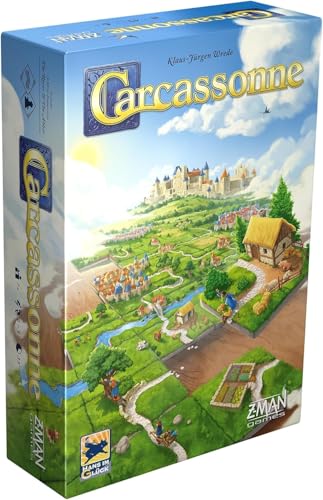
Carcassonne is a tile-laying game for 2 to 5 players, ages 7+ and 35 minutes on the base-game listing. Each turn you draw one square land tile, add it to a growing map of roads, cities and monasteries, and maybe place one of your little wooden followers to score it. The Carcassonne editions on Amazon US run from the base box to a Big Box with 11 expansions, two expansions that need the base game, and My First Carcassonne for ages 4+. The map ends up different every time, and nobody's arguing about the board, because they built it.
We earn a commission if you buy through our links, at no cost to you. Disclosure
Strategy & hobby games
| Model | Recommended age | Players (min) | Players (max) | Play time (min) | Play time (max) | Solo mode | Amazon |
|---|---|---|---|---|---|---|---|
Asmodee Carcassonne: Inns & CathedralsStrategy & hobby games More specs
| 8+ yearslisting | 2listing | 6listing | 45 minlisting | 45 minlisting | — | Check price |
Asmodee Carcassonne Big BoxStrategy & hobby games More specs
| 7+ yearslisting | 2listing | 6listing | 30 minlisting | 30 minlisting | — | Check price |
Asmodee CarcassonneStrategy & hobby games More specs
| 7+ yearslisting | 2listing | 5listing | 35 minlisting | 35 minlisting | — | Check price |
Asmodee Mists over CarcassonneStrategy & hobby games More specs
| — | 1listing | 5listing | 45 minlisting | 45 minlisting | Yeslisting | Check price |
Asmodee Carcassonne: Dragon & FairyStrategy & hobby games More specs
| 8+ yearslisting | 2listing | 5listing | 45 minlisting | 45 minlisting | — | Check price |




Kids & preschool games
| Model | Recommended age | Players (min) | Players (max) | Play time (min) | Amazon |
|---|---|---|---|---|---|
Asmodee My First CarcassonneKids & preschool games | 4+ yearslisting | 2listing | 4listing | 30 minlisting | Check price |

What’s in this listEditions and versions of Carcassonne sold on Amazon US, matched by the name on the listing. Players, age and play time come from the box or listing. “—” means neither the maker nor the Amazon listing states it.
What Carcassonne is
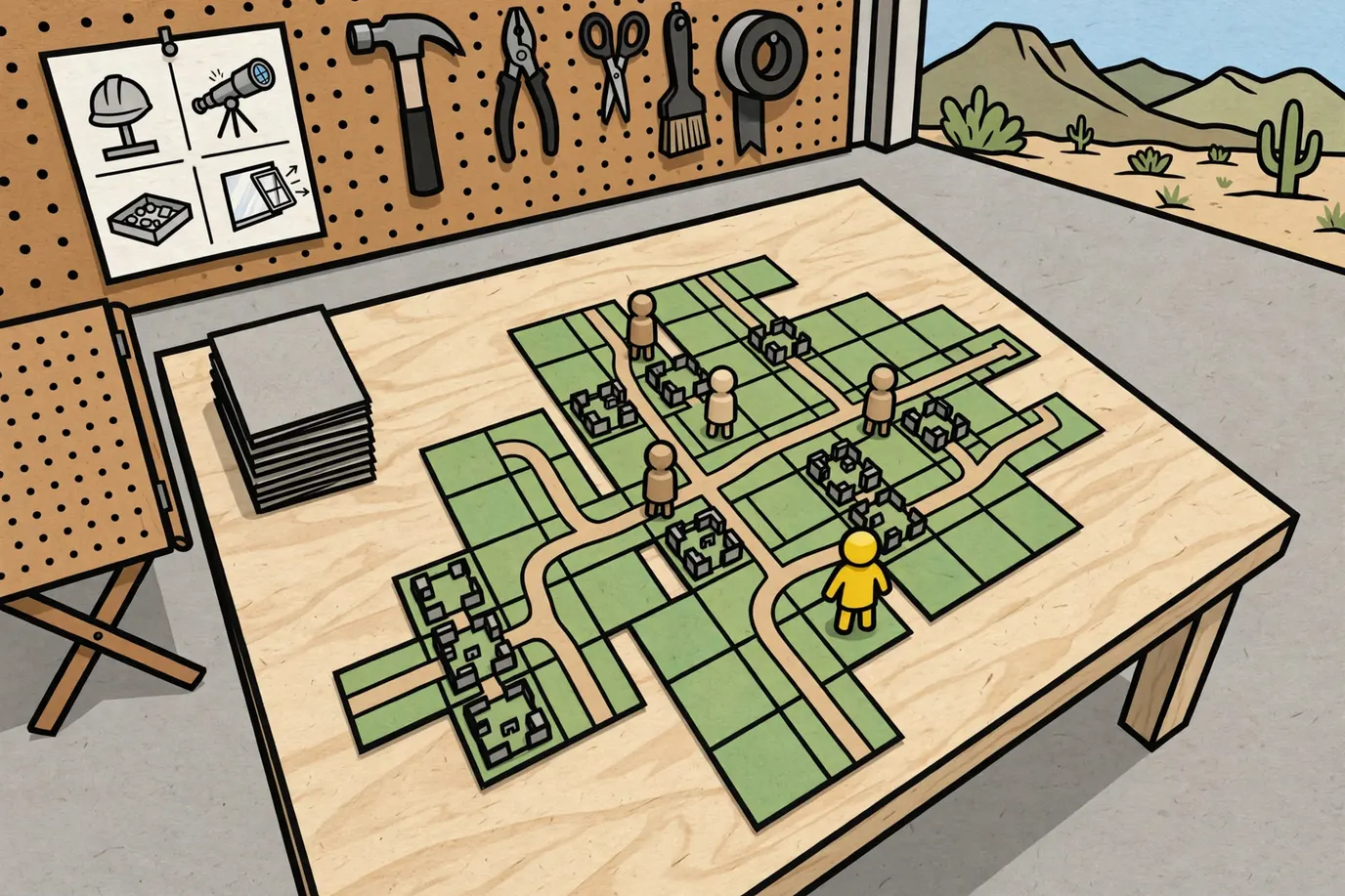
Carcassonne is a game where the players build the board. You start with one tile in the middle of the table. On every turn someone draws a square land tile and adds it to the map. Roads run from tile to tile. Walled cities grow edge by edge. Monasteries sit in the middle of fields.
As you place tiles, you can also place one of your meeples, the small wooden followers, on a road, a city, a monastery or a field. When that feature is finished, it scores, and the meeple comes back to you. The trick is that you only have a few meeples, and every one you leave on an unfinished city is one you can't use anywhere else.
The game was designed by Klaus-Jürgen Wrede, and it's named after the walled city of Carcassonne in southern France. Here are the box facts from the base-game listing in our data:
- Players: 2 to 5
- Ages: 7+
- Play time: 35 minutes
- Kind of game: tile placement, competitive
- Expansion: no; this is the base game
There's no co-op mode in the base rules. Everyone scores for themselves, though you can end up sharing a city with a rival. More on that below.
How Carcassonne plays
The rules below are in my own words, from the English rulebook for the Carcassonne Big Box, published by Hans im Glück. Its first section is the base game, and it's the cleanest teaching version of the rules I've read. The rulebook itself says to leave the farmers out of your first game, so I'll do the same and cover farmers at the end.
Setup
- Put the start tile, the one with the dark back, in the middle of the table.
- Shuffle the other land tiles face down into a few stacks everyone can reach.
- Each player picks a color and takes 7 meeples to play with.
- Put each player's 8th meeple on the 0 space of the scoreboard.
- The youngest player goes first, and play goes clockwise.
The Big Box also includes river tiles with dark backs. The rulebook says to put them back in the box for your first game.
A turn, in three steps
- Place a land tile. Draw one tile and add it to the map so it touches a tile already there. Every edge has to match its neighbor: road to road, city to city, field to field.
- Place a meeple, if you want. You may put one meeple from your supply on the tile you just placed. You can't put it on a road, city or field that already has a meeple anywhere along it.
- Score. If your tile finished a road, city or monastery, it scores right away, for whoever has meeples on it.
In the rare case that a tile can't fit anywhere, the rulebook says to put it back in the box and draw another. At my table that's not rare. That's a regular part of the evening, usually followed by someone saying it would have fit if the map were a little different.
Marisol's take: "Every edge agrees with its neighbor. That's a boundary survey, done in cardboard."
What a meeple becomes
Where you put the meeple decides its job:
- On a road, it's a traveler
- In a city, it's a knight
- On a monastery, it's a monk
- Lying down in a field, it's a farmer
The rulebook explains the name too. "Meeple" comes from "my people," and the same word works for one or many.
How features score during the game
- Road: finished when both ends close, at a village, a city, a monastery or by looping back on itself. 1 point per tile.
- City: finished when walls surround it with no gaps inside. 2 points per tile, plus 2 for each coat of arms on its tiles.
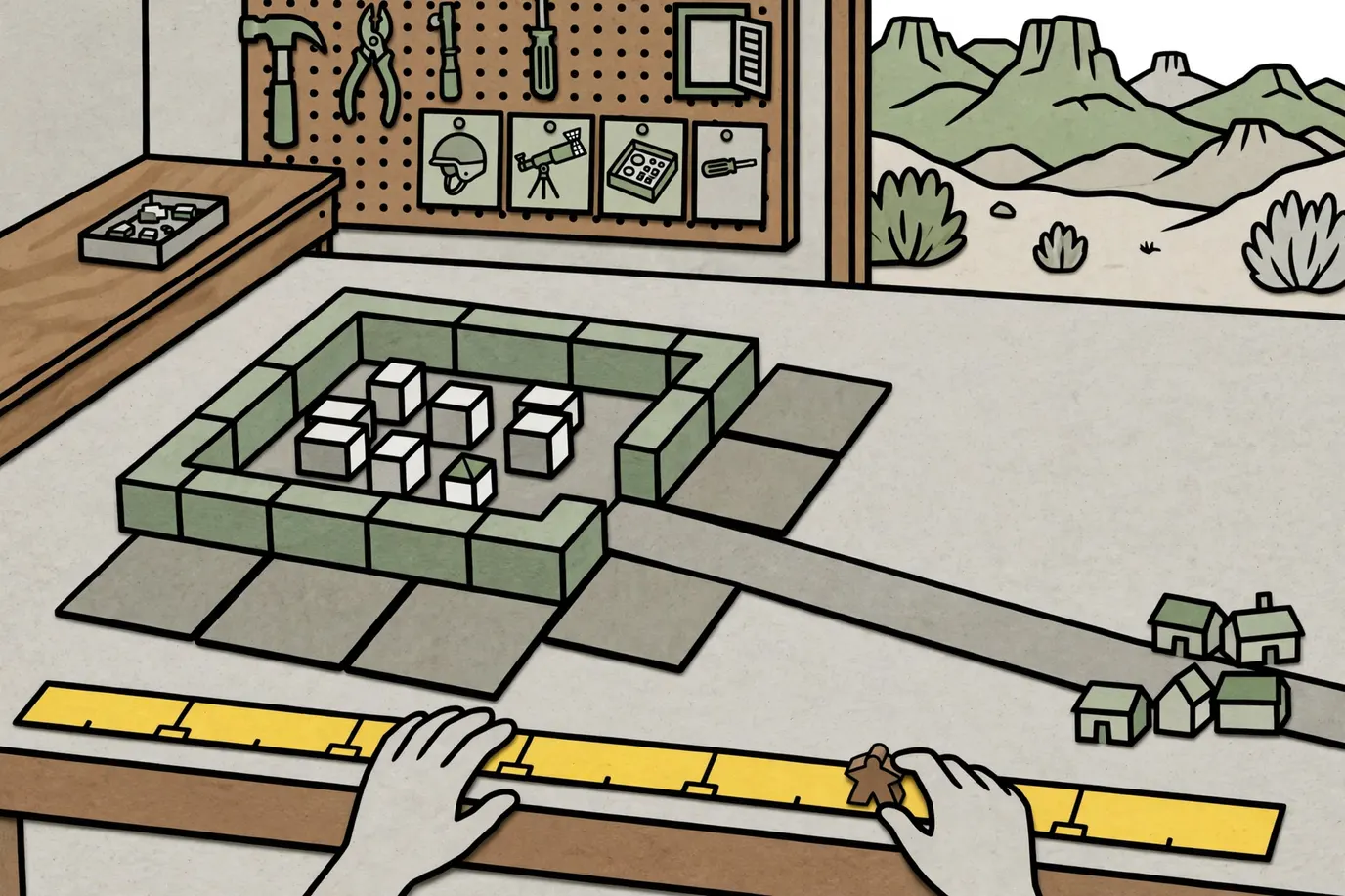
- Monastery: finished when 8 tiles surround it. 9 points: one for each surrounding tile and one for the monastery itself.
After a feature scores, its meeples go back to their owners' supplies. That's the rhythm of the game: place, wait, finish, get your follower back.
Sharing a city
You can't place a meeple directly onto a road or city that already has one. But you can place a meeple on a separate piece of city nearby, and later a tile might join the two pieces together. Then two players have meeples in the same city.
When it scores, the player with the most meeples in it takes all the points. If players tie for most, every tied player scores the full amount. This is where Carcassonne gets sneaky, and where the polite family game turns into a quiet takeover of somebody's city.
How the game ends
The game ends when the last tile has been placed. Then every meeple still on the map scores, at lower rates for anything unfinished:
- Unfinished road: 1 point per tile, same as usual
- Unfinished city: 1 point per tile and per coat of arms, half the usual rate
- Unfinished monastery: 1 point for itself plus 1 per surrounding tile
- Fields with farmers: 3 points for each finished city the field touches
Most points wins. The scoreboard loops, so the rulebook includes 50/100 tiles to remind you that you've gone around.
I teach middle-school math, and the monastery is my favorite thing in the box. It's a 3-by-3 square with the monastery in the center, so the full score is 3 × 3 = 9. It's the only place I've ever seen a game hand out points for a perfect square.
Farmers, once you're ready
The rulebook suggests adding farmers after two or three games. A farmer is placed lying down in a field and stays there for the whole game. Fields only score at the very end, at 3 points for each finished city they touch. Because farmers never come back, placing one is a long bet.
Carcassonne editions and expansions on Amazon US
Our data for this page lists 6 Carcassonne boxes on Amazon US as of October 2026. The table above shows players, age and play time as each listing states them. A dash means the listing leaves that field out.
The base game and the Big Box
- Asmodee Carcassonne. The base game: 2 to 5 players, ages 7+, 35 minutes, tile placement.
- Asmodee Carcassonne Big Box, 2025 Edition. The listing says base game plus 11 expansions, 2 to 6 players, ages 7+, 30 minutes.
If you've never played, either works, since the Big Box includes the base game. The Big Box makes sense if you already know your group will keep playing. The base box makes sense if you want to find out first.
Expansions that need the base game
Both of these are listed as expansions that need Carcassonne to play:
- Carcassonne: Inns & Cathedrals. Ages 8+, 2 to 6 players, 45 minutes. The listing names 24 land tiles, 8 pink meeples, 1 abbot and large meeples.
- Carcassonne: Dragon & Fairy. Ages 8+, 2 to 5 players, 45 minutes. The listing names 26 land tiles, a Source tile and a Lake tile.
Inns & Cathedrals is the one the publisher's rulebook calls the first expansion and suggests trying first. In the Big Box rules, inns make finished roads worth more and unfinished ones worth nothing, and cathedrals do the same for cities. The 8 pink meeples on the listing match the sixth color in the Big Box rulebook, which fits the expansion's 2-to-6 player count.
Note that both expansions list an older starting age, 8+, than the base game at 7+.
A standalone game with a solo mode
- Asmodee Mists over Carcassonne. 1 to 5 players, 45 minutes, tile placement, with a solo mode listed. It's listed as a full game, not an expansion.
It's the only Carcassonne box in our data with a solo mode. The listing doesn't give an age.
For younger players
- Asmodee My First Carcassonne. Ages 4+, 2 to 4 players, 30 minutes.
It's the only Carcassonne box in our data with a starting age under 7.
Check the age label on the listing. Toys with small parts are a choking hazard for children under 3, and meeples are small parts.
Which Carcassonne fits your table
My one opinion for this page: get the base game to the table a few times before buying expansions. An expansion adds rules to a game you haven't learned yet. The publisher's own rulebook agrees. It tells new players to skip the farmers in their first game, add them in the second, and only then try Inns & Cathedrals. That's a game designer saying "slow down" in print.
Quick matches, from the listings:
- A first copy for a family with kids 7 and up: Carcassonne, the base game
- A group that will play it a lot: the Big Box, base plus 11 expansions
- A sixth player: the Big Box or Inns & Cathedrals, both listed for 2 to 6
- Playing alone: Mists over Carcassonne, with a solo mode listed
- A child between 4 and 6: My First Carcassonne, listed for 4+
Who should skip Carcassonne
Skip it if your group wants a game with lots of talking and deal-making. Carcassonne is quiet. Most of the action is a tile and a long look at the map. Skip it too if nobody at your table enjoys counting up a score at the end. The final tally takes a few minutes, and farmers add more.
And skip the base box for a child under 7. Look at My First Carcassonne, listed for 4+, or wait a birthday or two.
If you like Carcassonne, look at these
Pages picked by what they share with Carcassonne: a map that changes, 2 to 5 players and a game under an hour.
- Strategy board games: the wider shelf of planning games
- Catan: another board built from tiles, with trading
- Ticket to Ride: routes across a map, simple turns
- Azul: tile laying on your own board
- Qwirkle: matching tiles by color and shape
Lay the first tile, and keep one meeple home.
Related
Questions people ask
How many players can play Carcassonne?
The base Carcassonne listing in our data says 2 to 5 players. The Carcassonne Big Box, 2025 Edition, lists 2 to 6, and the Inns & Cathedrals expansion also lists 2 to 6. The publisher's Big Box rulebook gives 8 meeples in each of six colors, which is where the sixth player comes from. Mists over Carcassonne lists 1 to 5 with a solo mode.
What are the best Carcassonne expansions to start with?
The publisher's own Big Box rulebook suggests an order: play the core rules first, add the farmers in your second game, then try the first expansion, Inns & Cathedrals, followed by Traders & Builders. Inns & Cathedrals is listed on Amazon US in our data and needs the base game. Dragon & Fairy is the other expansion listed, also needing the base game.
How long does a game of Carcassonne take?
The base game listing says 35 minutes, and the publisher's rulebook prints the same 35 minutes. The Big Box listing says 30 minutes. Both expansions in our data list 45 minutes, and the rulebook prints 15 minutes next to its Inns & Cathedrals section. My First Carcassonne lists 30 minutes. Each extra player adds turns, so a full table runs longer.
What is a meeple?
A meeple is the little wooden figure each player places on the map. The publisher's rulebook says the word comes from 'my people' and is both singular and plural. In the base game each player takes 7 meeples to play with and puts an 8th on the scoreboard to track points. Depending on where you place one, it becomes a traveler, knight, monk or farmer.
Is My First Carcassonne the same game?
It's a separate box for younger players. The listing in our data says ages 4+, 2 to 4 players and 30 minutes. The listing doesn't describe how its rules differ from the base game, so we won't either. The base game is 7+ on its listing, so My First Carcassonne is the one to look at for a 4- to 6-year-old.
Sources
- Hans im Glück: Carcassonne Big Box rulebook, English (PDF) — accessed 2026-10-23
- CPSC: Small Parts Ban and Choking Hazard Labeling — accessed 2026-10-23