Board & Card Games · Type
Betrayal at House on the Hill: The Game, the Haunt and the Editions
Betrayal at House on the Hill is a haunted-house game for 3 to 6 players, ages 12+ on the 3rd Edition box. You explore a house that gets built one room tile at a time, and partway through, the haunt starts and one of you usually turns traitor. Then it's that player against everyone else. The box lists 60 to 90 minutes. The house is different every game, and so is the person who betrays you.
We earn a commission if you buy through our links, at no cost to you. Disclosure
| Model | Recommended age | Players (min) | Players (max) | Amazon |
|---|---|---|---|---|
Avalon Hill Betrayal at House on The Hill Third EditionStrategy & hobby games More specs
| — | 3listing | 6listing | Check price |
Hasbro Betrayal at House on the Hill: Widow's WalkStrategy & hobby games More specs
| — | — | — | Check price |
Hasbro Avalon Hill Betrayal at Baldur's GateStrategy & hobby games More specs
| 12+ yearslisting | — | — | Check price |
Wizards of the Coast Betrayal LegacyStrategy & hobby games More specs
| — | — | — | Check price |


What’s in this listEditions and versions of Betrayal At House On The Hill sold on Amazon US, matched by the name on the listing. Players, age and play time come from the box or listing. “—” means neither the maker nor the Amazon listing states it.
What Betrayal at House on the Hill is
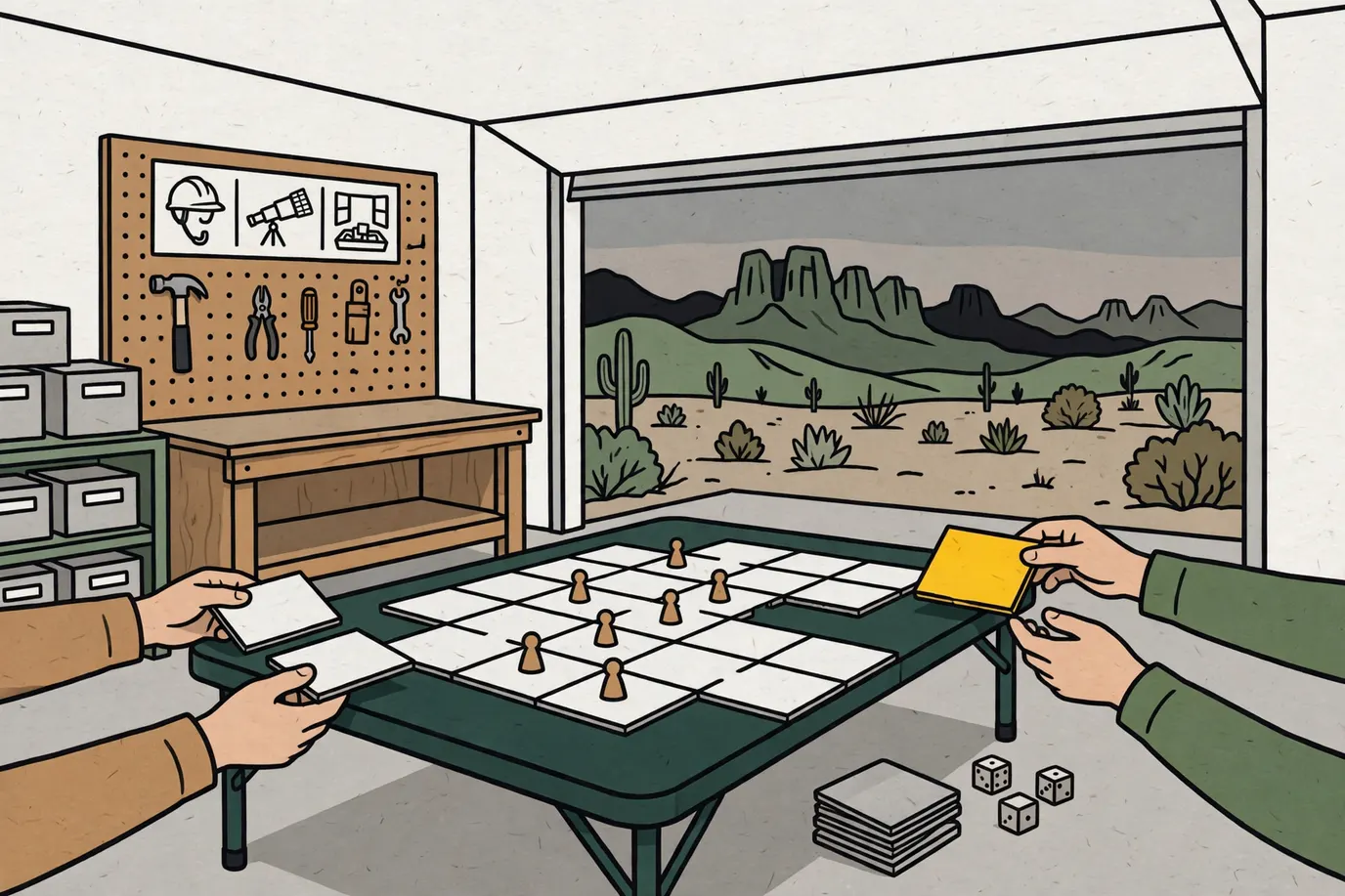
Betrayal at House on the Hill is a horror-movie game in two acts. In the first act, everyone plays a character exploring an old house, all on the same side. The house isn't on the table when you start. It grows one room tile at a time as players open doors. In those rooms you find items, events and omens, which are signs that something bad is coming.
In the second act, the haunt begins. A scenario card picked at the start of the game decides which story you're in and, usually, which player becomes the traitor. The traitor and the heroes each read their own instructions from separate books, and then it's a race to meet your side's goal first.
There are 50 haunts in the 3rd Edition. So the house changes every game, and so does the story at the end of it.
The box facts, from the 3rd Edition rulebook cover and Hasbro's instruction page (product code F4541):
- Players: 3 to 6
- Ages: 12+
- Play time: 60 to 90 minutes, on the rulebook cover
- Characters: 12, printed on 6 double-sided character boards, each with a matching figure
- Contents also include 8 dice, 74 game cards, 5 Scenario cards, 3 starting tiles, 42 single room tiles, 114 cardboard tokens and two haunt books, the Traitor's Tome and Secrets of Survival
- Co-op or competitive: both, in order. Together first, then usually one against the rest.
How Betrayal at House on the Hill plays
These rules are in my own words, from the 3rd Edition rulebook, F4541. Hasbro's US instruction page posts the haunt book, and the full rulebook I read is the version Hasbro posts for Canada, which is in French. The game is the same. Earlier editions use different haunt rules, and I flag the big changes below.
Setup, in brief
- Choose a Scenario card. It sets up why your characters came to the house, and it decides later which haunt you'll play.
- Pick characters. Each character board shows four traits: Might, Speed, Knowledge and Sanity. Plastic clips mark each value, starting on the green number.
- Put the starting tiles in the middle of the table. Shuffle the remaining room tiles into a face-down stack.
- Separate the Event, Item and Omen cards into three decks.
Trait values are public. Nobody hides their character board.
Your turn before the haunt
You can do these in any order:
- Move up to your Speed in tiles. Each point moves you to an adjacent tile, which means one joined by a doorway.
- Trade items and omens with another explorer on your tile, if they agree.
- Use special actions from your items and omens, each one once per turn.
You can stop early. Nobody makes you use every move.
Opening a door
This is the heart of the first act. If you're on a tile with an unexplored doorway, you can step through and discover a new room:
- Check the back of the top tile in the stack. It shows which floor it belongs to: the basement, the ground floor or the upper floor.
- If it doesn't match your floor, bury it at the bottom of the stack and check the next one.
- Place the matching tile so one of its doorways lines up with the door you came through.
- Move your figure onto it and read any text that triggers when you discover or enter it.
- If the tile shows an event, item or omen symbol, draw that card, read it aloud and do what it says.
- Your turn ends.
That last step is new in the 3rd Edition. Discovering a room ends your turn, every time. You open the door, something happens, and then you stand there and think about your choices. It's very true to the movies.
Marisol's take: "A floor plan drawn while you walk it. I've surveyed worse." She'd want to know why the stairs lead where they lead. The tiles don't explain themselves.
The haunt roll
Omen cards are the only cards that can start the haunt. When a card tells you to make a haunt roll, you roll one die for every omen drawn so far by all players. A total of 5 or more starts the haunt.
So the more omens come out, the more dice you roll, and the closer the haunt gets. If the last omen in the deck is drawn and the haunt still hasn't started, it starts anyway. The rulebook flags this haunt roll as a change from earlier editions, so veterans should read that page twice.
When the haunt starts
The Scenario card you chose at the start tells you which haunt was triggered and who the traitor is. Most haunts have one traitor against the heroes. Some have no traitor at the start, some have a hidden one, and a few are free-for-all.
Both sides read their introduction and setup out loud before they split up. Then the traitor takes the Traitor's Tome, the heroes take Secrets of Survival, and each side reads its own goal in private. Once you use an action from your book during the haunt, it's open information. The other side can ask you to read it out.
Traits, damage and death
Characters can't die before the haunt. Damage before then can push a trait down to its lowest value, next to the skull, but no further. After the haunt starts, a trait that reaches the skull kills that character.
Damage comes in three kinds:
- Physical: lower Might, Speed or both
- Mental: lower Knowledge, Sanity or both
- General: you choose which traits drop
To attack, both players roll dice for the same trait, usually Might. The lower roll takes damage equal to the difference. In this edition, stealing an item from a beaten enemy isn't a basic ability anymore. A haunt has to say you can. Dead explorers leave their figure on the tile, and other players can take items and omens from the body.
How it ends
The first side to meet its win condition from its haunt book wins. The winning side reads its closing text aloud.
One more thing about this rulebook. It has a table of contents and a page that lists what changed from earlier editions, marked with a symbol through the rules. I have a known weakness for rulebooks that help you find things. It also tells players that if a result seems unclear, the group should decide and keep playing. I'd frame that sentence if I could.
Betrayal editions on Amazon US right now
Our data for this page lists 4 Betrayal products on Amazon US as of October 2026: one edition of the base game, one expansion and two standalone games that carry the Betrayal name. The table above shows the players, age and play time each listing states, with a dash where a listing leaves a field out.
The base game
- Avalon Hill Betrayal at House on The Hill Third Edition. Listed for 3 to 6 players and labeled Third Edition. This is the game the rules above describe.
The expansion
- Hasbro Betrayal at House on the Hill: Widow's Walk. Listed as an expansion that needs Betrayal at House on the Hill. The listing names 50 haunts, 20 room tiles, 30 cards (11 items, 11 events and 8 omens) and 78 tokens. It doesn't say which edition of the base game it was made for. The 3rd Edition changed how haunts are chosen and how the haunt roll works, so check the listing's description against the edition you own before buying.
Standalone Betrayal games
- Avalon Hill Betrayal at Baldur's Gate (listed under Hasbro). Listed for ages 12+, with 6 pre-painted plastic figures and 50 scenarios. It's a full game on its own, not an expansion. Our data doesn't state its player count.
- Wizards of the Coast Betrayal Legacy. Labeled as a Legacy edition and listed as a standalone game. Our data doesn't give its players, age, play time or contents. Read the listing before buying it as a gift, since a Legacy box may play very differently from the base game.
Which Betrayal fits your table
The one opinion I'll offer here: get the base game to the table a few times before buying expansions. An expansion adds rooms, cards and haunts to a game you haven't learned yet. The 3rd Edition already has 50 haunts and a different story each time. You can play a long while before the box runs out of surprises. Widow's Walk will still be there when it does.
Matching a box to your group, from the listings:
- A first Betrayal: the Third Edition, at 3 to 6 players
- More rooms and haunts for a copy you already own: Widow's Walk, after you confirm it fits your edition
- A different setting with pre-painted figures: Betrayal at Baldur's Gate, listed at 12+
- A group that wants one long campaign: Betrayal Legacy, after reading its listing
Check the age label on the listing. Toys with small parts are a choking hazard for children under 3, and this box is full of tokens, clips, dice and figures. It's labeled 12+, so keep it on a high shelf if younger kids share the house.
Who should skip Betrayal at House on the Hill
Skip it if your table is usually two people. The game needs at least three, and the haunts assume a group.
Skip it if your youngest player is under 12. The box says 12+, and the haunts are written like horror movies: killers, monsters, curses and characters who die. That's the point of the game. It isn't a gentle spooky night.
Skip it too if your group wants a balanced strategy game where the better player usually wins. Betrayal is about the story. The dice decide when the haunt starts, and the scenario decides who turns. Players who enjoy that call it the fun part. Players who don't will say so before the 60-minute mark.
And skip it if someone at your table really hates being ganged up on. Most haunts are one player against the rest. Whoever turns traitor plays alone, by design.
If you like Betrayal, look at these
These share something with Betrayal: 3 or more players, a spooky theme, teams or hidden roles.
- Eldritch Horror: a longer co-op game against something very old
- Mysterium: a ghost story where the players work together
- HeroQuest: explore rooms, fight monsters, one player runs the dungeon
- Social deduction games: for the hidden-traitor part
- Murder mystery games: a story night with a culprit to find
- Strategy board games: for the night you want less luck
For the rest of the maker's lineup, see the Hasbro brand page.
Open one door at a time. The house will wait.
Brands in this list
Related
Questions people ask
How many players can play Betrayal at House on the Hill?
The 3rd Edition box and Hasbro's instruction page both say 3 to 6 players, and the Third Edition listing in our data says the same. The haunts are written with values that change by player count, so a three-player game and a six-player game set up differently. There's no two-player mode in the rulebook.
How long does Betrayal at House on the Hill take?
The 3rd Edition rulebook cover lists 60 to 90 minutes. The listings in our data don't state a play time for any edition. Most of the clock goes to exploring before the haunt, and how fast the haunt starts depends on the dice, so one game can run shorter than the next.
What is the difference between Betrayal at House on the Hill and Betrayal at Baldur's Gate?
Both use the Betrayal name and the explore-then-haunt idea. The Betrayal at Baldur's Gate listing in our data says ages 12+, 6 pre-painted plastic figures and 50 scenarios, and it's sold as a standalone game, not an expansion. Our data doesn't list its player count or how its rules differ from House on the Hill.
Is Betrayal at House on the Hill cooperative?
Partly. Before the haunt, everyone explores the house on the same side. Once the haunt starts, most haunts split the table into heroes and one traitor, each side with its own haunt book and win condition. Some haunts have no traitor or a hidden one, and some are free-for-all. Hasbro's page calls it a cooperative board game.
What does the Widow's Walk expansion add?
The Widow's Walk listing in our data says 50 haunts, 20 room tiles, 30 cards (11 items, 11 events and 8 omens) and 78 tokens. It's an expansion, so it needs a base game. The listing names the base game as Betrayal at House on the Hill without naming an edition.
Sources
- Hasbro: Avalon Hill Betrayal at House on the Hill, 3rd Edition instructions (F4541) — accessed 2026-10-23
- Hasbro Canada: Betrayal at House on the Hill 3rd Edition rulebook, F4541 (PDF, French-language rulebook) — accessed 2026-10-23
- CPSC: Small Parts Ban and Choking Hazard Labeling — accessed 2026-10-23