Brand · Scale Model Kits
Badger Airbrush Lineup and Supplies
A Badger airbrush is a hobby spray tool from a company in Bellwood, Illinois, that says it was founded in 1963. The grid above holds 27 Badger listings on Amazon US: 19 airbrushes and airbrush sets, plus paint, primer, cleaner, lubricant and maintenance kits. Choose by feed, by single or dual action, then by model number. (Badger names its airbrushes by number. As a surveyor, I find that very easy to respect.)
We earn a commission if you buy through our links, at no cost to you. Disclosure
Badger on Amazon US
27 models- Airbrush kits
Badger 150-1 (M) Airbrush Set, Medium Head
Check price - Airbrush kits
Badger 150-7 Professional Airbrush Set
Check price - Airbrush kits
Badger 350-3 Single Action Medium Head Airbrush Set with Propel
Check price - Airbrush kits
Badger Airbrush Weathered Black 1 oz
Check price - Airbrush kits
Badger 360-1 Universal Airbrush Set
Check price - Airbrush kits
Badger 200-20 Fine Detail Single-Action Airbrush
Check price - Airbrush kits
Badger 122 Regdab Airbrush Lubricant
Check price - Airbrush kits
Badger 155-1 Anthem Airbrush Set
Check price - Airbrush kits
Badger 175-9 Crescendo Airbrush Set
Check price - Airbrush kits
Badger Sotar 2020-2F Large Gravity Feed Fine Airbrush
Check price - Airbrush kits
Badger 350-4 Single Action Deluxe Airbrush Set
Check price - Airbrush kits
Badger Velocity Gravity Feed Renegade Dual Action Airbrush .21mm
Check price - Airbrush kits
Badger 175-2(M) Crescendo Airbrush, Medium Head
Check price - Airbrush kits
Badger Model 105 Patriot Fine Gravity Airbrush
Check price - Airbrush kits
Badger 200-3 Siphon Feed 200NH Airbrush Deluxe Set with Propel
Check price - Airbrush kits
Badger 105-2XR Patriot Arrow Fine Gravity Airbrush, Small Cup
Check price - Airbrush kits
Badger Sotar 2020-2H Large Gravity Feed Airbrush with Heavy Head
Check price - Airbrush kits
Badger 1706 Model Flex Airbrush Weathering Colors
Check price - Airbrush kits
Badger Renegade Velocity R1V Dual Action Airbrush
Check price - Airbrush kits
Badger CMK-0116 Complete Airbrush Maintenance Kit
Check price - Airbrush kits
Badger Model 105-7 Patriot Fine Airbrush Set
Check price - Airbrush kits
Badger 105-155BGF Two Airbrush 105 and 155 Set
Check price - Airbrush kits
Badger Xtreme Patriot 105 Airbrush BAD105XTR
Check price - Model paints & paint sets
Badger 16-604 Model Flex Airbrush Paint Cleaner
Check price - Model paints & paint sets
Badger Air-Opaque Airbrush Ready Water Based Acrylic Paint White 4 oz
Check price - Model paints & paint sets
Badger Stynylrez SNR-401 Primer 4 fl oz White
Check price - Model paints & paint sets
Badger 121 Paint Mixer, White
Check price




What Badger makes
Badger Air-Brush Co. makes airbrushes and airbrush supplies. Its website gives an address in Bellwood, Illinois. The site says the company was founded in 1963 and began manufacturing its airbrush designs in 1964.
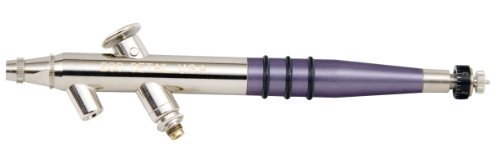
An airbrush is a small spray tool that mixes paint with compressed air and lays it down in thin coats. Model builders use it for base coats, camouflage, soft shading and clear coats.
On Amazon US, our data holds 27 live Badger listings. Some are filed as airbrush kits and some as model paints, and they sort into these groups:
- Airbrushes and airbrush sets: 19
- Paint and primer: Air-Opaque white, Stynylrez primer and Weathered Black
- Weathering colors: a Model Flex weathering set
- Cleaning and care: Model Flex cleaner, Regdab lubricant, a maintenance kit
- Tools: a 121 paint mixer
Our data merges listings sold as Badger and as Badger Air-Brush Co. into one brand. They're one company.
Badger airbrush numbers, decoded by title
Badger names its airbrush lines by number, and the titles add the line name and a few key words. Here's what the listing titles say, line by line. When a title doesn't state the action or feed, we don't guess.
Theo read the list over my shoulder. "105, 150, 155, 175, 200, 350, 360. That's not a lineup. That's a number line with gaps, and I want to fill them in." He teaches seventh grade. He can't help it.
105 Patriot
The Patriot is the largest group in the grid:
- Model 105 Patriot Fine Gravity Airbrush
- 105-2XR Patriot Arrow Fine Gravity Airbrush, Small Cup
- Model 105-7 Patriot Fine Airbrush Set
- Xtreme Patriot 105
- 105-155BGF Two Airbrush 105 and 155 Set
Gravity feed means the paint cup sits on top and paint flows down into the airbrush. It's a common layout for small batches of paint. Fine, in these titles, points to a finer spray. The two-airbrush set pairs a Patriot with a 155 Anthem in one box.
150 and 155 Anthem
- 150-1 (M) Airbrush Set, Medium Head
- 150-7 Professional Airbrush Set
- 155-1 Anthem Airbrush Set
The (M) and Medium Head in the 150-1 title tell you the head size the set comes with. The titles don't state feed or action, so check the listing photos.
175 Crescendo
- 175-9 Crescendo Airbrush Set
- 175-2(M) Crescendo Airbrush, Medium Head
Two listings, one set and one airbrush. Again, read the listing for feed and action.
200 single action
- 200-20 Fine Detail Single-Action Airbrush
- 200-3 Siphon Feed 200NH Airbrush Deluxe Set with Propel
Siphon feed means the paint sits in a bottle or cup below the airbrush and gets drawn up. It suits larger batches of one color. The 200-3 title says siphon feed. The 200-20 title says single action and fine detail.
350 and 360
- 350-3 Single Action Medium Head Airbrush Set with Propel
- 350-4 Single Action Deluxe Airbrush Set
- 360-1 Universal Airbrush Set
The 350 titles both say single action. The 360-1 is called Universal in its title.
Renegade and Sotar
- Velocity Gravity Feed Renegade Dual Action Airbrush .21mm
- Renegade Velocity R1V Dual Action Airbrush
- Sotar 2020-2F Large Gravity Feed Fine Airbrush
- Sotar 2020-2H Large Gravity Feed Airbrush with Heavy Head
The Renegade titles say dual action, and one gives a 0.21 mm size. The Sotar titles say gravity feed, with a fine head on the 2F and a heavy head on the 2H.
Single action or dual action
This is the first real choice inside the Badger list.
ANEST IWATA, another airbrush maker, explains the difference plainly. On a single-action airbrush, pressing the button sends air, and the amount of paint is set separately with a knob. On a dual-action airbrush, pressing the button sends air and pulling it back releases paint. You can change the paint flow while you spray. ANEST IWATA calls dual action the most widely used type.
Sorted by what Badger's titles say:
- Single action, per the title: 350-3, 350-4, 200-20
- Dual action, per the title: both Renegade listings
- Not stated in the title: the rest
Single action suits even coats of one color over a big area, like a car body or a primer coat. Dual action suits shading, gradients and fine lines, where you want more or less paint from one stroke to the next. Neither is the "right" one. It depends on what's on the bench.
Nozzle size and head size
The nozzle is the tiny opening the paint leaves through. ANEST IWATA lists 0.2 mm for fine detail, 0.3 mm as the general size and 0.4 to 0.5 mm for larger areas. A bigger nozzle sprays more paint and uses more air.
Only one Badger title in our data states a nozzle size: the Renegade at 0.21 mm, which sits at the fine-detail end. Other titles use words instead: fine, medium head, heavy head. Fine and heavy point in the directions you'd expect. If you need the exact size, the listing photos or the maker's manual will have it.
A 0.21 mm opening is narrower than a pencil line. Dried paint in a passage that small is a problem with a very small address. Clean it the same night.
Paint, primer and care supplies
Badger's non-airbrush listings in the grid:
- Air-Opaque Airbrush Ready Water Based Acrylic Paint, White, 4 oz: an airbrush-ready acrylic, per the title
- Stynylrez SNR-401 Primer, 4 fl oz, White: a primer, the first coat that helps paint stick
- Airbrush Weathered Black, 1 oz
- 1706 Model Flex Airbrush Weathering Colors: a weathering set
- 16-604 Model Flex Airbrush Paint Cleaner
- 122 Regdab Airbrush Lubricant
- CMK-0116 Complete Airbrush Maintenance Kit
- 121 Paint Mixer, White
Regdab is Badger spelled backward. I noticed. I wrote it on the bottle's label anyway, because a lubricant should say what it is from across the bench.
The paint mixer's title doesn't say more than its name. It's the one Badger listing whose whole job is finished before the airbrush starts. Paint that settles in the bottle is the reason it exists.
How to pick within Badger
Use three questions, in this order:
- Do you have an air supply? None of the Badger titles names a compressor. Plan your air supply before anything else.
- One color over big areas, or detail and shading? Single action for the first, dual action for the second.
- Cup on top or bottle below? Gravity feed for small batches and fine work. Siphon feed for larger batches of one color.
For an entry-level setup, a single-action set with a medium head is the simpler place to start. For detail work on figures, mecha or camouflage, a dual-action gravity airbrush with a fine head is the usual direction. Then add a cleaner and a lubricant from the start, not after the first clog.
Two airbrushes or one
The 105-155BGF set puts two airbrushes in one box. That makes sense for a builder who sprays primer and detail in the same session. One stays loaded with primer. The other stays clean for color. For a first airbrush, one is plenty.
Plan the air supply
An airbrush sprays nothing on its own. It needs steady compressed air. ANEST IWATA recommends a pressure regulator for steady pressure and an air filter to keep water, oil and dust from the compressor out of the airbrush. It gives a spray pressure range of 0.10 to 0.29 MPa for its own airbrushes, which works out to about 15 to 42 psi.
None of the Badger titles in our data names a compressor, so plan one separately. Check that the hose fitting matches the airbrush you pick. Start at the low end of the pressure range and test on scrap plastic before the model.
Primer first, then color
Badger's grid includes a white Stynylrez primer. Primer is the first coat. Tamiya's modeling guide describes primer as a coat that covers minor imperfections before the top coat, and it shows primer in grey, white, pink and other tones.
White primer suits bright top colors, because the color doesn't fight a dark base. A primer coat also shows you every seam and scratch you missed. That's annoying, and useful. Fix them before the color goes on.
Ventilation isn't optional
This is my one opinion on this page, and the label backs it up. An airbrush makes a fine mist on purpose. That mist goes where the air goes, including into your lungs.
The U.S. EPA lists paints, solvents and hobby supplies among household sources of fumes, and its advice is direct: increase ventilation, provide plenty of fresh air and follow the label precautions. Water-based paint isn't a pass on this. The paint maker's label decides the mask and gloves, not my patience or yours.
Work with good ventilation and follow the paint or cleaner maker's label for masks and gloves. Use a spray booth or an exhaust fan pulling air outside if you can. Keep cleaners, thinners and paint away from children.
Who should skip an airbrush for now
If you've built one or two kits and painted them with a brush, you may not need an airbrush yet. A brush handles small parts, details and most figures. An airbrush earns its place on big, smooth surfaces: car bodies, aircraft wings, ship hulls, camouflage.
If you can't set up ventilation where you paint, skip it for now too. That one isn't a matter of taste.
A cleaning routine for any Badger airbrush
Every airbrush needs cleaning, and Badger's list shows it: a cleaner, a lubricant and a maintenance kit sit beside the airbrushes. Plan to flush the airbrush with the right cleaner after every color change and at the end of every session. Take it apart only as far as the manual shows. Lay the parts out in order on a towel so the needle, nozzle and caps go back the way they came.
If you're comparing Badger with other airbrush makers, the airbrush kits page lines up feed, action and nozzle across brands. Iwata, Harder & Steenbeck and Master Airbrush have their own pages.
Pick the feed, then the action, then the number.
Where Badger shows up
Questions about Badger
Is a Badger airbrush good for beginners?
We don't rate airbrushes. Our data shows Badger listings for both kinds of control. Single-action sets like the 350 and 200 set paint flow separately from the trigger, which ANEST IWATA describes as a simpler system. Dual-action models like the Patriot 105 let you change paint flow while spraying. Most Badger listings here are the airbrush or set only, so plan an air supply.
Where are Badger airbrushes made?
Badger's own website gives its address in Bellwood, Illinois, and says the company was founded in 1963 and began manufacturing its airbrush designs in 1964. The page we opened doesn't say where each model is made today, so we don't state it.
What is the difference between Badger single action and dual action?
On a single-action airbrush, the trigger controls air, and paint flow is set separately with an adjustment, per ANEST IWATA's explanation. On a dual-action airbrush, pressing the trigger releases air and pulling it back releases paint, so you change paint flow as you spray. Badger listings here name 350 and 200 models as single action and the Renegade as dual action.
Does a Badger airbrush come with a compressor?
None of the 27 Badger titles in our data names a compressor. Two sets list Propel in the title; check those listings for what it includes. The rest are the airbrush alone or with a hose, bottles or heads. Read each listing's contents before you order, and budget a separate air supply.
What is Stynylrez primer?
Stynylrez is a primer listed under Badger in our data: the SNR-401 Primer, 4 fl oz, white. Primer is the first coat that helps paint stick to plastic. The listing title is all our data holds about it, so check the listing for how to thin and apply it.
Sources
- Badger Air-Brush Co.: home page (address, founded 1963) — accessed 2026-10-23
- ANEST IWATA: About airbrushes (how to use) — accessed 2026-10-23
- U.S. EPA: Volatile Organic Compounds' Impact on Indoor Air Quality — accessed 2026-10-23